
Export, Shipping and Documentation
Export packing, shipping marks, the document set, FOB and CIF terms, customs clearance and a site readiness checklist for boiler shipments.
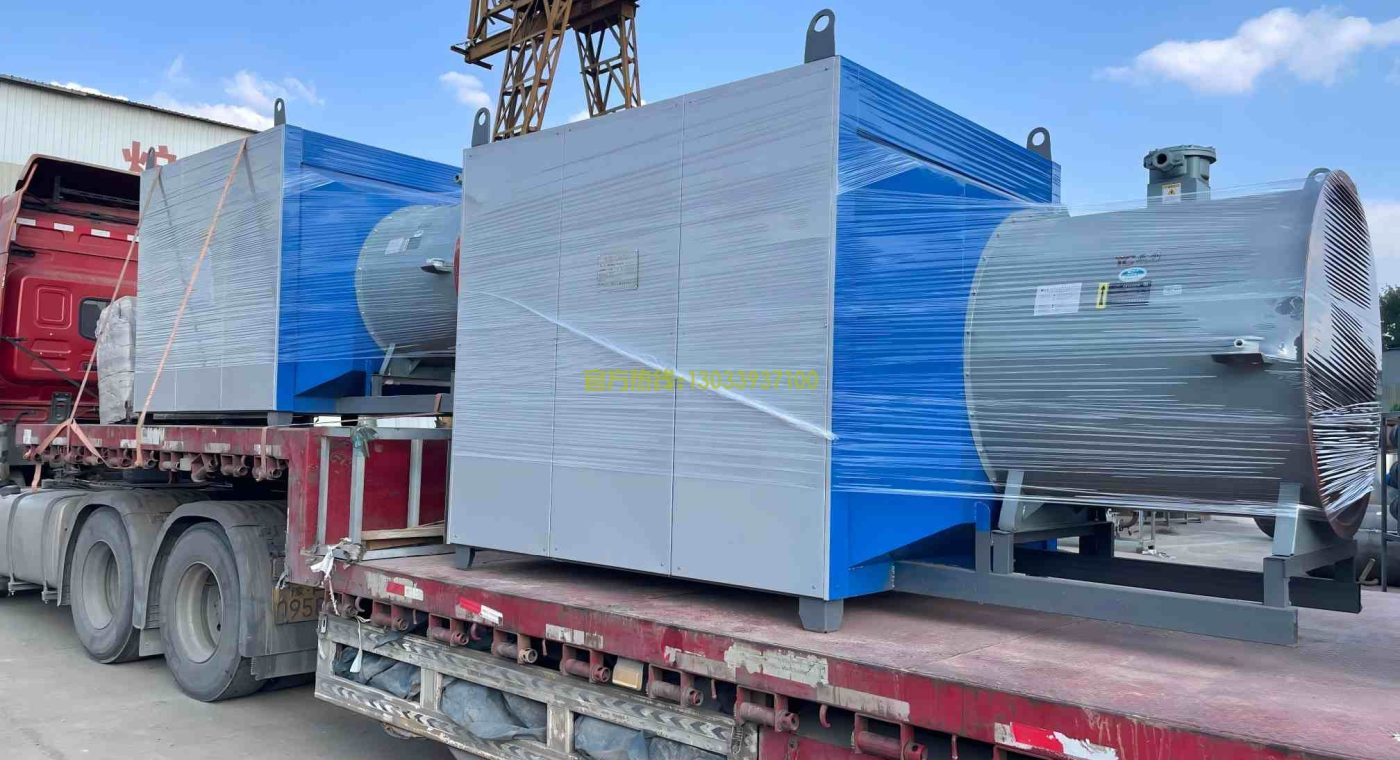
Packing built around the route, not the yard
A packaged boiler travels badly if it is packed for the weather outside the factory gate. Export packing is chosen for the journey: frame, crate or container, and often a combination of all three on one shipment.
Large packaged units go on a steel skid or frame, braced at the lifting points and often shipped on a flat rack or as break-bulk cargo. The frame keeps the shell in one plane during lifting and lashing, which matters because a 20 t boiler that flexes on a crane sling can crack insulation and distort a door seal before it ever reaches the ship.
Smaller units and loose components are crated in plywood or steel-framed cases. Burners, control panels and instruments travel separately from the boiler, in their own cases, with shock indicators on the control panel where the route involves long road transport. Machined faces are coated with rust preventive, instrument tappings are capped, and desiccant is sized to the case volume and the transit time rather than added as a token sachet.
Container stuffing is used for the smaller models and for the many parts that accompany a large one: economiser sections, valves, gauges, anchors, gaskets and spares. The container is loaded with weight distribution in mind, and heavy items are blocked and lashed rather than left to friction. Photographs are taken at each stage of packing and loading, because a damage claim is decided by evidence, not by recollection.
Shipping marks, loading and the bill of lading
Every case carries a mark that matches the packing list exactly: case number and total, dimensions, gross and net weight, lifting points, centre of gravity, port of destination and the purchase order reference. Handling symbols are stencilled in weatherproof paint, not printed on a label that dissolves in the first rain. Where a site stores cases outdoors before installation, the marks also say so, and the packing specification is upgraded accordingly.
Loading is supervised and recorded. The container or hold number goes into the file, the lashing arrangement is photographed, and the bill of lading is checked against the packing list before it is issued. Discrepancies between the three documents are the most common cause of a customs hold, and they are almost always clerical.
The document set that travels with the boiler
A typical shipment carries a commercial invoice, a packing list, the bill of lading, a certificate of origin and, where the destination has a trade agreement with China, the preferential origin document that goes with it. Some destinations also require chamber of commerce attestation or consular legalisation, which takes time and should be identified at the quotation stage rather than the week before sailing.
Technical documents travel in the same file and in a waterproof envelope inside the control panel case: mill test certificates for plate and tube, pressure test records, welder and procedure records, general arrangement and foundation drawings, piping diagrams, the operation and maintenance manual in English, and the spare parts list with part numbers. A second set goes by email so that the site engineer can read the drawings before the ship arrives.
Where the buyer needs the documentation in another language, translation is arranged before dispatch. A manual translated after arrival is a manual nobody uses.
Incoterms: FOB, CIF and the gap between them
Most shipments are quoted FOB or CIF. Under FOB the buyer nominates the forwarder and the risk passes when the cargo is on board; under CIF we arrange and pay for freight and insurance to the destination port, but the risk still passes at loading. Neither term covers unloading at the destination port, inland transport, import duty, clearance or installation, and a quotation that leaves those items implicit is an invitation to a dispute.
Two practical points are worth settling in writing. First, destination port charges: terminal handling, demurrage and detention are usually the buyer’s under both terms, but the split should be stated. Second, timing: if the site is not ready when the container arrives, storage and detention accrue quickly, and no Incoterm assigns that cost to the party who caused it. A short delay in shipment is almost always cheaper than a container sitting at a terminal.
Clearing customs and preparing the site
Clearance is the buyer’s responsibility, but it goes better when both sides prepare. The HS code should be agreed before shipment, a customs broker appointed, and duty and tax funded in advance. Where the destination requires an import permit or a pressure equipment registration, the paperwork should start as soon as the proforma invoice is accepted, because these approvals run on their own timetable.
A site readiness check before dispatch prevents most installation delays:
- Foundation poured, cured, level and within tolerance; anchor bolts set to the drawing
- Crane or forklift of adequate capacity booked for unloading and positioning
- Water supply, softener and drain available, with the blowdown line complete
- Electrical supply at the correct voltage and frequency, with the isolator installed
- Fuel supply connected, pressure tested and at the contracted calorific value
- Dry, ventilated storage available if commissioning is deferred
- Operators nominated for training, and a site contact who can sign the handover
Voltage and frequency vary more than buyers expect. A unit built for 380 V at 50 Hz will not run correctly on 440 V at 60 Hz: motors, heaters and control transformers are selected for the supply, and the burner control circuit is matched to it. The same applies to fuel. Natural gas networks differ in calorific value and supply pressure, LPG and propane-air need different burner jets, and heavy oil needs heating and atomisation equipment that a diesel-fired unit does not carry. These are settled at the drawing approval stage, which is why the fuel analysis and the electrical data are requested before the quotation is fixed.
Reference material
- U.S. DOE — Process heating basics
- Boiler feedwater treatment — reference overview
- WTO — Import and export procedures
External links open the publisher’s website and are provided for background reading.
Request a quote
Tell us the capacity, fuel and working pressure. Our engineers reply with a technical proposal within one working day.
Become a Yuanda Boiler agent
We appoint one or two partners per country to quote, deliver and service our boilers locally. Territory protection, factory pricing and commissioning support are part of the agreement.