
Commissioning, Spare Parts and Boiler Service
Pre-delivery checks, foundation and piping drawings, installation supervision, five to ten day commissioning, training, water treatment and spare parts.
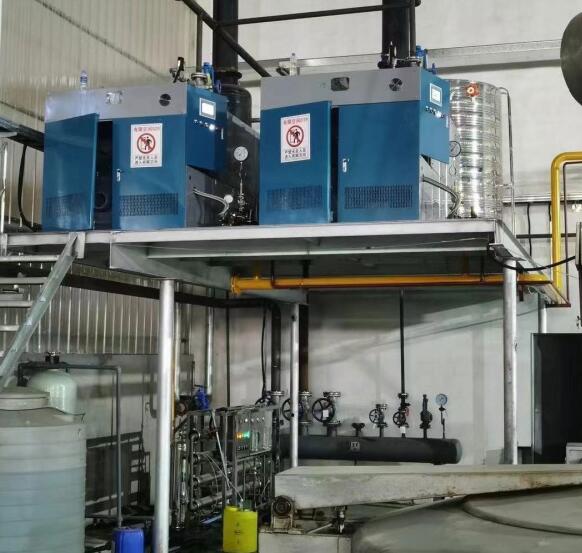
Checks before the boiler leaves the works
Service begins before dispatch, not after the first breakdown. A pre-delivery check walks the finished unit against the order: nameplate data, safety valve set pressure, instrument ranges, burner wiring, control parameters, loose items and the spare parts kit. Anything that does not match the approved drawing is corrected in the works, where the crane and the welder are already there.
For overseas buyers who cannot attend, the check is photographed and filmed, and the file includes the factory acceptance record, the pressure test records and the packing list. It is a modest habit that prevents a surprising number of arguments three months later, when nobody can remember whether the gauge was supplied by us or by the customer.
Foundation, piping and installation supervision
Before the unit ships, the site receives a drawing package: a foundation plan with anchor bolt positions, bearing loads and the space needed for tube withdrawal, a piping and instrumentation diagram covering steam, feedwater, blowdown, safety valve discharge and flue connection, and an electrical load list with cable schedules. The foundation drawing is the one that gets ignored most often and matters most, because a packaged boiler set on an out-of-level plinth will fight its own pipework for the rest of its life.
The common site errors are consistent: a blowdown line sized too small, a steam header without proper trapping, expansion left unaccommodated between the boiler and the first anchor, and a chimney with more resistance than the fan curve allows. Each is cheap to fix on paper and expensive to fix in a plant room that is already tiled.
An engineer can attend for installation supervision — positioning and alignment on the plinth, connection of steam, feed and drain lines, checks on insulation and wiring, and a review of the pipework before it is closed up. The visit is planned with the customer’s contractor, with visas and travel arranged in advance, and the objective is that commissioning starts from a finished installation rather than from a list of unfinished ones.
Commissioning over five to ten days
Site commissioning normally takes five to ten days for a single packaged unit, depending on the auxiliary scope and how much of the pipework the customer’s contractor has completed. The sequence is deliberate rather than dramatic. The shell and pipework are flushed and checked, fans and pumps are run for rotation and current draw, control loops are stroked and the safety interlocks are proved by simulation before any fuel is admitted.
First light-up is gradual: low fire, observation of flame shape and stack appearance, then a stepwise increase with the flue gas analyser on the stack. Combustion is set for oxygen, carbon monoxide and stack temperature at each firing rate, and the results are recorded so that the site has a baseline to compare against in six months. Steam quality, blowdown rate and feedwater control are checked under load, and the unit runs at the plant’s normal demand before handover.
Where the fuel is variable — biogas, coke oven gas, a blended supply — the burner is set across the range the site actually expects, and the limits are written into the handover note. A boiler tuned only at the design gas composition will trip on flame failure the first time the supply weakens.
Training, water treatment and spare parts
Operator training is classroom and hands-on, delivered on the actual controls rather than on slides: normal start-up and shutdown, steady running, alarm response, emergency stop, the daily log, weekly blowdown and water testing. Shift teams are trained separately where the plant runs continuous shifts, because the night team is the one that meets the unusual condition.
Water treatment advice carries more weight than any other recommendation we make. Hardness, alkalinity, dissolved oxygen, pH and conductivity are the five numbers that decide tube life, and most premature tube failures we see trace back to scale or oxygen pitting rather than to the boiler. A softener sized for the make-up rate, a deaerator where the load justifies one, and consistent dosing do more for availability than any optional extra on the quotation.
Spare parts are supplied as a commissioning kit and a first-year kit. Beyond that, the parts that actually wear should be held on site:
- Burner nozzle, electrodes and flame sensor
- Door and sight glass gaskets, plus a spare sight glass
- Water level electrodes and pressure gauge
- Feed pump mechanical seals and coupling elements
- Safety valve spare parts, or a complete spare valve
- Filter elements for fuel and feedwater lines
- Refractory patch material for the furnace outlet and door areas
Inspection support and troubleshooting after handover
Statutory inspection comes round every year, and the first one is usually where documentation gaps appear. We prepare the file — design data, material certificates, pressure test records, welding records, previous inspection reports — and can attend the inspection to strip access covers, assist with internal examination and advise on any repair before the inspector writes it up. Finding a repair item early is cheaper than finding it during a shutdown window.
Remote troubleshooting handles the smaller problems. Where the control system permits remote access, an engineer can read parameters and trend data directly; where it does not, photographs of the alarm screen, the flame and the stack, plus a short video of the burner at low fire, usually identify the cause within a call. Typical calls are flame failure on a weak gas supply, low water alarms from a fouled electrode, and short cycling from a control band set too narrow.
Wear parts are listed in the manual with part numbers, recommended stock quantities and inspection intervals, so that a store keeper can reorder without a technical discussion. Units on continuous duty should hold more than units on seasonal duty; the manual states both cases rather than a single number that suits neither.
Reference material
- U.S. DOE — Process heating basics
- U.S. EPA — Stationary source air pollution rules
- Boiler fundamentals — reference overview
External links open the publisher’s website and are provided for background reading.
Request a quote
Tell us the capacity, fuel and working pressure. Our engineers reply with a technical proposal within one working day.
Become a Yuanda Boiler agent
We appoint one or two partners per country to quote, deliver and service our boilers locally. Territory protection, factory pricing and commissioning support are part of the agreement.