
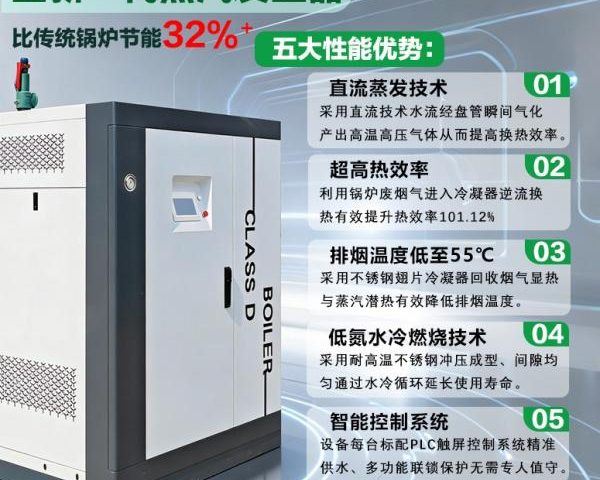
Industrial boiler
Shell-and-Tube Heat Exchanger
Shell-and-tube heat exchanger, 10-250 m², in Q245R or Q345R with 304/316 tubes, for steam, hot water and process duties.
View detailsCustom pressure vessels and storage tanks, 2-100 m³, in Q245R or Q345R, built under our D1/D2 licence with full NDT and hydrostatic test.
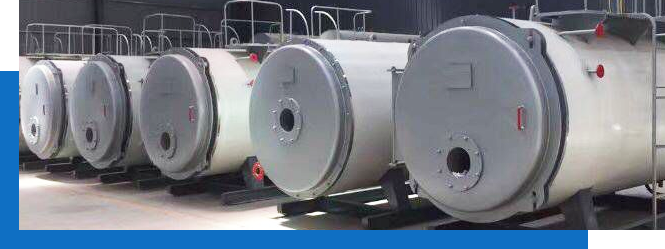
Pressure vessel manufacture in China is licensed by category, and our licence covers D1 and D2 — the low and medium pressure vessels in the first, second and third classes that make up most of the steam-plant and process inventory. In practice that means air receivers, condensate tanks, flash vessels, blowdown tanks, buffer vessels, oil and chemical storage under pressure, and the small separators that sit alongside a boiler house.
The licence is not a marketing label. It defines the design review, the material certification, the welding procedure qualification, the inspection plan and the documentation that must accompany each vessel. Every unit we build is traceable from the steel mill certificate to the final hydrostatic test record.
Q245R is the workhorse for vessels at moderate pressure and temperature: good weldability, predictable properties, and adequate strength for shells up to about 16 mm at 1.0 MPa. Q345R gives roughly 40 per cent more yield strength, which pays off either in higher pressure or in thinner plate and lower weight for the same duty. Both are supplied with mill certificates and checked against the composition specification on arrival.
Corrosion allowance is added to the calculated thickness and is a decision about the service, not the code. Two millimetres is normal for treated water, dry air or clean oil; three or four millimetres where the medium is wet, salty or contains condensate that will collect at the bottom. Stainless cladding on the wetted surface is the alternative where the allowance would otherwise become excessive — for example on a vessel storing dilute acid or a chloride-bearing process stream.
Every opening removes metal from the shell and must be compensated. The calculation checks that the remaining plate plus the nozzle neck and any reinforcing pad can carry the pressure load that the removed area used to carry. Small connections are usually reinforced by the nozzle neck alone; large manways, agitator mounts and side-entry nozzles need a pad or a thickened insert plate.
Layout is as important as the calculation. Keep nozzles away from longitudinal seam welds, space them so that welds can be inspected, and orient the inlet and outlet to avoid impingement on the shell wall — a dip pipe or an impingement plate opposite a high-velocity inlet prevents erosion. Manways should be at least DN450 for a person to pass, with a hinge and a davit where the cover is heavy.
Longitudinal and circumferential seams are welded with submerged arc for the straight runs and manual or TIG for the root and for nozzles. Welding procedures are qualified and welders are tested against them. Depending on the class, welds are radiographed or ultrasonically examined, and the results are recorded on a weld map that forms part of the vessel file.
The finished vessel is hydrostatically tested at 1.25 times design pressure, held for a minimum of thirty minutes, and examined at every seam and connection for leakage or permanent deformation. Where the design calls for it, a pneumatic test is used instead, with the additional safety precautions that a stored-energy test requires. After testing, the vessel is drained, dried, painted and stamped.
Not every tank is a pressure vessel. Atmospheric storage tanks are built to a different specification, with a fixed or floating roof and a shell thickness governed by the liquid head rather than by pressure. We build both, and the distinction is settled at the enquiry stage: tell us the medium, the pressure, the temperature and whether the tank will be indoors or exposed, and the specification follows.
Vessels up to about 4 m diameter travel complete by road. Larger tanks are shop-fabricated in sections, with the circumferential seams completed on site under the same procedure and the final hydrostatic test performed after erection. Annual capacity is 5,000 t of pressure vessels, and dispatch usually follows 25 to 45 days after the drawings are approved.
It covers design and manufacture of low and medium pressure vessels in the first, second and third classes, which includes most steam-plant and process vessels. Higher pressure or special categories are handled with a third-party design review.
Yes. We can work from a client design, verify it against the applicable code, and manufacture to it, or produce the design in-house from a process datasheet and return drawings for approval.
From the medium, the temperature and the expected life. Two millimetres is standard for treated water and clean oil; three or more where condensate, chlorides or wet service are expected, or stainless cladding where the allowance would be impractical.
| Nominal volume | 2 m³ | 10 m³ | 30 m³ | 100 m³ |
|---|---|---|---|---|
| Design pressure | 0.6 MPa | 1.0 MPa | 1.6 MPa | 2.5 MPa |
| Design temperature | 120 °C | 150 °C | 200 °C | 200 °C |
| Shell plate | Q245R | Q245R | Q345R | Q345R |
| Corrosion allowance | 2 mm | 2 mm | 2 mm | 3 mm |
| Head type | Elliptical | Elliptical | Elliptical | Elliptical |
| Hydrostatic test | 1.25× design | 1.25× design | 1.25× design | 1.25× design |
Industrial boiler
Shell-and-tube heat exchanger, 10-250 m², in Q245R or Q345R with 304/316 tubes, for steam, hot water and process duties.
View details
10-50 t/h feedwater
Tray-type thermal deaerator, 10-50 t/h, removing oxygen to below 15 ppb and heating feedwater to 104-105 °C before it reaches the...
View detailsIndustrial boiler
Steam accumulator, 5-80 m³, storing flash steam at 1.0-2.5 MPa so a boiler can run at steady load through sharp demand peaks.
View detailsExternal links open the publisher’s website and are provided for background reading.
Include the capacity (t/h or MW), fuel, working pressure and site country so the proposal matches your permit limits.
We appoint one or two partners per country to quote, deliver and service our boilers locally. Territory protection, factory pricing and commissioning support are part of the agreement.