
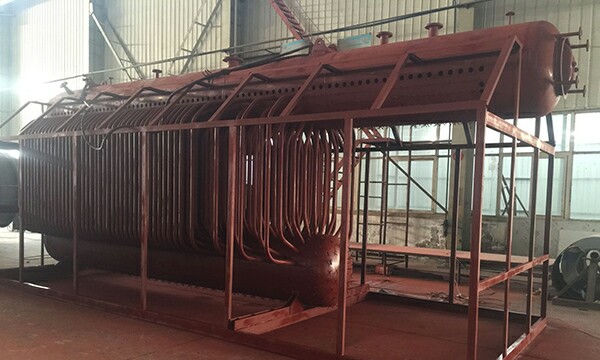
20 t/h
20 t/h Biomass Steam Boiler SZL20-1.25-T
The SZL20-1.25-T is a 20 t/h, 1.25 MPa biomass steam boiler delivering 194 °C steam at 88% efficiency on the lower heating value....
View detailsPackaged three-pass biomass steam boiler, 2-10 t/h at up to 1.6 MPa, with a light chain grate and water-cooled arches.
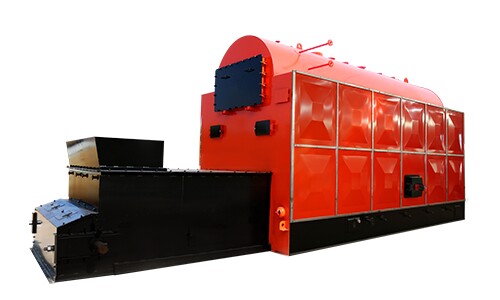
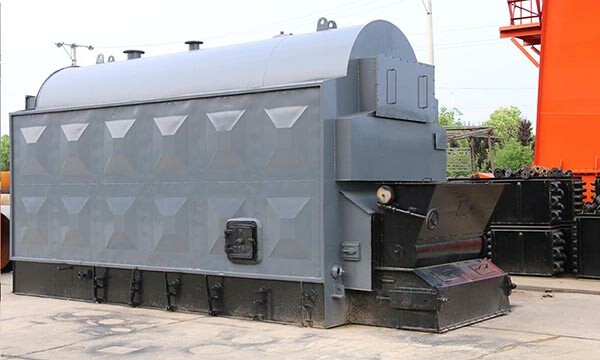
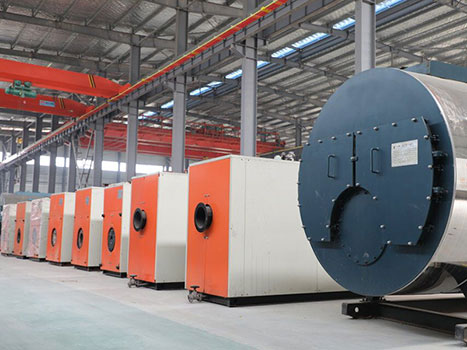
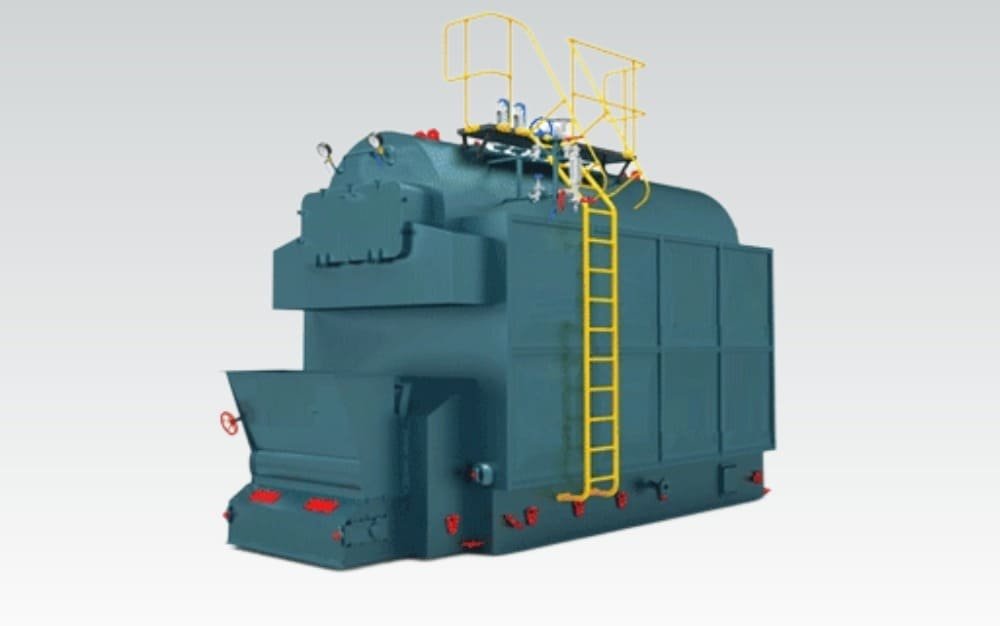
The DZL is a packaged horizontal boiler: a single upper drum, a furnace with water walls on both sides, and a light scale-type chain grate beneath it. Gas leaves the furnace, turns in the rear chamber, crosses the drum through one pass of threaded smoke tubes, and exits at the front smoke box into the economiser. Standard sizes run 2-10 t/h at 0.7-1.6 MPa, saturated at 170-204 °C; the same layout is built to 100 t/h for larger plants. The pressure part is assembled on one base in the workshop, so site work is foundations, ducting, feedwater and electrical connections.
The threaded tubes disturb the gas boundary layer, raising the convective coefficient by 20-30% against plain tubes at the same velocity, and the spiral keeps light ash moving rather than settling. On biomass that self-cleaning behaviour matters as much as the heat transfer gain.
Under the furnace sits a light chain grate with independent air compartments and air admitted from both sides. Crank-lever screws adjust each compartment, giving a full 100% turn-down on the air section so the operator matches air to the fuel bed instead of damping the whole wind box. Grate speed is variable and bed depth runs 150-250 mm depending on fuel density.
Biomass is not one fuel. Pellets of 6-10 mm at 8-10% moisture behave like a high-volatile coal and want a thin, fast bed. Wood chips at 30-35% moisture need a deeper bed, more primary air and a longer residence time; chips over about 30 mm bridge at the fuel gate and leave a cold patch that never catches. Rice husk is the opposite problem: bulk density near 100-120 kg/m³, ash of 12-18%, and a tendency to lift and burn in suspension, so it needs a deeper bed, slower grate travel and a rear arch that holds flame over the fuel.
Fuel preparation belongs in the guarantee. Screen out stone and tramp metal, cap the fines near 30% and hold moisture within about five points; a boiler tuned on 12% pellets loses 1.5-2 efficiency points on 30% chips before any mechanical fault appears. The front arch stands at 45° and the rear arch is low, long and reverse-inclined at its exit, so both radiate onto fresh fuel and form the inverted alpha flame that gives ignition without a support burner. Secondary air enters above the bed at the front wall, usually 10-15% of total air, to burn volatiles released in the first metre of grate travel.
Rated efficiency is 80-84% on lower calorific value, against 95%+ for a gas fire-tube unit. Flue gas at 150-180 °C carries 8-12%; unburnt carbon in slag and fly ash takes 3-6%; fuel moisture 3-5%; radiation from a large hot casing 1-2%. Every point of excess air above the optimum adds directly to stack loss, which is why compartment air adjustment matters more than any single design feature. An economiser heating feedwater to 100-105 °C cuts exit gas by 25-35 °C and recovers 1.5-2 points.
For scale, a 10 t/h boiler at 6,000 hours makes about 60,000 t of steam a year. At 82% and a 15 MJ/kg fuel that is roughly 12,600 t of biomass, so one efficiency point is about 150 t of fuel.
Ash leaves the grate at the rear into a slag hopper and is carried out by a screw conveyor; the economiser hopper and the collector catch the fly ash. Pellets yield 1-3% ash, chips 2-5%, rice husk 12-18%, so size the ash system on the worst fuel in the contract. An ash softening temperature below 1,100 °C means slagging arches and a derated boiler.
For particulate, a multi-tube cyclone followed by a pulse-jet bag filter is the standard chain at this size, giving under 30 mg/Nm³ and often under 20. Staged air and the rear arch hold NOx at 150-250 mg/Nm³; where the limit is 100 mg/Nm³, SNCR at the furnace outlet is the usual addition. Sulphur is low in biomass, so SO2 rarely governs.
Send the fuel ultimate and proximate analysis, moisture range, ash fusion temperature, site altitude, feedwater analysis and load profile with the enquiry; those six inputs fix grate area, furnace volume and arch shape.
| Item | DZL2 | DZL4 | DZL6 | DZL8 | DZL10 |
|---|---|---|---|---|---|
| Rated evaporation | 2 t/h | 4 t/h | 6 t/h | 8 t/h | 10 t/h |
| Rated pressure | 0.7-1.25 MPa | 1.25-1.6 MPa | 1.25-1.6 MPa | 1.25-1.6 MPa | 1.25-1.6 MPa |
| Steam temperature | 170-194 °C | 194-204 °C | 194-204 °C | 194-204 °C | 194-204 °C |
| Grate area | 4.1 m² | 5.85 m² | 7.95 m² | 9.75 m² | 10.77 m² |
| Thermal efficiency | 83-84% | 83-84% | 83-84% | 83-84% | 83-84% |
| Shipping weight | 23 t | 25 t | 35 t | 45 t | 33 t |
Yes, with the right grate and arch. Husk needs a deeper bed, slower grate speed and a rear arch that holds flame over the fuel, plus an ash system sized for 12-18% ash. The furnace volume is kept generous so the light particles stay long enough to burn out.
80-84% on lower calorific value, against 95%+ for a gas fire-tube unit. The difference is flue gas loss, fuel moisture and unburnt carbon. An economiser recovers 1.5-2 points; the rest is inherent to grate firing.
Pellets give 1-3% of fuel mass, wood chips 2-5% and rice husk 12-18%. Bottom ash leaves through the screw slag remover; fly ash is collected in the economiser and bag filter hoppers.
| Model | DZL2 | DZL4 | DZL6 | DZL8 | DZL10 |
|---|---|---|---|---|---|
| Rated evaporation | 2 t/h | 4 t/h | 6 t/h | 8 t/h | 10 t/h |
| Rated pressure | 0.7-1.25 MPa | 1.25-1.6 MPa | 1.25-1.6 MPa | 1.25-1.6 MPa | 1.25-1.6 MPa |
| Steam temperature | 170-194 °C | 194-204 °C | 194-204 °C | 194-204 °C | 194-204 °C |
| Grate area | 4.1 m² | 5.85 m² | 7.95 m² | 9.75 m² | 10.77 m² |
| Thermal efficiency | 83-84% | 83-84% | 83-84% | 83-84% | 83-84% |
| Shipping weight | 23 t | 25 t | 35 t | 45 t | 33 t |
20 t/h
The SZL20-1.25-T is a 20 t/h, 1.25 MPa biomass steam boiler delivering 194 °C steam at 88% efficiency on the lower heating value....
View details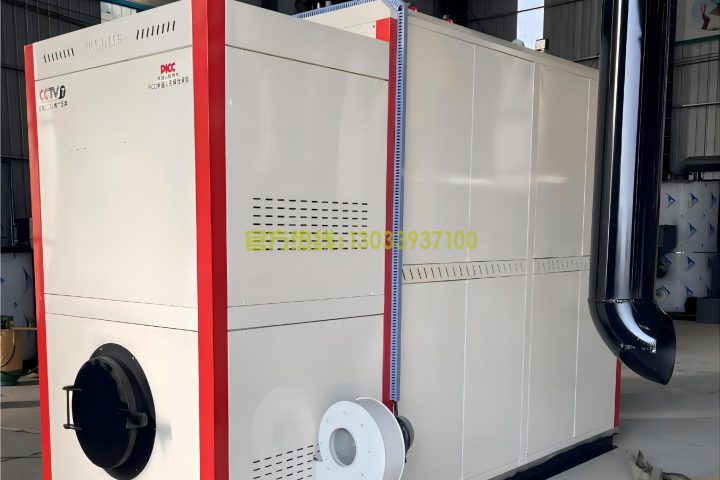
0.1-1 t/h
Vertical biomass steam generator, 0.1-1 t/h at 0.4-0.7 MPa, gravity feed and natural draft, under 2 m² of floor, 72-80% efficiency...
View details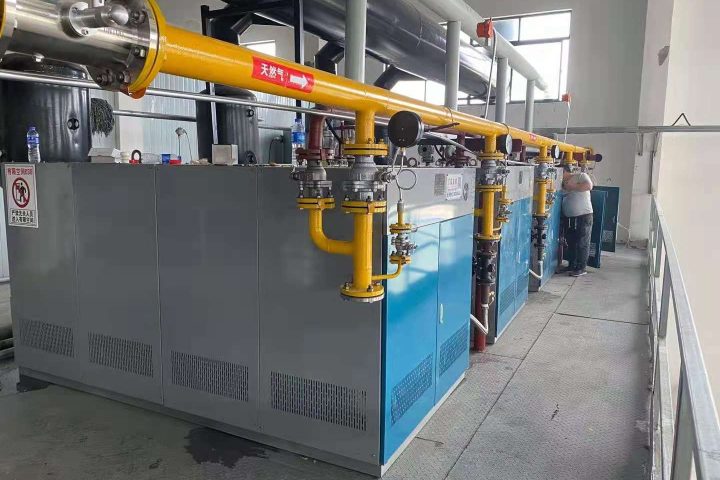
700-7000 kW (60-600 ×10⁴ kcal/h)
Horizontal chain-grate biomass thermal oil heater, 700-7000 kW, liquid phase to 320 °C at under 1.0 MPa, with coil banks matched t...
View detailsExternal links open the publisher’s website and are provided for background reading.
Include the capacity (t/h or MW), fuel, working pressure and site country so the proposal matches your permit limits.
We appoint one or two partners per country to quote, deliver and service our boilers locally. Territory protection, factory pricing and commissioning support are part of the agreement.