
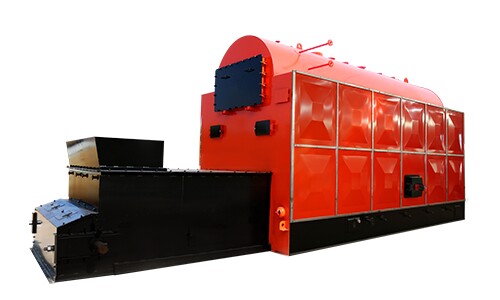
2-10 t/h (series to 100 t/h)
DZL Chain Grate Biomass Steam Boiler
Packaged three-pass biomass steam boiler, 2-10 t/h at up to 1.6 MPa, with a light chain grate and water-cooled arches.
View detailsDouble-drum water-tube biomass boiler, 4-20 t/h, shipped in two sections with membrane walls and an S-pass dust drop.
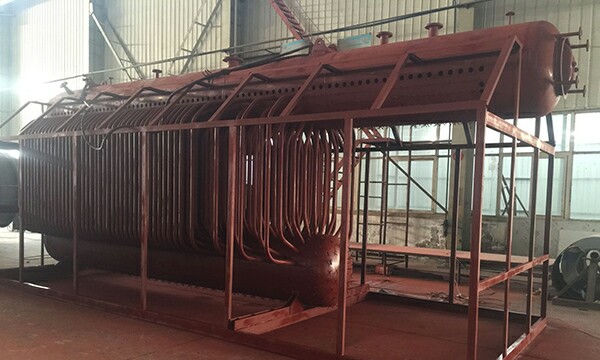
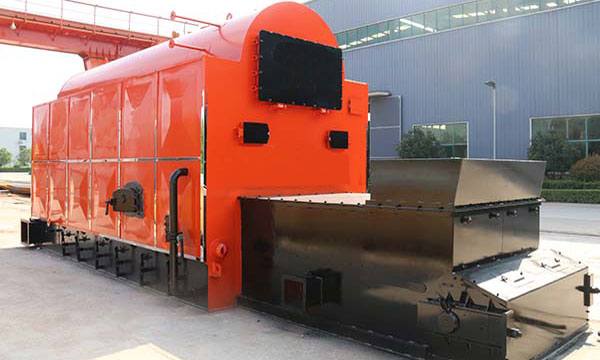
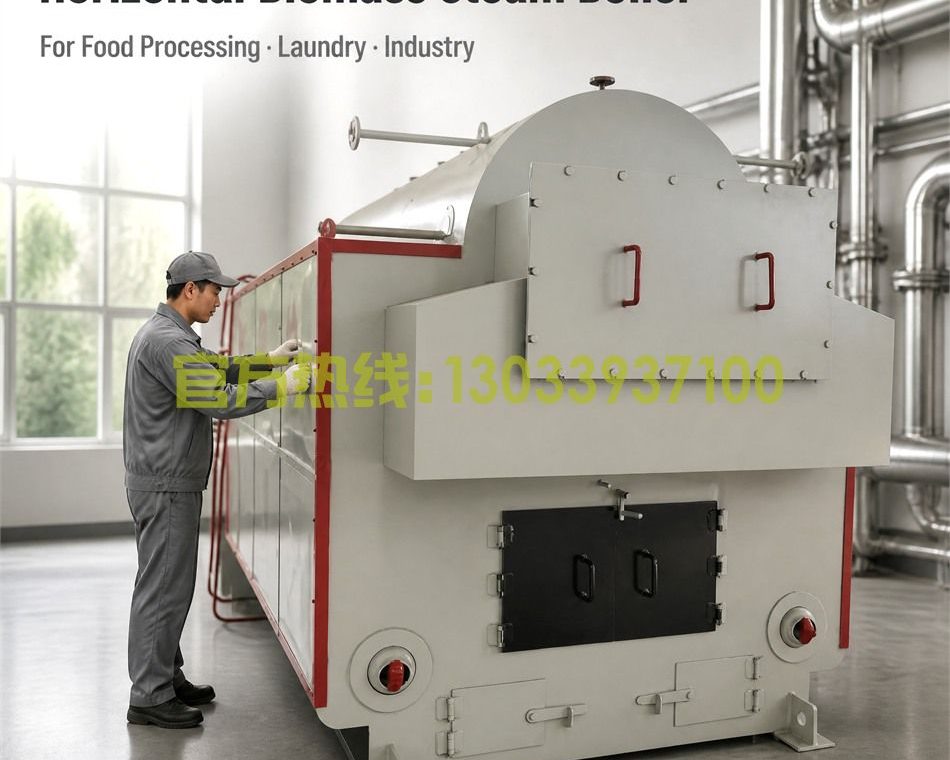
SZL is the assembled water-tube option for plants that need more than a packaged fire-tube boiler can give. Two longitudinal drums sit above a chain-grate furnace, connected by a convective tube bank; the side walls are membrane water walls, and the front and rear wall tubes run down to the grate to form the arches. The boiler ships as two large sections: the upper carries drums, tube bank, steel frame and upper wall, the lower carries hopper, grate, base frame and lower wall. Only the middle division wall is built on site.
That split matters commercially. A 10-20 t/h boiler arrives by standard flatbed and refractory work drops to a few days; delivery is typically 25-45 days after drawing approval, with 5-10 days on site for commissioning. Membrane walls also seal the furnace to a gas-tight casing, so excess air can be held at 1.25-1.35 instead of the 1.4-1.5 common on older brick-set units.
The furnace volume is larger than a fire-tube’s, and that volume is the main emissions tool. Biomass volatiles need time at temperature; a furnace at 150-200 kW/m³ volumetric heat release with two seconds above 850 °C burns them out without a support burner. Front-wall secondary air, valve-controlled, is brought in on biomass to complete combustion above the bed and cut both CO and unburnt carbon in the fly ash.
Fuel handling is sized for light material. The feed inlet sits higher than on a coal unit so low-density chips and pellets flow by gravity rather than bridging, and the gate is wider. Chips are screened to 30 mm, pellets kept at 6-10 mm, and husk gets a deeper bed and slower grate. The grate is a chain type with independent air compartments and two-side air admission, set by the same crank-lever screws used across the range.
After the furnace, gas turns through the convective bank in an S-path. Each turn throws dust out of the stream by inertia, and four gravity hoppers under the bank collect it and discharge back to the slag conveyor. In practice this removes a useful share of the fly ash before the collector, lowering the load on the bags, reducing economiser erosion and cutting the pressure drop the induced-draft fan must overcome.
The published figures run from 78.8% at 4 t/h to 82% at 15-20 t/h. Small water-tube units lose more to excess air and to unburnt carbon in the fly ash than a fire-tube of the same output, because the convective bank runs at higher gas velocity and carries more dust out of the furnace. The larger models recover this through better surface-to-volume ratio, a deeper economiser and a steadier fuel bed.
Upgrades are an economiser to 100-105 °C feedwater, variable-frequency drives on the draft fans and oxygen trim. Together they are worth 2-3 points on a plant running at fixed air. A 10 t/h unit at 6,000 hours produces about 60,000 t of steam; at 80% and a 15 MJ/kg fuel that is roughly 12,900 t of biomass, so each point is about 160 t of fuel.
Water-side condition matters more here than on a fire-tube. The bank has closer tube spacing and is harder to clean, so hardness carryover shows up first as a rising gas outlet temperature and falling output, not as a visible deposit.
Bottom ash drops off the grate into the slag hopper, and four hoppers take the coarse fly ash. Ash runs 1-3% for pellets, 2-5% for chips and 12-18% for husk; on husk the conveyor runs continuously.
A cyclone followed by a pulse-jet bag filter holds particulate below 30 mg/Nm³, and staged air with front-wall secondary air keeps NOx at 150-250 mg/Nm³. Where a 100 mg/Nm³ limit applies, SNCR is added at the furnace exit; sulphur in biomass is low enough that SO2 control is rarely needed.
Specify fuel analysis with moisture and ash fusion data, the pressure and temperature actually required, feedwater hardness, and whether the plant runs at part load for long periods. Grate area and furnace volume are fixed at order and cannot be corrected later.
| Item | SZL2 | SZL4 | SZL6 | SZL10 | SZL15 | SZL20 |
|---|---|---|---|---|---|---|
| Rated evaporation | 2 t/h | 4 t/h | 6 t/h | 10 t/h | 15 t/h | 20 t/h |
| Rated pressure | 1.25-2.5 MPa | 1.25-2.5 MPa | 1.25-2.5 MPa | 1.25-2.5 MPa | 1.25-2.5 MPa | 1.25-2.5 MPa |
| Steam temperature | 194-225 °C | 194-225 °C | 194-225 °C | 194-225 °C | 194-225 °C | 194-225 °C |
| Grate area | 3.22 m² | 6.72 m² | 7.52 m² | 11.8 m² | 18 m² | 23 m² |
| Thermal efficiency | 79.6% | 78.8% | 79.5% | 80.2% | 82% | 82% |
| Shipping weight | 25 t | 30 t | 22.5 t | 26.5 t | 30 t | 35 t |
The boiler leaves the works as two large sections: the upper with drums, tube bank and wall, the lower with grate, hopper and base. Only the middle division wall and ducting are built on site, cutting installation to days rather than weeks.
The water-tube bank runs at higher gas velocity and carries more unburnt carbon out of the furnace, and small units lose more to excess air. Larger models recover this with more surface and a deeper economiser, reaching 82% at 15-20 t/h.
Yes, with the same preparation: chips screened to 30 mm, pellets at 6-10 mm, husk with a deeper bed. The higher feed inlet and wider gate make low-density fuel flow more reliably.
| Model | SZL2 | SZL4 | SZL6 | SZL10 | SZL15 | SZL20 |
|---|---|---|---|---|---|---|
| Rated evaporation | 2 t/h | 4 t/h | 6 t/h | 10 t/h | 15 t/h | 20 t/h |
| Rated pressure | 1.25-2.5 MPa | 1.25-2.5 MPa | 1.25-2.5 MPa | 1.25-2.5 MPa | 1.25-2.5 MPa | 1.25-2.5 MPa |
| Steam temperature | 194-225 °C | 194-225 °C | 194-225 °C | 194-225 °C | 194-225 °C | 194-225 °C |
| Grate area | 3.22 m² | 6.72 m² | 7.52 m² | 11.8 m² | 18 m² | 23 m² |
| Thermal efficiency | 79.6% | 78.8% | 79.5% | 80.2% | 82% | 82% |
| Shipping weight | 25 t | 30 t | 22.5 t | 26.5 t | 30 t | 35 t |
2-10 t/h (series to 100 t/h)
Packaged three-pass biomass steam boiler, 2-10 t/h at up to 1.6 MPa, with a light chain grate and water-cooled arches.
View details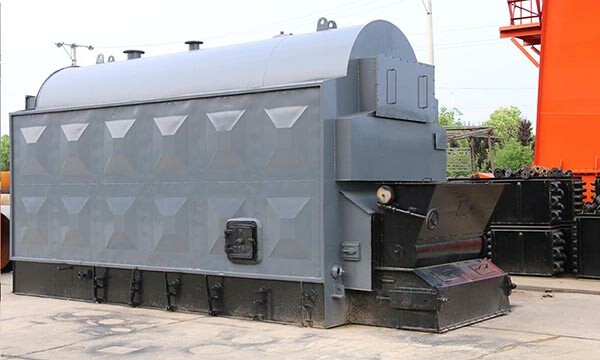
0.5-4 t/h
Batch-fired horizontal biomass boiler for wood, sawdust, rice husk and agro-residue, 0.5-4 t/h, manual firing door, natural or for...
View details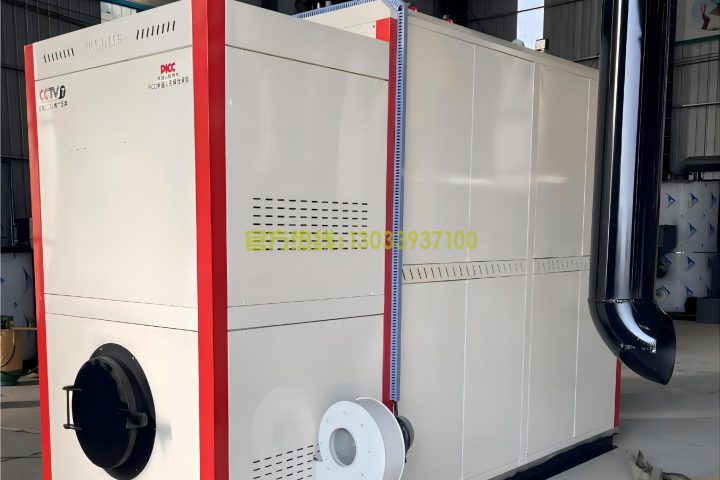
0.1-1 t/h
Vertical biomass steam generator, 0.1-1 t/h at 0.4-0.7 MPa, gravity feed and natural draft, under 2 m² of floor, 72-80% efficiency...
View detailsExternal links open the publisher’s website and are provided for background reading.
Include the capacity (t/h or MW), fuel, working pressure and site country so the proposal matches your permit limits.
We appoint one or two partners per country to quote, deliver and service our boilers locally. Territory protection, factory pricing and commissioning support are part of the agreement.