
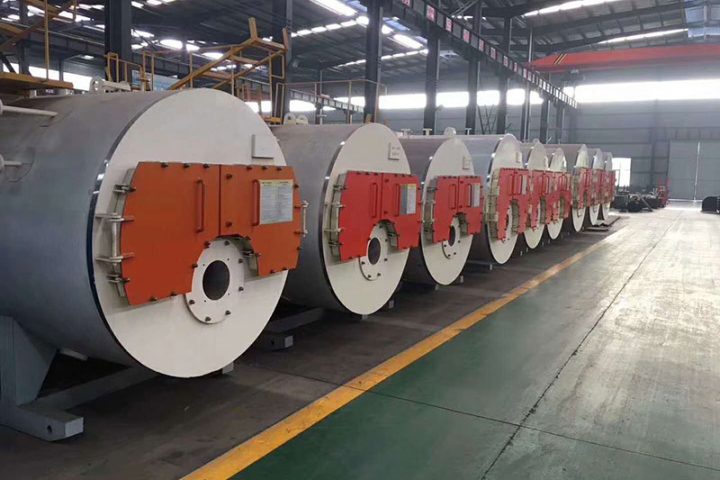
0.7-14 MW hot water
Hot Water Boiler Package for Greenhouse Horticulture
A hot water boiler package for greenhouse horticulture, sized 0.7-14 MW and delivering low-grade heat at 60-90 °C for root-zone he...
View detailsThe SZL15-1.25-T delivers 15 t/h of steam at 1.25 MPa and 194 °C from biomass pellets, wood chips, rice husk or palm kernel shell, at 88% efficiency (LHV) on an assembled chain-grate water-tube, two-drum platform.
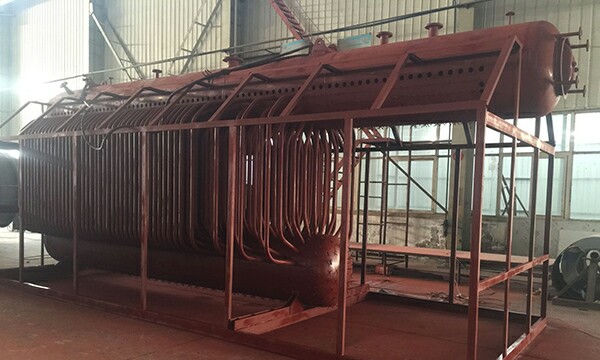
The SZL15-1.25-T is the 15 t/h member of the SZL biomass steam boiler series. At 1.25 MPa and 194 °C it produces saturated steam for process loads that sit above the range of small packaged units but below the step to the next size in the series. Typical duty is a continuous process steam demand with moderate swing between shifts: food and beverage processing, feed milling, textile finishing, paper converting, and small district or industrial park steam headers. The 15 t/h rating is the rated output; sustained demand should be planned around it rather than above it.
The unit is an assembled chain-grate water-tube boiler with a two-drum arrangement, designed for solid biomass. The chain grate carries the fuel bed and is matched to the fuel list: biomass pellets, wood chips, rice husk and palm kernel shell. Because these fuels differ in bulk density, ash content and burn-out behaviour, grate speed and air distribution are set per fuel at commissioning rather than fixed at a single value.
The published fuel consumption is 2557 kg/h at rated output, stated for biomass pellets at 4,000 kcal/kg and 88% efficiency on an LHV basis. The arithmetic is straightforward: 15 t/h of steam at 1.25 MPa and 194 °C represents a known enthalpy rise from feedwater to steam; dividing that heat output by the fuel heating value and by the 88% efficiency gives the hourly fuel mass. The figure is a design-point value for the stated fuel and efficiency. Wood chips, rice husk and palm kernel shell have different heating values and bulk densities, so the mass rate changes with the fuel actually burned; the boiler output does not.
At 15 t/h the furnace and grate have enough thermal inertia that part-load operation is stable, and the two-drum water-tube layout keeps circulation reliable as demand falls. Efficiency at part load depends mainly on excess air and grate speed; the control system trims both as load drops. Below roughly half load, expect a modest efficiency penalty and somewhat less stable bed conditions, which is normal for chain-grate firing. If the plant routinely runs far below 15 t/h, a smaller unit in the series is the better match.
The boiler is assembled and shipped as a unit, which shortens site work compared with field-erected designs. Planning should allow for the boiler body, the chain grate and its drive, the fuel feed and ash removal paths, the flue gas train to the stack, and access for inspection and tube cleaning. Foundation loading, clearances and headroom are project-specific and are confirmed against the arrangement drawing for the actual site; no fixed dimensions are quoted here.
Water-tube boilers at this pressure require treated feedwater. Softening alone is not sufficient; plan for demineralisation or reverse osmosis plus chemical conditioning, with continuous blowdown and bottom blowdown as required by the water chemistry. Carry out daily testing of hardness, alkalinity, dissolved oxygen and conductivity, and keep records. Poor water treatment is the most common cause of tube failure in boilers of this type, and it is entirely avoidable.
The control package covers combustion modulation, feedwater control to maintain drum level, and safety interlocks for low water, high pressure and flame failure. Grate speed and forced-draft air are linked so that fuel input follows steam demand. The interface is designed for connection to plant SCADA, with the exact burner and control configuration confirmed per project.
Choose the 15 t/h unit when peak process demand sits comfortably under 15 t/h with normal margin. Step down if the plant rarely exceeds 10 t/h, since a smaller grate and furnace will run closer to design and hold efficiency better. Step up only when genuine sustained demand or future expansion justifies it; oversizing a chain-grate boiler means long periods at low load, where efficiency and bed stability both suffer.
| Parameter | Value |
|---|---|
| Model | SZL15-1.25-T |
| Capacity | 15 t/h |
| Pressure | 1.25 MPa |
| Steam temperature | 194 °C |
| Fuel | Biomass pellets, wood chips, rice husk, palm kernel shell |
| Fuel consumption at rated output | 2557 kg/h (biomass pellets, 4,000 kcal/kg, 88% efficiency) |
| Efficiency | 88% (LHV basis) |
It is the rated steam output: 15 tonnes of steam per hour at 1.25 MPa and 194 °C. Plan sustained process demand below this figure so the boiler runs near design rather than continuously at its limit.
It is the design-point consumption for biomass pellets at 4,000 kcal/kg with 88% efficiency (LHV basis): the heat needed to raise 15 t/h of feedwater to steam at 1.25 MPa and 194 °C, divided by the fuel heating value and the efficiency. Other fuels on the list have different heating values, so the mass rate changes while output stays at 15 t/h.
Yes. The chain grate is designed for the listed solid biomass fuels, including rice husk and palm kernel shell. Grate speed and air distribution are set per fuel at commissioning, and the fuel mass rate differs from the pellet figure because heating values differ.
| Model | SZL15-1.25-T |
|---|---|
| Capacity | 15 t/h |
| Pressure | 1.25 MPa |
| Steam temperature | 194 °C |
| Feedwater temperature | Not specified in brief |
| Fuel | Biomass pellets, wood chips, rice husk, palm kernel shell |
| Fuel consumption at rated output | 2557 kg/h (biomass pellets at 4,000 kcal/kg, 88% efficiency) |
| Efficiency | 88% (LHV basis) |
| Burner/control | Chain-grate firing with combustion modulation, feedwater control and safety interlocks; configuration confirmed per project |
| Application | Process steam for food and beverage, feed milling, textile finishing, paper converting, and industrial park steam headers |
0.7-14 MW hot water
A hot water boiler package for greenhouse horticulture, sized 0.7-14 MW and delivering low-grade heat at 60-90 °C for root-zone he...
View details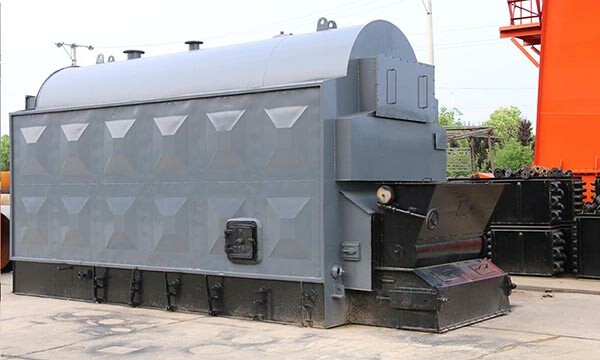
0.5-4 t/h
Batch-fired horizontal biomass boiler for wood, sawdust, rice husk and agro-residue, 0.5-4 t/h, manual firing door, natural or for...
View details4-20 t/h (2 t/h model also built)
Double-drum water-tube biomass boiler, 4-20 t/h, shipped in two sections with membrane walls and an S-pass dust drop.
View detailsExternal links open the publisher’s website and are provided for background reading.
Include the capacity (t/h or MW), fuel, working pressure and site country so the proposal matches your permit limits.
We appoint one or two partners per country to quote, deliver and service our boilers locally. Territory protection, factory pricing and commissioning support are part of the agreement.