Heating a greenhouse is an energy-intensive operation, and cost per square metre varies widely based on climate, structure, and operational strategy. Rather than quoting a single figure, this article breaks down the engineering factors that determine heat load and fuel consumption, so you can estimate your own cost per m². We cover heat load calculation, thermal screens, pipe rail systems, fuel choice, and night setback—each with practical numbers and assumptions.
Heat Load: The Foundation of Cost per m²
Heat load is the rate of energy required to maintain the desired inside temperature on the coldest design night. It is typically expressed in watts per square metre (W/m²) of greenhouse floor area. For a typical glass greenhouse in a temperate climate (e.g., Northern Europe), with an outside design temperature of -10°C and an inside target of 18°C, the heat load ranges from 150 to 250 W/m². This assumes a double-layer polyethylene or single glass cover with a U-value of 6.0 W/m²K and no thermal screen. With a thermal screen, the effective U-value can drop to 3.5 W/m²K, reducing heat load by up to 40%.
To calculate heat load: Q = U × A × ΔT, where U is the overall heat transfer coefficient (W/m²K), A is the exposed surface area (m²), and ΔT is the temperature difference (K). For a 1,000 m² greenhouse with U=6.0 W/m²K, A≈1,300 m² (including roof and walls), and ΔT=28 K, Q ≈ 218 kW, or 218 W/m². This is the peak demand your boiler must meet. The annual fuel consumption depends on climate data (heating degree days) and operational setpoints.
Thermal Screens: Reducing Heat Loss
Thermal screens (or shade screens) are deployed at night to reduce radiative and convective heat loss. A standard aluminized screen can reduce heat loss by 35–50%, depending on material and installation quality. For the example above, adding a screen with 40% savings lowers the heat load from 218 W/m² to about 131 W/m². This directly reduces fuel consumption and cost per m². Screens also help in summer by reducing cooling demand. The payback period for screen installation is typically 2–4 years, depending on fuel prices and climate.
Pipe Rail Systems: Efficient Heat Distribution
Pipe rails (also called heating pipes) are often used in Dutch-style greenhouses for both heating and transport. They consist of steel pipes (typically 51 mm or 60 mm diameter) running along the greenhouse bays at low level. The heat output per metre of pipe depends on water temperature and pipe diameter. For a 51 mm pipe at 80°C water temperature and 18°C air temperature, the heat output is approximately 200 W per metre. A typical layout might have 2 pipes per 1.6 m bay, giving about 250 W/m² of floor area at design conditions. Pipe rails provide gentle, uniform heat and allow low water temperatures (e.g., 50–60°C) when combined with good insulation, making them suitable for condensing boilers or waste heat recovery.
Fuel Choice: Impact on Operating Cost
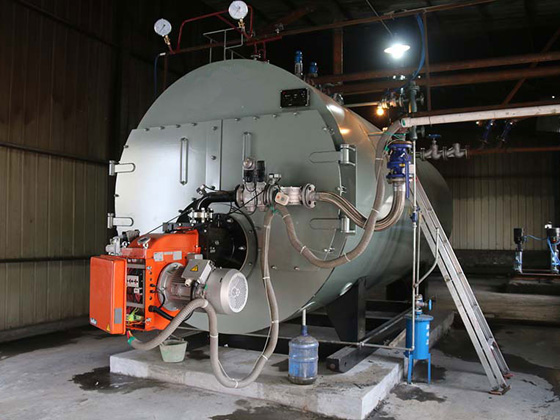
Fuel choice significantly affects cost per m². Common options include natural gas, heating oil, biomass, and electricity (heat pumps). Natural gas is often the most economical for large greenhouses, with boiler efficiencies of 90–95% (LHV). Biomass (e.g., wood chips) can be cheaper per kWh but requires more handling and maintenance. Heat pumps can achieve a coefficient of performance (COP) of 3–4, reducing primary energy use, but capital cost is higher. The table below compares typical fuel characteristics. Note that actual costs depend on local prices and should be calculated separately.
| Fuel Type | Typical Boiler Efficiency (LHV) | Energy Content | Relative Cost per kWh (indicative) |
|---|---|---|---|
| Natural Gas | 92–95% | ~10.5 kWh/m³ | Low |
| Heating Oil | 88–92% | ~10.0 kWh/L | Medium |
| Biomass (Wood Chips) | 80–85% | ~3.5 kWh/kg (at 35% moisture) | Low–Medium |
| Electricity (Heat Pump) | COP 3–4 | 1 kWh electricity → 3–4 kWh heat | High (but may be offset by COP) |
Assumptions: Efficiencies based on typical modern equipment; energy content at standard conditions. Relative cost is qualitative; actual costs vary by region and contract.
Night Setback: Saving Energy When Crops Allow
Lowering the greenhouse temperature at night can save significant energy. A common strategy is to reduce the setpoint by 2–4°C during the night, provided crop tolerance allows. Each 1°C reduction in average inside temperature saves about 6–8% of heating energy, depending on outside conditions. For a greenhouse with a base heat load of 150 W/m², a 3°C setback for 10 hours per night could reduce annual fuel consumption by 10–15%. However, be cautious with humidity-sensitive crops; sudden temperature drops can cause condensation and disease. Use a climate computer to implement gradual setbacks and monitor crop response.
Checklist: Optimising Heating Cost per m²
- Calculate your actual heat load using local design temperatures and greenhouse U-values.
- Install and maintain thermal screens; aim for at least 35% heat loss reduction.
- Consider pipe rail heating for uniform temperature and low water temperatures.
- Evaluate fuel options based on local availability, cost, and boiler efficiency.
- Implement night setback with crop-specific limits and humidity control.
- Regularly service boilers and check pipe insulation to maintain efficiency.
- Use a climate computer to optimise setpoints and monitor energy use.
What to send us for a proposal
To receive a tailored proposal for a greenhouse heating system, please provide the following information:
- Greenhouse location and climate data (design outside temperature, heating degree days).
- Greenhouse dimensions, cover material, and U-value.
- Desired inside temperature setpoints (day/night) and crop type.
- Existing heating system details (if any) and fuel availability.
- Any constraints on emissions, space, or noise.
Our engineering team will size the boiler and heating system accordingly. For a broader overview of boiler capacity and cost factors, see our capacity and cost guide. You can also browse our product range for suitable heating equipment.