

6-100 t/h
SZS Water-Tube Gas/Oil Steam Boiler, 6-100 t/h
Membrane-wall water-tube steam boiler with staged combustion and FGR, 6-100 t/h at up to 2.5 MPa and 98% efficiency with heat reco...
View detailsA 10 t/h water-tube boiler for a textile finisher travelled 8,000 km in two modules; the engineering story is the split, the packing and the re-erection.
The mill finishes cotton knit fabric: bleaching, reactive dyeing on 14 jet machines, stentering and calendering. Steam at 1.6 MPa and 204 °C feeds dyeing machines through 250 mm headers, a stentor range and a cylinder drying section. Average demand is 7.2 t/h, peak 9.4 t/h when three dye lots start together, and the mill runs 6,600 hours a year.
The specification called for a water-tube boiler rather than a fire-tube unit for two reasons. First, the dyehouse wants 1.6 MPa at the machine, and the pressure drop through 180 m of header and rotary joints leaves little margin at 1.25 MPa. Second, the mill’s gas supply varies in heating value between 34 and 39 MJ/Nm³ depending on the network, and a water-tube furnace with membrane walls tolerates that variation with less effect on flame shape than a fire-tube furnace with a fixed furnace volume.
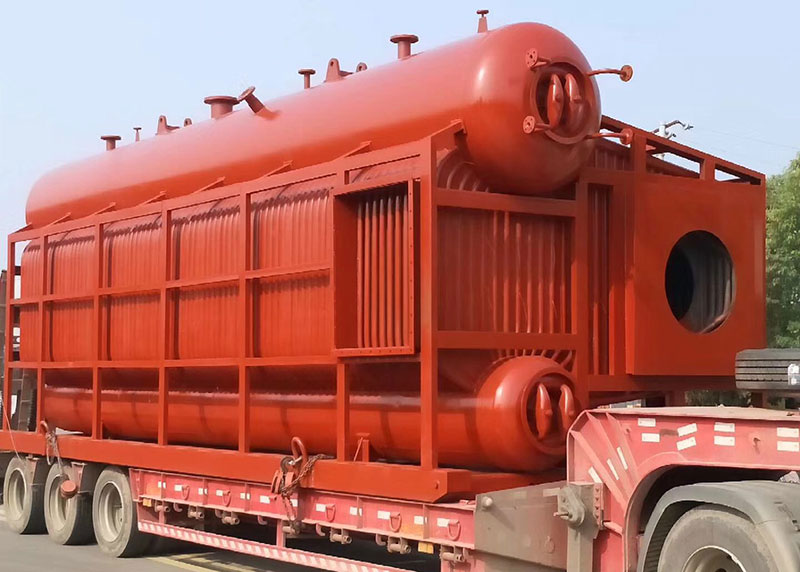
The SZS10-1.6-Q is a double-drum, longitudinal water-tube boiler with membrane water walls, an economiser and a condenser in the tail. As built for this order it leaves the works in two modules: the lower furnace and membrane walls as one 7.9 m by 3.4 m by 3.4 m unit of 40 t, and the drum, convective section and headers as a second unit of 26 t. The split is set by the widest road and the heaviest lift at the destination, not by the boiler’s thermodynamics.
Each module is braced internally against racking, with the membrane walls blocked to prevent movement in transit. The two modules went by road to Qingdao and reached Alexandria by break-bulk vessel in 26 days.
Boiler exports fail on paperwork more often than on engineering. This shipment carried a commercial invoice, packing list with net and gross weight per case, bill of lading, certificate of origin for the preferential tariff line, a fumigation certificate and ISPM 15 marks on every timber crate, marine insurance certificate, and a certificate of inspection issued before loading. The pressure-part file travelled with the goods: material certificates to EN 10028 for the shell plate, welding procedure specifications and welder qualification records, radiographic films and reports for the longitudinal and circumferential seams, a hydrostatic test certificate at 2.0 MPa, and the safety valve set-pressure record.
Two items were requested at destination and were not in the original file: a gas train drawing showing the double-block-and-vent arrangement, and a declaration that the burner’s NOx figure had been measured at 3% O2 reference. Both came from the works in four days. A shipment that cannot produce them sits at the port at the buyer’s cost.
Site assembly took twelve days with a six-person crew and a 100 t mobile crane. The lower module was set on a 200 mm plinth with 20 mm grout, levelled to 2 mm over 8 m, and the upper module landed on four dowel pins with the drum seams matched and the membrane wall panels welded in sequence from the centre outwards to control shrinkage. Welding was manual arc on site, with preheat at 120 °C on the drum stubs.
The hydrostatic test at 2.0 MPa held for 30 minutes with no loss of pressure and no seepage across 1,400 welded joints.
The boiler was commissioned in nine days, inside the 5-10 day allowance, with one day lost to a gas pressure regulator that had been set for 2 kPa instead of the specified 8 kPa. At 80% load the indirect efficiency test gave 97.6% on lower calorific value, with flue gas at 62 °C after the condenser, O2 at 3.4% and NOx at 28 mg/Nm³. Feedwater is Nile river water through a clarifier, sand filter, two-pass reverse osmosis and a mixed bed, with conductivity held below 0.2 µS/cm; the mill had planned softening only, and the water-tube boiler specification forced the upgrade.
After six months the mill reports steam at the dyehouse header within 0.04 MPa of set point through the day, and gas at 70 Nm³ per tonne of steam against a design figure of 69.5, an annual efficiency of 96.9% including part-load running. The difference is the feedwater temperature, which sits at 95 °C rather than the 104 °C assumed, because the condensate return from the stentor is lower than the mill expected. That is a one-line fix in the heat recovery, not in the boiler.
6-100 t/h
Membrane-wall water-tube steam boiler with staged combustion and FGR, 6-100 t/h at up to 2.5 MPa and 98% efficiency with heat reco...
View details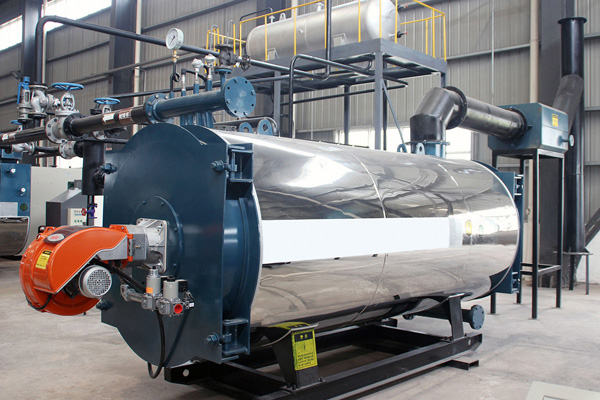
120-5,800 kW
Horizontal liquid-phase thermal oil heater, 120-5,800 kW, disc coil heating surface, 300-340 C at 0.8-1.0 MPa working pressure.
View details
10-50 t/h feedwater
Tray-type thermal deaerator, 10-50 t/h, removing oxygen to below 15 ppb and heating feedwater to 104-105 °C before it reaches the...
View detailsExternal links open the publisher’s website and are provided for background reading.
In two modules, the largest about 7.9 m by 3.4 m by 3.4 m at 40 t, on a break-bulk vessel. Refractory is shipped bagged rather than pre-cast to survive the voyage.
Invoice, packing list, bill of lading, certificate of origin, ISPM 15 fumigation marks, insurance, inspection certificate, and the full pressure-part file with material, welding, radiography and hydrostatic records.
Evaporator tubes run at higher heat flux with less water inventory than a fire-tube shell. Dissolved solids concentrate quickly, so demineralised water rather than softened water is the normal specification.
2024
Tanger, Morocco
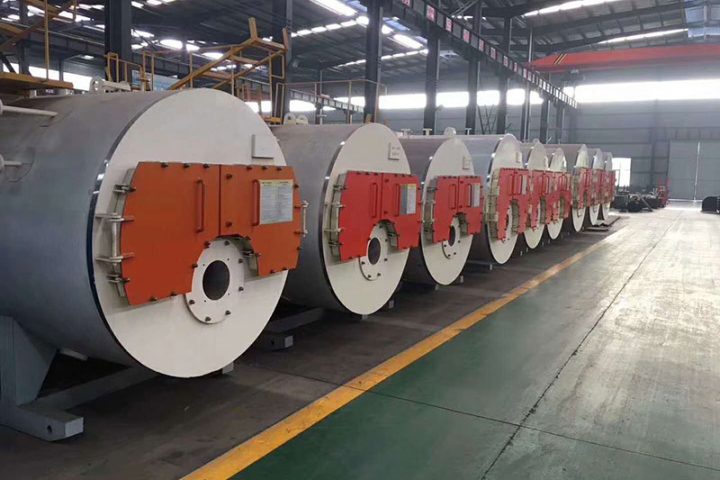
2.8 MW gas hot water boiler at 95/70 °C on natural gas, commissioned in 2024 in Tanger, Morocco: the paint shop's hot water demand...
View project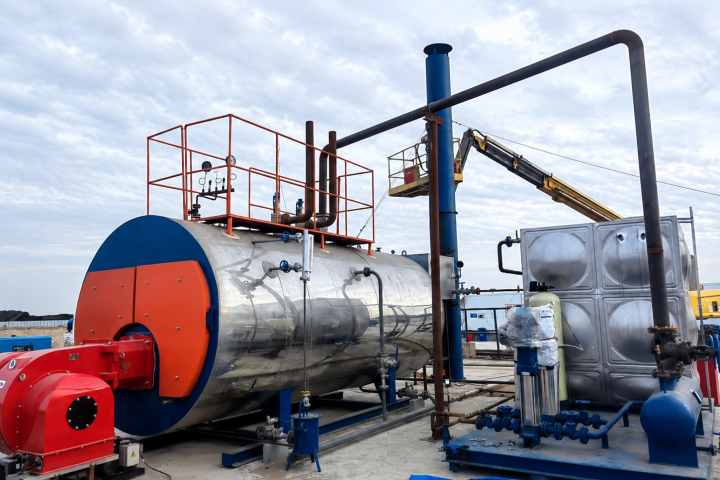
2021
Windhoek, Khomas District, Namibia
A gas-fired steam boiler was supplied for an alcohol distillation process in Windhoek, Khomas District, Namibia. The boiler provid...
View project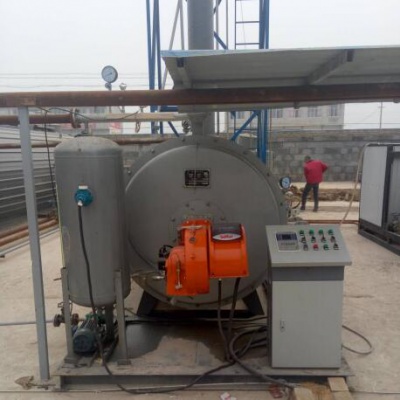
2025
Addis Ababa, Ethiopia
A 6 t/h biomass boiler on eucalyptus and cotton waste supplies dyeing and finishing steam in Addis Ababa, with a bag filter for th...
View projectWe appoint one or two partners per country to quote, deliver and service our boilers locally. Territory protection, factory pricing and commissioning support are part of the agreement.