

2-50 m³/h treated water
Boiler Feedwater Treatment System
Softener and deaerator package for boiler make-up, holding hardness below 0.03 mmol/L and oxygen below 0.05 mg/L.
View detailsFinned tube economizers and tubular air preheaters for fire-tube, water-tube and thermal oil systems, with cold-end protection against acid dew point.
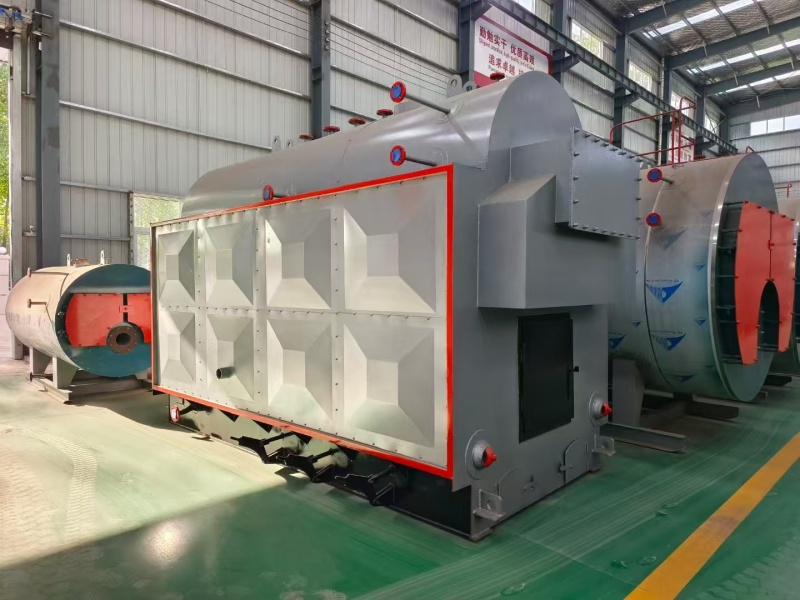
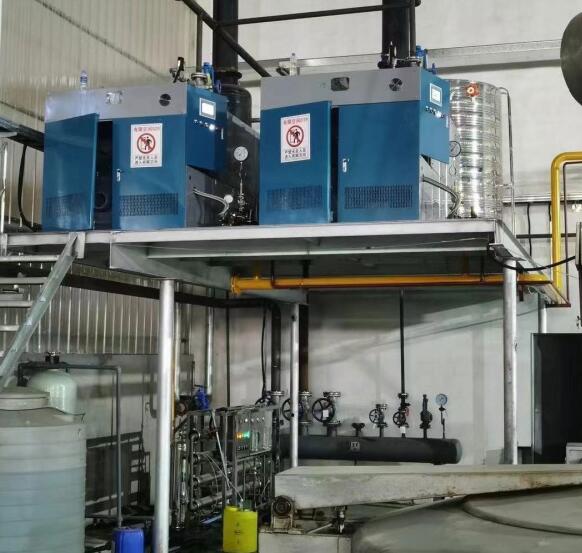
A shell boiler leaves at 150 to 250 °C, and every 15 to 20 °C taken out of that stream is worth roughly one point of efficiency. That makes tail-end heat recovery the cheapest efficiency a plant can buy once the burner is correctly tuned, and it is the same calculation whether the boiler is fire-tube, water-tube, biomass or a thermal oil heater. Two devices do the work: the economizer heats feedwater, and the air preheater heats combustion air. They can be fitted separately or in series, and both are supplied as flanged packages that sit between the boiler outlet and the chimney.
Neither device changes the combustion process. What they change is how much of the heat already paid for leaves through the stack, and that is why they pay for themselves faster than almost any other capital item in a boiler house.
The economizer is a counterflow bundle of steel tubes with spiral fins on the gas side. Fins exist because the gas-side coefficient is roughly a tenth of the water-side coefficient; extending the gas surface redresses the balance and lets a compact bundle do the work of a much larger bare-tube one. A 1 t/h boiler carries about 11.8 m² of surface, a 6 t/h about 56 m² and a 10 t/h about 132 m², which brings feedwater from 20 °C to between 76 and 104 °C and drops the exit gas by 30 to 50 °C.
Fin pitch follows the fuel. Natural gas gives a clean, dry stream and takes a close pitch; oil and heavy fuel oil need a wider pitch and soot blowers, because a fouled finned surface loses more performance than a fouled bare tube and is much harder to clean. Counterflow is the arrangement that extracts the most heat, since the coldest water meets the coldest gas, and it is also the arrangement that puts the tube metal closest to the acid dew point. That trade is settled by material and by bypass control, not by hope.
A tubular air preheater takes the same gas and heats combustion air from ambient to 60-120 °C. The gain is twofold: heat returns to the furnace, and warm air stabilises combustion at low load and reduces the risk of a cold, smoky flame on start-up. The cost is fan power, because the air-side pressure drop has to be paid for, and a footprint larger than an economizer of the same duty.
Where the two are combined, the economizer goes first in the gas path. The water side then takes the high-grade heat, and the air heater works against a lower gas temperature, which reduces the air-side surface needed.
Sulphur in the fuel burns to sulphur dioxide and a small fraction of it to sulphur trioxide, which with water vapour forms sulphuric acid. The acid dew point of that mixture is typically 120 to 150 °C, and any metal surface below it collects acid. The failure is not gradual: tubes at the cold end perforate within two or three seasons, and the pinholes put water into the gas path.
Three defences work together. Keep the cold-end metal above the dew point by bypassing part of the water or air flow at low load, which is what a three-way valve on the water side is for. Use a corrosion-resistant material at the cold end: ND steel, cast iron gilled tubes or an enamel coating. And keep the water-side inlet above about 60 °C in normal running, which a feedwater tank with a steam coil achieves without any extra control. On gas with negligible sulphur the limit is water dew point rather than acid dew point, and the cold end can run lower.
The arithmetic is worth doing before the order, because it decides the size. Take a 10 t/h gas-fired boiler burning 700 Nm³/h for 4,000 hours a year, and an economizer that cuts the exit gas from 200 °C to 150 °C. Recoverable heat is the gas mass flow times specific heat times 50 K, which at these figures is about 2% of fuel input: roughly 15 Nm³/h, or 60,000 Nm³ a year.
Multiply that by the local gas price to get the annual saving, then divide the installed cost, including ductwork, valves, insulation and labour, by the saving. At industrial tariffs the answer usually falls between 8 and 24 months for a unit of this size, and shorter where the boiler runs more hours. Two caveats: the saving only holds if the boiler actually runs at the assumed load, and the added gas-side resistance must be checked against the existing fan, because a fan upgrade can consume a large part of the gain.
Yes, provided there is space between the outlet and the chimney and the fan has margin for the extra resistance. The flanged package is sized from a flue gas measurement at the actual operating load.
Not if the cold-end metal stays above the acid dew point. That is why the cold-end rows use ND steel, why a bypass is fitted, and why the water-side inlet is held above about 60 C.
Typically 2 to 4 points, depending on exit gas temperature and how much surface is installed. The gain is capped by the dew point limit on sulphur-bearing fuel.
| Boiler capacity served | 1 t/h | 2 t/h | 4 t/h | 6 t/h | 10 t/h |
|---|---|---|---|---|---|
| Economizer heating surface | 11.8 m² | 22.6 m² | 32.2 m² | 56.2 m² | 132.2 m² |
| Feedwater in / out | 20 / 90 °C | 20 / 78 °C | 20 / 90 °C | 20 / 76 °C | 20 / 104 °C |
| Exit gas temperature | 150 °C | 148 °C | 146 °C | 145 °C | 140 °C |
| Gas-side resistance | 250 Pa | 280 Pa | 300 Pa | 320 Pa | 350 Pa |
| Cold-end material | ND steel | ND steel | ND steel | ND steel | ND steel |
2-50 m³/h treated water
Softener and deaerator package for boiler make-up, holding hardness below 0.03 mmol/L and oxygen below 0.05 mg/L.
View details
5,000-200,000 Nm³/h
Cyclone, pulse-jet bag filter and ESP selection for coal and biomass boilers, sized 5,000-200,000 Nm³/h.
View detailsExternal links open the publisher’s website and are provided for background reading.
Include the capacity (t/h or MW), fuel, working pressure and site country so the proposal matches your permit limits.
We appoint one or two partners per country to quote, deliver and service our boilers locally. Territory protection, factory pricing and commissioning support are part of the agreement.