
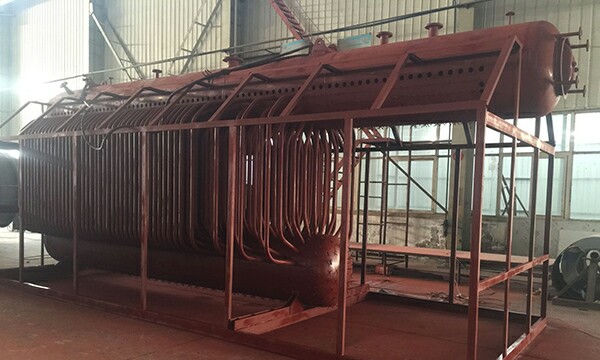
15 t/h
15 t/h Biomass Steam Boiler SZL15-1.25-T
The SZL15-1.25-T delivers 15 t/h of steam at 1.25 MPa and 194 °C from biomass pellets, wood chips, rice husk or palm kernel shell,...
View detailsHorizontal chain-grate biomass thermal oil heater, 700-7000 kW, liquid phase to 320 °C at under 1.0 MPa, with coil banks matched to the fuel.
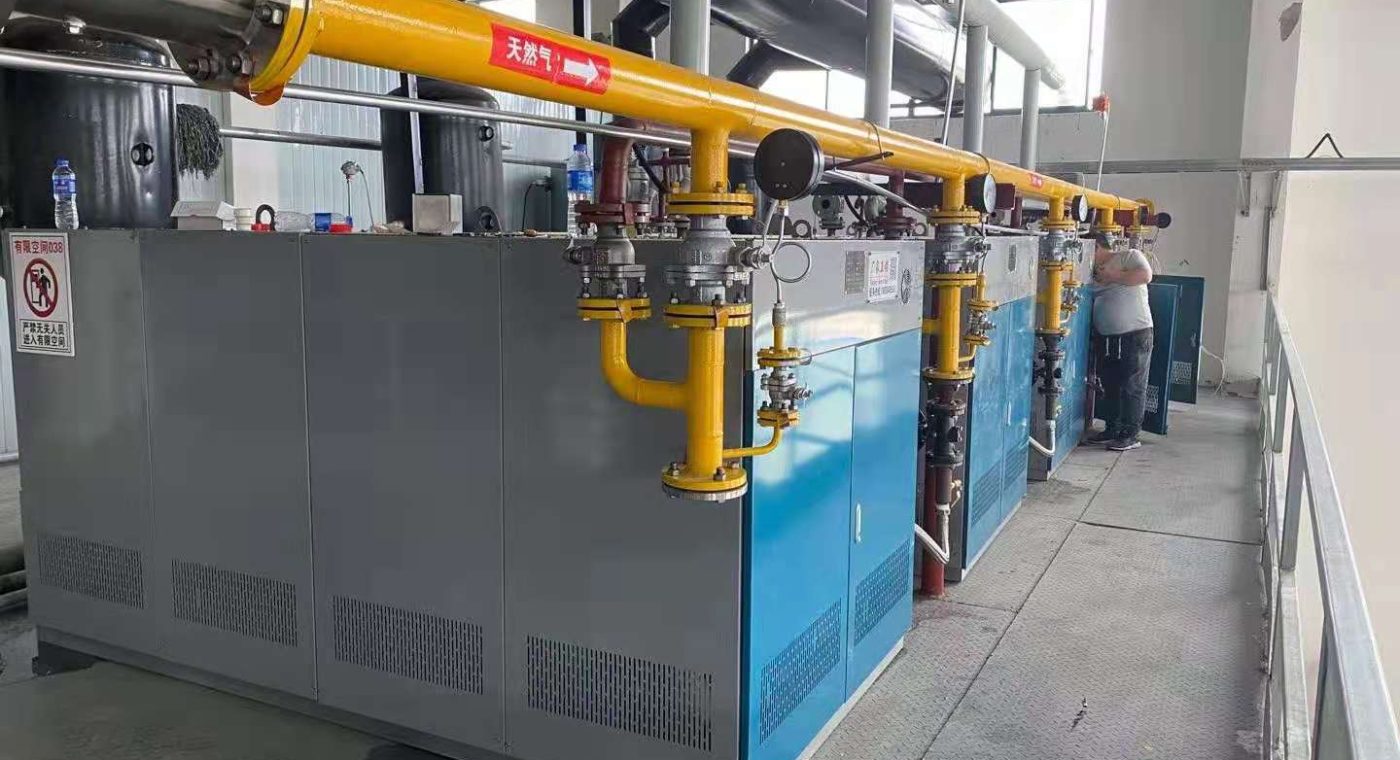
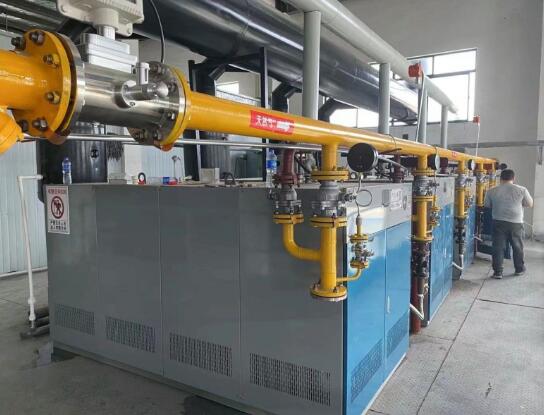
The YGL is a horizontal, chain-grate fired organic heat carrier heater for 700 to 7000 kW, delivering oil at 300 to 320 °C in the liquid phase at a design pressure of 0.6 to 1.0 MPa. Fuel is spread on a chain grate inside a refractory furnace; the hot gas crosses close-pitched coil banks in the convection section, then an air preheater, and leaves through an induced-draught fan and a dust collector. The coils are the pressure part, arranged as an inner radiant ring around the furnace exit and outer convective rings, so gas scrubs the tubes.
Delivering 320 °C with a boiler would need about 11 MPa. Oil does it at a fraction of that because it never boils, so tubes are thin-walled, flanges standard and the plant is not a steam boiler house. That is why thermal oil dominates press, stenter and reactor heating, and why the heater is only half of the installation.
Oil degrades by bulk overheating and by local film overheating at the tube wall, and the second kills charges. Film temperature depends on heat flux and velocity, so coils are sized generously and the pump keeps tube velocity between 1.5 and 2.5 m/s at the lowest expected load.
Flow follows from duty and temperature drop. At a 25 K rise, with a specific heat near 2.2 kJ/kg·K and a density of 850 kg/m³, a 700 kW heater moves about 54 m³/h and a 7000 kW heater about 540 m³/h. Pushing the small unit to a 50 K rise to save pump power halves the flow and doubles the wall-to-oil temperature difference: the oil cracks, coke lays down inside the coil, and the wall runs hotter until the tube fails.
The expansion tank sits at the highest point, holds 8 to 10 per cent of the charge and sets the pump suction head. It is tied to the loop by a small-bore line so that it stays cool, and vented to a safe place because hot oil vapour is flammable. A deaerator takes off water and light ends; filters on suction and return catch the carbon that forms.
Start-up has a sequence that is not optional. Circulate cold oil for thirty minutes to prove flow and fill the coils, raise the outlet at 20 to 30 K per hour, hold at 120 to 130 °C while water boils off, then climb to working temperature. Skipping the hold is the usual cause of tripping on pump cavitation and of oil foaming out of the expansion tank.
Chips should be screened to about 30 mm and dried to 30 per cent moisture or below; pellets at 8 to 10 per cent behave like a high-volatile coal and want a thinner, faster bed; rice husk at 12 to 18 per cent ash needs a deeper bed, slower grate travel and a rear arch that holds flame over the fuel. Primary air is split into four to six compartments under the grate, secondary air at 10 to 15 per cent enters above the bed, and oxygen is trimmed to 4 to 6 per cent at the outlet.
Efficiency is 78 to 84 per cent on lower calorific value. Exit gas at 150 to 180 °C carries 8 to 12 points, unburnt carbon in slag and fly ash 3 to 6, fuel moisture 3 to 5, radiation 1 to 2. An air preheater heating combustion air to 120 to 150 °C recovers 2 to 3 points on wet fuel and pays above 3,000 hours.
At 7000 kW it burns about 2,250 kg/h of 14 MJ/kg fuel, so at 1 to 3 per cent ash it produces 22 to 67 kg/h — a continuous conveyor duty. Clinker forms where the bed runs too hot or too deep; the first sign is a falling furnace temperature with rising oxygen, as the bed bridges and air short-circuits.
The annual routine is oil analysis for acidity, viscosity and flash point, a check of the expansion tank blanket, a coil inspection through the access covers, and a grate and refractory survey. Coil cleaning every two to three years on husk restores the convective surface that fly ash quietly insulates.
| Size class | Heat output | Oil flow | Fuel | Design pressure | Oil temperature |
|---|---|---|---|---|---|
| YGL-700 | 700 kW | 54 m³/h | 225 kg/h | 0.6 MPa | 300 °C |
| YGL-2100 | 2100 kW | 162 m³/h | 675 kg/h | 0.6 MPa | 320 °C |
| YGL-4700 | 4700 kW | 362 m³/h | 1510 kg/h | 0.8 MPa | 320 °C |
| YGL-7000 | 7000 kW | 540 m³/h | 2250 kg/h | 1.0 MPa | 320 °C |
Steam at 300 °C needs about 8.6 MPa and a boiler house to match. Oil reaches the same temperature at 0.6 to 1.0 MPa in thin-walled tubing, with no water treatment, no blowdown and no trap losses.
A flow switch trips the firing within seconds and the coil is protected by its thermal mass for a short period. Restarting requires circulation to be re-established before heat is applied; the interlock is the most important safety device on the package.
Yes, with a deeper bed and more ash space. Husk at 12 to 18 per cent ash produces several times the ash volume of pellets, so the ash conveyor and the fly ash hoppers have to be sized for it.
| Size class | YGL-700 | YGL-1400 | YGL-2100 | YGL-3500 | YGL-4700 | YGL-7000 |
|---|---|---|---|---|---|---|
| Heat output | 700 kW | 1400 kW | 2100 kW | 3500 kW | 4700 kW | 7000 kW |
| Heat output | 60×10⁴ kcal/h | 120×10⁴ kcal/h | 180×10⁴ kcal/h | 300×10⁴ kcal/h | 400×10⁴ kcal/h | 600×10⁴ kcal/h |
| Oil circulation at 25 K | 54 m³/h | 108 m³/h | 162 m³/h | 270 m³/h | 362 m³/h | 540 m³/h |
| Fuel at 14 MJ/kg | 225 kg/h | 450 kg/h | 675 kg/h | 1125 kg/h | 1510 kg/h | 2250 kg/h |
| Design pressure | 0.6 MPa | 0.6 MPa | 0.6 MPa | 0.8 MPa | 0.8 MPa | 1.0 MPa |
| Maximum oil temperature | 300 °C | 310 °C | 320 °C | 320 °C | 320 °C | 320 °C |
15 t/h
The SZL15-1.25-T delivers 15 t/h of steam at 1.25 MPa and 194 °C from biomass pellets, wood chips, rice husk or palm kernel shell,...
View details10 t/h
The SZL10-1.25-T is a 10 t/h, 1.25 MPa biomass steam boiler delivering 194 °C steam at 88% efficiency. An assembled chain-grate, t...
View details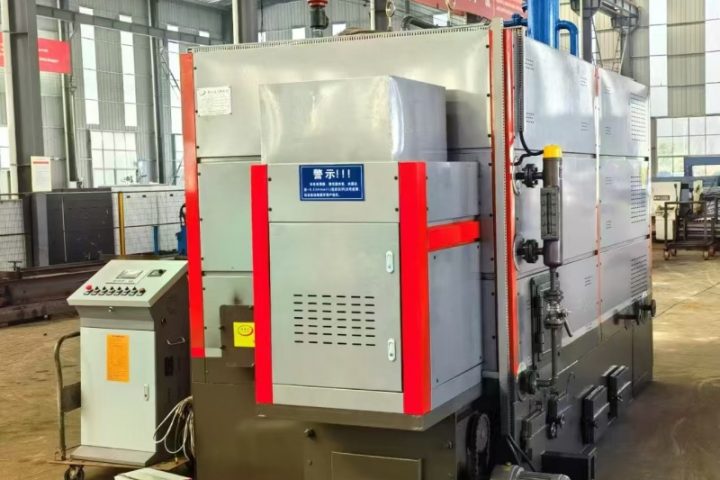
70-700 kW (0.06-0.6 MW)
Small coal or biomass bathhouse boiler, 70-700 kW, with secondary-air smokeless combustion and an integrated hot water tank for ru...
View detailsExternal links open the publisher’s website and are provided for background reading.
Include the capacity (t/h or MW), fuel, working pressure and site country so the proposal matches your permit limits.
We appoint one or two partners per country to quote, deliver and service our boilers locally. Territory protection, factory pricing and commissioning support are part of the agreement.