
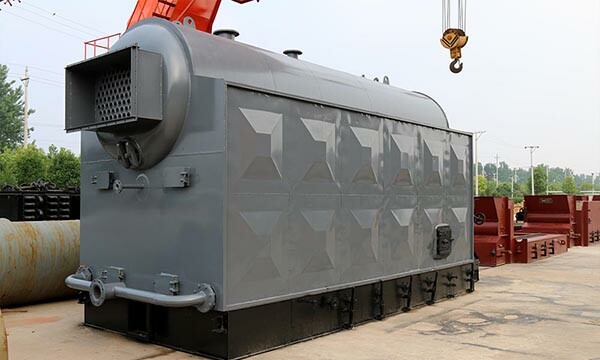
10 t/h
10 t/h Coal Steam Boiler DZL10-1.25-AII
The DZL10-1.25-AII is a 10 t/h single-drum chain-grate coal steam boiler producing 1.25 MPa steam at 194 °C, with threaded smoke t...
View detailsOne pressure shell with two combustion systems: coal with gas, biomass or electric elements, 0.5-20 t/h, switched as fuel supply or policy changes.
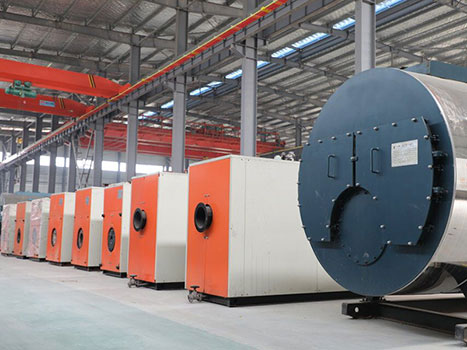
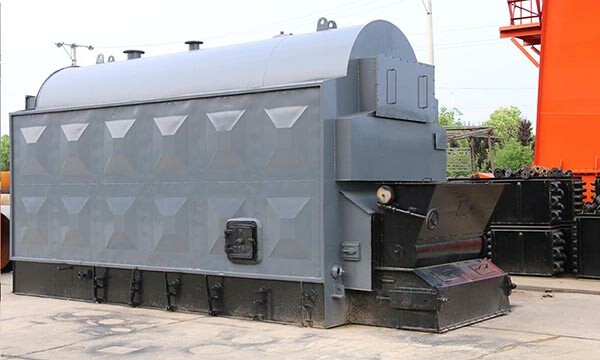
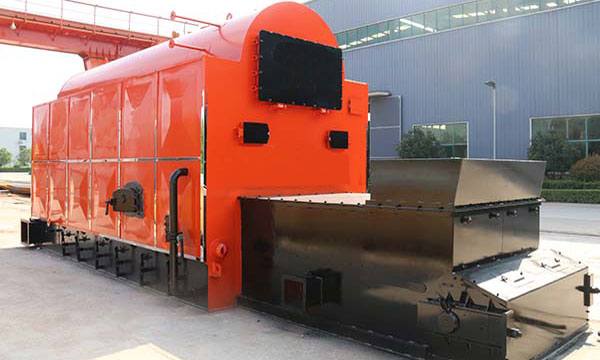
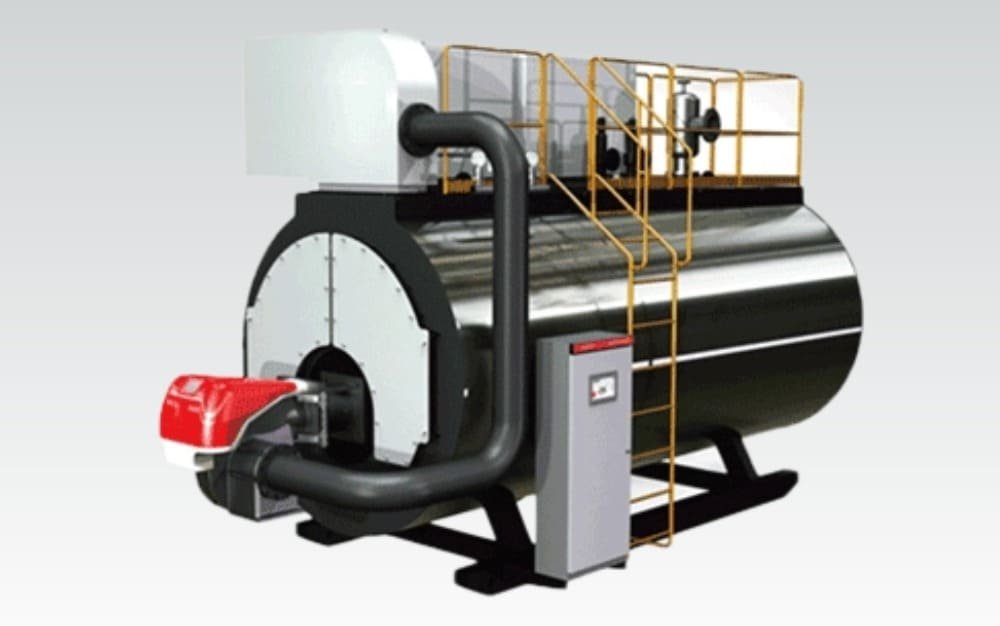
A dual-fuel boiler carries two combustion systems on one pressure part: coal with gas, coal with biomass, or coal with electric elements. Each pair exists because the plant expects its fuel to change inside the boiler’s life: a gas main is coming, coal is being restricted, or the fuel that is cheap at night is not the one available by day.
Ratings run from 0.5 to 20 t/h at 1.0 to 1.25 MPa: one shell, one set of safety valves, one water treatment plant and one chimney, with a grate and a burner or an element bundle sharing the furnace.
Each system must reach full load on its own, because the point of the second fuel is that the first may be gone. That sets the furnace volume at the larger of the two requirements: coal on a grate needs 350 to 500 kW/m³ and a long residence time, gas needs 1.5 to 2 MW/m³. Sizing for coal leaves a furnace two to three times larger than the gas flame needs, and the burner fires into a chamber whose walls sit further away than its flame shape assumes.
The consequences are measurable: radiation loss rises half a point to a point, the burner runs below its design heat-release density, and the passes are longer than the gas duty requires, so the flue gas reaches the economiser cooler than optimum. A dual-fuel unit on gas typically makes 90 to 92 per cent where a dedicated gas boiler of the same rating makes 94 to 95.
A coal-fired shell normally uses two passes: furnace, then a single bundle, with a large reversal chamber that slows the gas and lets fly ash drop into a hopper before it reaches the tubes. A gas-fired shell uses three passes because the extra turn takes another 30 to 40 K out of the flue gas and buys two points of efficiency.
Three passes give the gas firing its efficiency but put a cool third bundle where coal ash settles and blocks, so the unit needs steam sootblowers and a water wash every few thousand hours. Two passes keep the coal side serviceable and give up two points on gas, and the ash hopper must be reachable whichever is chosen.
The transition period is where these units actually live, often for years. A common pattern is coal at night and gas by day: coal is cheaper, gas is cleaner, and the daytime air-quality readings and neighbours are the ones that matter. The boiler is switched at the shift change, twice a day, and the operators get good at it.
That pattern has a cost the tariff comparison misses. Every changeover is a purge and a warm-up: five air changes through the furnace before the gas burner may light, then 20 to 30 minutes bringing the shell up before it accepts load. The coal fire must be burnt out or sealed off, because a smouldering bed under a gas flame is an uncontrolled ignition source.
One burner management system must own both fuels, and its first rule is that they never fire together. The gas train carries double block-and-bleed valves with position feedback and valve proving; the coal side carries grate and damper position switches and fire detection, usually flue temperature plus oxygen. Changeover to gas requires proof the coal fire is out, by the flue cooling below a set point after a timed burn-out or by an oxygen reading at the top of the furnace. Changeover to coal requires the gas valves proved closed and the furnace purged.
Two independent systems with two controllers is the failure mode to avoid: sooner or later an operator lights one while the other still fires, and the furnace over-pressures through the firing door. The interlocks also belong in the written procedure, because a boiler that can run on two fuels will be run on two by a tired man at three in the morning if the procedure allows it.
The trap is the phrase itself. A dual-fuel boiler is one furnace doing two jobs well enough to be useful, not two boilers in one shell. Each fuel runs 2 to 4 points below a dedicated unit, the maintenance scope is the union of both systems, and the spares inventory doubles: grate bars, burner, gas train and, on the electric version, element bundles. It earns its place where the fuel future is genuinely uncertain and a second boiler house is impossible. Where the fuel is already decided, a dedicated unit is the better machine.
No, and the interlocks must enforce it. Two flames in one furnace give an uncontrolled heat release and over-pressure through the firing door. One burner management system owns both trains, with valve proving on the gas side and fire-out proof on the coal side.
Twenty to forty minutes including purge and warm-up. The furnace gets five air changes before the gas burner may light, and the coal fire must be burnt out or sealed off first, which is the slow part if the bed is deep.
It is the version with the widest efficiency gap, since elements sit in a furnace sized for a coal flame. It suits a site that needs a policy-compliant backup for a few hundred hours a year, not one that intends to run on electricity for a full shift.
| Rated evaporation | 1 t/h | 2 t/h | 4 t/h | 6 t/h | 10 t/h | 20 t/h |
|---|---|---|---|---|---|---|
| Coal burn at 80% | 153 kg/h | 307 kg/h | 614 kg/h | 920 kg/h | 1,534 kg/h | 3,068 kg/h |
| Coal efficiency | 80-82% | 80-82% | 81-83% | 81-83% | 82-84% | 82-84% |
| Gas efficiency | 89-91% | 90-91% | 90-92% | 90-92% | 91-92% | 91-92% |
| Furnace volume | 2.5 m³ | 5 m³ | 10 m³ | 14.5 m³ | 24 m³ | 48 m³ |
| Gas burner turn-down | 4:1 | 4:1 | 5:1 | 5:1 | 5:1 | 5:1 |
10 t/h
The DZL10-1.25-AII is a 10 t/h single-drum chain-grate coal steam boiler producing 1.25 MPa steam at 194 °C, with threaded smoke t...
View details6 t/h
The DZL6-1.25-AII is a 6 t/h single-drum chain-grate coal steam boiler delivering 1.25 MPa steam at 194 °C. It burns bituminous co...
View details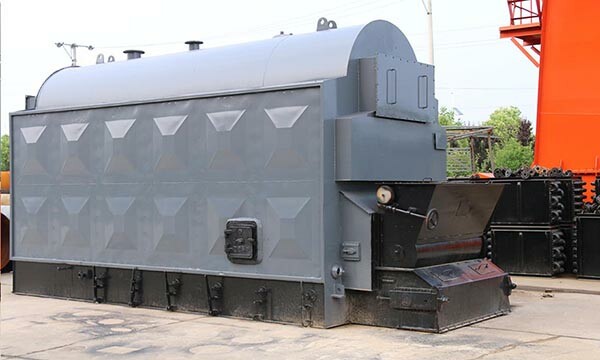
0.7-5.6 MW
Atmospheric coal-fired hot water boiler, 0.7-5.6 MW, with a water-cooled drum roof and a two-wing gas pass.
View detailsExternal links open the publisher’s website and are provided for background reading.
Include the capacity (t/h or MW), fuel, working pressure and site country so the proposal matches your permit limits.
We appoint one or two partners per country to quote, deliver and service our boilers locally. Territory protection, factory pricing and commissioning support are part of the agreement.