
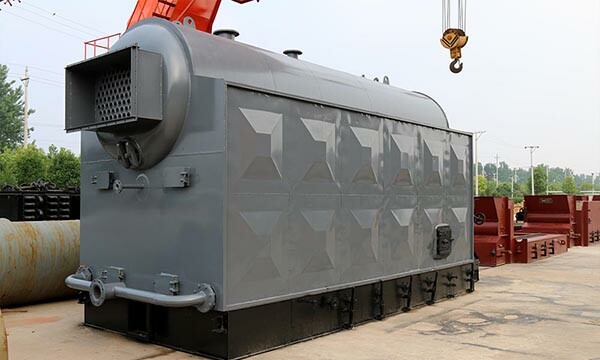
4 t/h
4 t/h Coal Steam Boiler DZL4-1.25-AII
The DZL4-1.25-AII is a 4 t/h single-drum chain-grate coal steam boiler producing 1.25 MPa steam at 194 °C. It fires bituminous coa...
View detailsDouble-drum chain-grate coal boiler, 0.5-4 t/h packaged, for AII bituminous coal at 0.7-1.6 MPa.
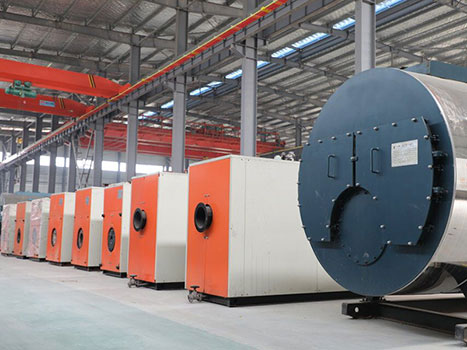
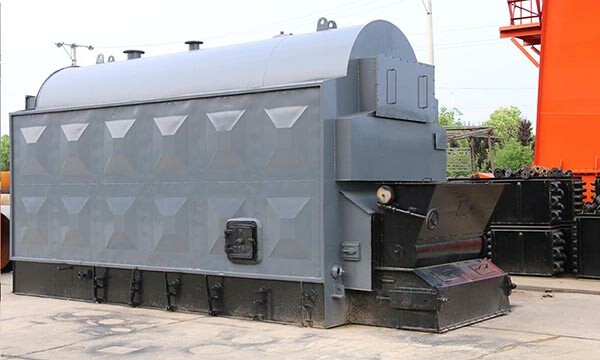
DZ(H)L covers the small end of the coal range: a horizontal boiler with an upper and a lower longitudinal drum, a convective tube bank between them, water walls on both sides of the furnace and a light chain grate underneath. The packaged models in the table run 0.5-4 t/h at 0.7-1.6 MPa; the same layout with a longer grate extends to 40 t/h and beyond. Coal enters from the hopper through a gate, burns on the grate, and gas turns through the rear arch into the tube bank, then the economiser, dust collector and chimney.
The upper drum carries the steam separation and surface blowdown arrangements, the lower drum the periodic blowdown. Separating those duties is what lets the boiler hold steam quality on a fuel whose ash and moisture vary from delivery to delivery.
The design fuel is AII bituminous coal with a lower calorific value of at least 17,750 kJ/kg, volatiles above 38.5% and ash up to 32.4% – roughly a 4,200 kcal/kg coal with a long flame that ignites readily on a chain grate but needs furnace volume to finish burning. Coal is screened to 0-25 mm; fines below 1 mm lift off the bed and burn in suspension, while lumps above 25 mm arrive at the grate end still black.
The coal gate sets bed thickness, normally 100-150 mm, and grate speed is trimmed so the burn-out point falls 300-500 mm before the grate end. Four to six air compartments under the grate are adjusted individually, because drying, ignition, reduction and ash zones need very different air quantities. Excess air runs 1.35-1.5 at the economiser outlet, higher than a gas boiler because the grate leaks and the flame is diffusion-controlled.
The front arch stands at 45° and the rear arch is low, long and reverse-inclined at its exit. The pair radiates onto fresh coal at the gate and produces the inverted alpha flame that stabilises ignition at low load. Both arches are cast in one piece on water-wall supports, which avoids the annual patching that loose brick arches need and keeps the furnace shape constant over the campaign.
Rated efficiency is 80-84%. Slag leaving the grate carries 8-12% carbon and fly ash 15-25%, together costing 3-6 points. That is the single largest difference against a gas boiler, which has no ash at all. Fly-ash reinjection can recover 1-2 points by returning carbon to the furnace, but it raises the dust load on the collector and only pays where the collector has margin.
The other losses are familiar: 8-12% up the stack at 140-180 °C, 3-5% in fuel moisture, 1-2% by radiation. An economiser is the standard remedy and pays back quickly; beyond that, matching grate speed to coal and keeping the arches intact does more than any add-on.
A 4 t/h boiler at 6,000 hours makes 24,000 t of steam. At 82% and a 17,750 kJ/kg coal that is about 4,300 t of coal a year, so one point is roughly 50 t of fuel – and a 3 mm scale layer in the tubes can cost several times that.
Sulphur shapes the back end. Each 1% of sulphur in the coal produces roughly 2,000 mg/Nm³ of SO2 before control, so a 1% coal needs either a tight limestone regime or a wet scrubber to meet a 200 mg/Nm³ limit. Limestone injected into the bed at Ca/S 2-2.5 removes 50-70% at low capital cost; a wet scrubber reaches 90-95% but adds a wastewater stream.
Particulate goes through a cyclone and a pulse-jet bag filter, holding under 30 mg/Nm³ and usually under 20. Bag media must suit 140-180 °C gas, so PPS or PTFE is normal; the dew point rises with sulphur and moisture, and the casing is insulated to stay above it. NOx from a chain grate sits at 200-300 mg/Nm³ with air staging, and SNCR is added where the limit is 150-200 mg/Nm³.
Slag drops into the hopper at the grate end and a screw conveyor takes it away; fly ash falls out in the economiser and collector hoppers. The carbon content of the fly ash decides whether it can go to a cement plant or must be landfilled.
| Item | DZH0.5 | DZH1 | DZH2 | DZH4 |
|---|---|---|---|---|
| Rated evaporation | 0.5 t/h | 1 t/h | 2 t/h | 4 t/h |
| Rated pressure | 0.7/1.0 MPa | 0.7/1.0/1.25 MPa | 0.7/1.0/1.25 MPa | 1.25/1.6 MPa |
| Steam temperature | 170/184 °C | 170-194 °C | 170-204 °C | 194/204 °C |
| Grate area | 1.28 m² | 2.1 m² | 3.36 m² | 5.2 m² |
| Exhaust gas temperature | 179 °C | 163-165 °C | 125-137 °C | 144/145 °C |
| Shipping weight | 8 t | 10-11 t | 14-15 t | 22 t |
AII bituminous with a lower calorific value of at least 17,750 kJ/kg, volatiles above 38.5% and ash up to 32.4%, screened to 0-25 mm. Lower-volatile coals need a different arch and are handled case by case.
Limestone injected into the bed at Ca/S 2-2.5 removes 50-70% at low cost. Where the limit is tighter or the coal exceeds about 1.5% sulphur, a wet scrubber reaches 90-95%.
Unburnt carbon in slag and fly ash costs 3-6 points, flue gas 8-12%, fuel moisture 3-5% and radiation 1-2%. A gas boiler has no ash and a lower exit loss, which is how it reaches 95%+.
| Model | DZH0.5 | DZH1 | DZH2 | DZH4 |
|---|---|---|---|---|
| Rated evaporation | 0.5 t/h | 1 t/h | 2 t/h | 4 t/h |
| Rated pressure | 0.7/1.0 MPa | 0.7/1.0/1.25 MPa | 0.7/1.0/1.25 MPa | 1.25/1.6 MPa |
| Steam temperature | 170/184 °C | 170-194 °C | 170-204 °C | 194/204 °C |
| Grate area | 1.28 m² | 2.1 m² | 3.36 m² | 5.2 m² |
| Exhaust gas temperature | 179 °C | 163-165 °C | 125-137 °C | 144/145 °C |
| Shipping weight | 8 t | 10-11 t | 14-15 t | 22 t |
4 t/h
The DZL4-1.25-AII is a 4 t/h single-drum chain-grate coal steam boiler producing 1.25 MPa steam at 194 °C. It fires bituminous coa...
View details2 t/h
The DZL2-1.25-AII is a 2 t/h single-drum chain-grate steam boiler rated at 1.25 MPa and 194 °C, firing bituminous coal, anthracite...
View details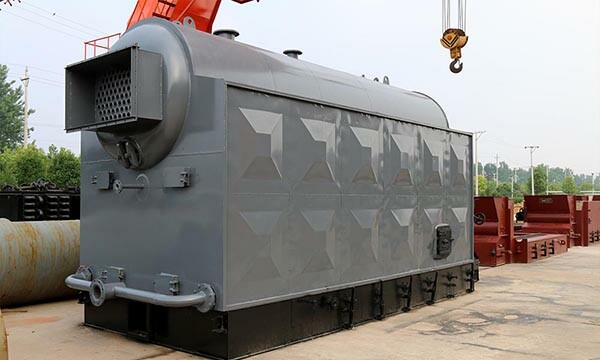
2-20 t/h
Assembled water-tube coal boiler, 2-20 t/h at 1.25-2.5 MPa, with six air compartments and an S-pass convective bank.
View detailsExternal links open the publisher’s website and are provided for background reading.
Include the capacity (t/h or MW), fuel, working pressure and site country so the proposal matches your permit limits.
We appoint one or two partners per country to quote, deliver and service our boilers locally. Territory protection, factory pricing and commissioning support are part of the agreement.