
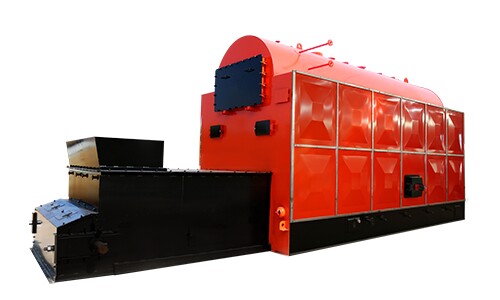
2-10 t/h (series to 100 t/h)
DZL Chain Grate Biomass Steam Boiler
Packaged three-pass biomass steam boiler, 2-10 t/h at up to 1.6 MPa, with a light chain grate and water-cooled arches.
View detailsDust, SO2 and NOx retrofits compared on efficiency and footprint, the real ceiling for a chain-grate boiler, and how to phase the work.
Boiler emission limits for coal and biomass firing are written as concentrations, not tonnes: dust, sulphur dioxide and nitrogen oxides in milligrams per normal cubic metre, dry, corrected to a reference oxygen level, usually 9% for solid fuel. In most Chinese jurisdictions the numbers that matter are dust 20 mg/m³ (10 in key regions), sulphur dioxide 50 mg/m³ (35 in key regions) and nitrogen oxides 150-200 mg/m³, with 50-100 demanded in the stricter areas. A boiler that was compliant in 2010 at 80/300/400 is now two to eight times over.
A reading at 11% oxygen converted to 9% is multiplied by (21-9)/(21-11), or 1.2, so 25 mg becomes 30 mg. Reports that disagree by 20% often differ only in the correction, not in the boiler.
Fuel switch. Coal to gas removes dust and sulphur dioxide almost entirely and, with a low-NOx burner in an adequate furnace, reaches 30-50 mg/m³ of nitrogen oxides. It also removes the grate, the ash handling and most of the labour. The cost is fuel price per gigajoule plus a burner and gas train; the efficiency gain of 5-8 points pays part of it back. It is the only option that solves all three pollutants at once.
Low-NOx burner and air staging. On a chain-grate boiler, staged air and flue gas recirculation cut nitrogen oxides by 15-30%, from 300 to 220-250. It costs 0.5-1.0 point of efficiency, because a cooler primary zone raises carbon in ash from about 10% to 15-20%. Cheapest combustion measure, rarely sufficient alone.
SNCR. Urea or ammonia injected at 850-1,050 °C reduces nitrogen oxides by 40-60% at a reagent ratio of 1.0-2.0. Capital cost is low; the footprint is a tank and lances. The problems are ammonia slip of 5-15 mg/m³, which forms ammonium sulphate and fouls the air preheater and bag filter, and the need for a real temperature window.
SCR. Catalyst at 320-400 °C reduces nitrogen oxides by 80-90% with slip under 3 mg/m³. It needs two or three catalyst layers, a volume comparable to the boiler, and flue gas reheat or a position upstream of the economiser. The penalty is 0.8-1.5 points. On a new unit it is straightforward; as a retrofit it is a structural project.
Dust. A cyclone removes 80-90% but leaves 100-200 mg/m³, which no current limit accepts. A bag filter reaches 10-20 mg/m³ at an air-to-cloth ratio of 0.8-1.2 m/min, costs 0.5-1.0 point in fan power at 1,200-1,500 Pa, and takes three to five times the cyclone footprint. Sulphur dioxide. A wet scrubber removes 90-98% but adds 1.5-2.5 points, consumes alkali, produces sludge and needs reheat to avoid a visible plume.
| Measure | Pollutant | Reduction | Efficiency cost | Footprint |
|---|---|---|---|---|
| Fuel switch to gas | All three | 30-50 mg NOx, near zero dust and SO2 | Gain of 5-8 points | Burner and gas train |
| Low-NOx burner, staged air | NOx | 15-30% | 0.5-1.0 point | None |
| SNCR | NOx | 40-60% | 0.2-0.4 point | Tank and lances |
| SCR | NOx | 80-90% | 0.8-1.5 points | Boiler-sized reactor |
| Bag filter | Dust | To 10-20 mg/m³ | 0.5-1.0 point | 3-5 times cyclone |
| Wet scrubber | SO2 | 90-98% | 1.5-2.5 points | Large, with water plant |
A chain-grate boiler is a poor platform for combustion-based NOx control. Fuel burns in a bed, so the primary zone is rich and volatiles leave before the air that would burn them arrives; carbon monoxide and unburnt carbon are already high before staging is added. The furnace exit is 850-950 °C, at the bottom of the SNCR window, and residence above 850 °C is 0.3 seconds where SNCR wants 0.5-1.0. Staging air commonly moves carbon in ash from 10% to 20%, a two-point loss and a slagging risk on the grate.
What a 6-10 t/h chain-grate unit can honestly reach is 150-180 mg of nitrogen oxides from 300, with a bag filter for dust and a scrubber or low-sulphur coal for sulphur dioxide. Getting to 50 mg needs SCR — 320 °C gas and space the boiler does not have — or a fuel switch. Any proposal promising 50 mg from a chain grate with a burner change alone is a sales document, not an engineering one.
The work divides into a tail-end package and a combustion package. The tail end — bag filter, induced draught fan, CEMS and ductwork — installs in a five to seven day outage with the boiler isolated and a temporary stack in place. Do it first: least invasive, and it makes the dust number compliant at once.
Combustion changes need the boiler cold and open: grate work, staging ports, feeder or burner modification and refractory. That is a 10-14 day annual inspection, booked with the inspection institute and the permit in hand. SNCR is commissioned afterwards, in steps, tuned at 50%, 75% and 100% load with ammonia slip measured at each point, because a reagent rate set at full load over-injects and fouls the preheater at half load.
Boiler type, rating and stack tests at three loads with the reference oxygen stated; local limits and their basis; space behind the boiler and height to the stack top; coal sulphur and ash; and the production calendar. With those, the retrofit can be scoped as packages with a realistic efficiency and footprint cost, rather than a single promise.
2-10 t/h (series to 100 t/h)
Packaged three-pass biomass steam boiler, 2-10 t/h at up to 1.6 MPa, with a light chain grate and water-cooled arches.
View details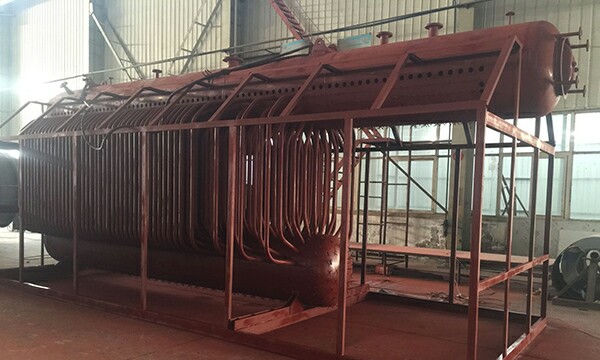
4-20 t/h (2 t/h model also built)
Double-drum water-tube biomass boiler, 4-20 t/h, shipped in two sections with membrane walls and an S-pass dust drop.
View details5,000-200,000 Nm³/h
Cyclone, pulse-jet bag filter and ESP selection for coal and biomass boilers, sized 5,000-200,000 Nm³/h.
View detailsExternal links open the publisher’s website and are provided for background reading.
Not with combustion measures alone. Staged air, recirculation and SNCR on a chain grate realistically reach 150-180 mg/m³ from 300. Reaching 50 mg needs SCR, which requires 320-400 °C gas and space the boiler does not have, or a fuel switch.
About 0.5-1.0 point, almost all of it fan power to overcome 1,200-1,500 Pa of pressure drop. It replaces a cyclone that removed 80-90% and left 100-200 mg/m³, which no current dust limit accepts.
The tail end: bag filter, induced draught fan and CEMS. It installs in a five to seven day outage with a temporary stack, makes the dust number compliant immediately, and does not touch the pressure parts or the combustion system.
Industry solution
Cylinder drying, corrugator preheat and starch kitchen loads, with a 200 t/day board machine worked example and condensate recover...
View details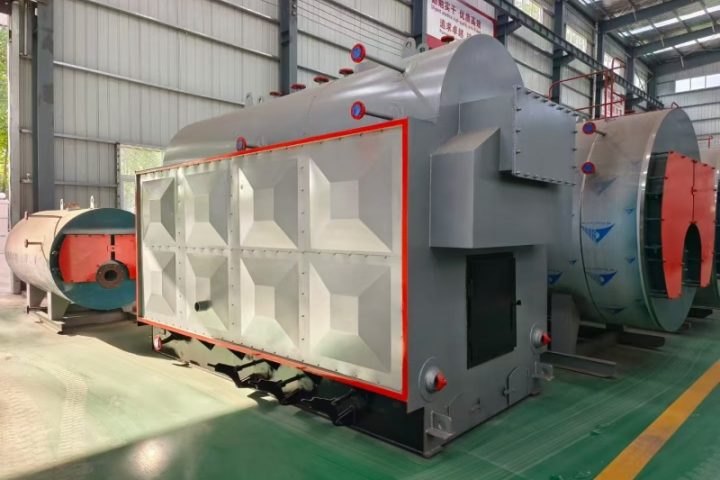
Industry solution
Sterilisation steam quality, laundry peaks and 60 °C hot water with Legionella control, sized on a 300-bed worked example.
View details
Industry solution
Sizing steam plant for pasteurisers, retorts, CIP and kettles, with a worked 6 t/h example, accumulator logic and fuel-saving leve...
View detailsWe appoint one or two partners per country to quote, deliver and service our boilers locally. Territory protection, factory pricing and commissioning support are part of the agreement.