Wet steam is expensive steam
2 t/h at 1.0 MPa is the working point for a seafood plant in Da Nang, Vietnam, where steam contacts product in the cookers and the plant needs dry steam. The unit was selected on that operating pattern rather than on a catalogue rating, and the difference shows in how it holds pressure on the worst shift of the week.
Steam leaving a boiler carries tiny droplets of boiler water, and those droplets carry dissolved solids. At the heat exchanger the water evaporates and the solids plate out, so a plant with carry-over finds scale in places the water treatment cannot reach. Dryness below about 0.98 also means the steam gives up less latent heat per kilogram, and the process simply takes longer.
Numbers that decide the design
At 2 t/h and 1.0 MPa the unit absorbs about 1.4 MW. On wood waste at roughly 79% efficiency, full-load demand is about 0 kg/h. The figures are stated at the site’s conditions, because ambient temperature, altitude and fuel analysis all move them.
| Item | Value |
|---|---|
| Rated output | 2 t/h |
| Pressure / temperature | 1.0 MPa |
| Fuel | wood waste |
| Full-load fuel demand | 0 kg/h |
| Thermal efficiency | about 79% |
What to watch on site
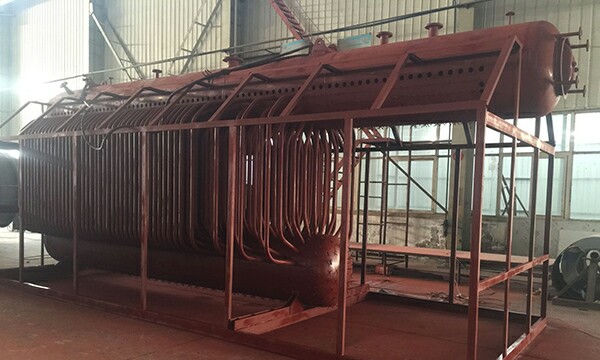
Carry-over is controlled with an adequate steam space, a separator, and boiler water solids held well below the point where foaming starts. Two thousand to three thousand ppm is a normal working range for industrial units, with automatic blowdown on conductivity. Where steam touches food or turbines, a separator plus a filter is standard.
Site note: steam contacts product in the cookers and the plant needs dry steam. The operators log header pressure and stack temperature every two hours, which is enough to see fouling and load drift before either becomes a shutdown.
Why it matters
Wet steam is expensive steam is not a detail to settle after the order. It decides the shell size, the burner, the feedwater train and the maintenance calendar, and it is cheaper to get right in the specification than in the boiler house.
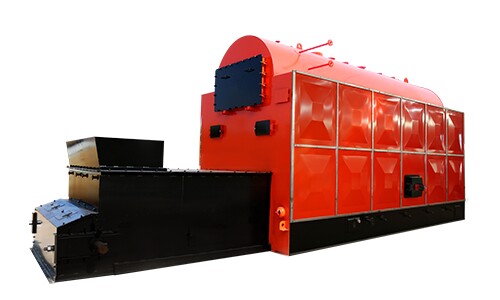
Equipment used in this kind of plant: dzl chain grate biomass boiler and water treatment system. The industry side is covered in this solution page, and project cases show comparable installations.
Background reading: external reference on steam and process heat.
Questions plant engineers ask
What causes wet steam?
High water level, high dissolved solids, sudden load changes and an undersized steam space. All four show up as a falling dryness fraction.
How is steam dryness measured?
With a throttling calorimeter or a conductivity-based sampler at the header. A simple check is the temperature drop across a known pressure reduction.
Related note: 8 t/h Gas steam boiler in Pakistan: The peak, not the average, sizes the boiler