
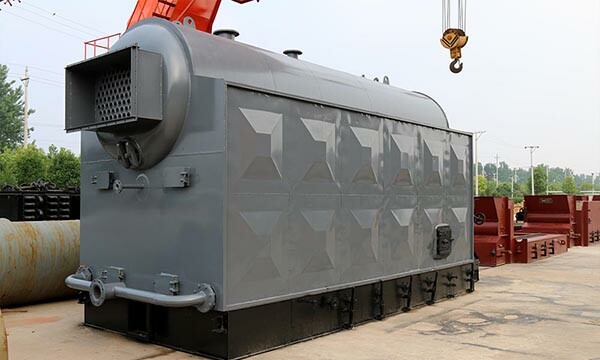
6 t/h
6 t/h Coal Steam Boiler DZL6-1.25-AII
The DZL6-1.25-AII is a 6 t/h single-drum chain-grate coal steam boiler delivering 1.25 MPa steam at 194 °C. It burns bituminous co...
View detailsAtmospheric coal-fired hot water boiler, 0.7-5.6 MW, with a water-cooled drum roof and a two-wing gas pass.
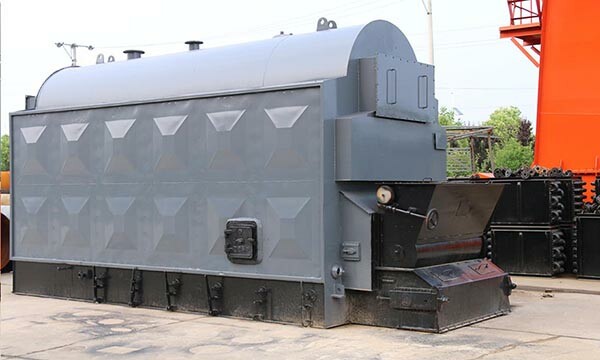
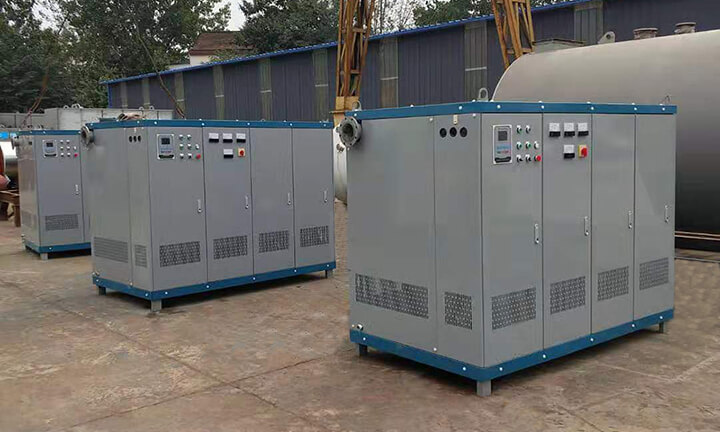
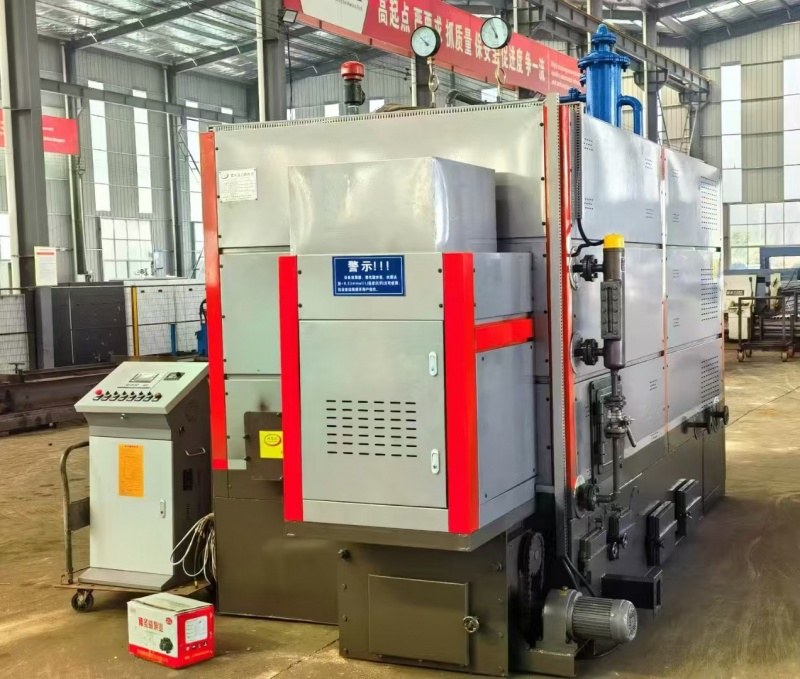
CDZH(L) is a coal-fired hot water boiler that operates at atmospheric pressure. The shell is vented to an open expansion tank, so the circuit stays below boiling at the top of the system and the boiler itself is not a pressure vessel. Output covers 0.7-5.6 MW with 85/60 °C or 115/70 °C flow and return, which is the normal range for district heating, greenhouse loops and process hot water where steam is not required.
Atmospheric operation changes the safety case rather than the combustion problem. Coal still has to be ignited, burned out and cleaned on a grate, and the heat still has to be moved into water without boiling at the metal surface. Those two issues govern the design more than the pressure rating does.
The classic failure of a small coal hot water boiler is a bulged drum bottom. Flame radiates onto the lower shell, local boiling starts under a scale layer, and the metal distorts. Here part of the risers from the side headers are drawn across the furnace to form a roof of water-cooled tubes, backed by a castable layer poured in one piece against the drum. The drum bottom therefore sees a cooled surface instead of flame, and the bulge mode disappears.
After the furnace, gas splits into two side passes before rejoining at the front smoke box. Splitting the flow halves the gas temperature seen by the tube plate at the turnaround, which is where thermal cracking and tube-end failures usually begin. The tubes in the drum are single-pass threaded, so they stay largely self-cleaning, and gas velocity is held high enough to prevent ash settlement without eroding the tube ends.
Fuel is bituminous coal; anthracite runs on a different arch and a thinner, faster bed, and the two are not interchangeable without a drawing change. The grate is a light chain type with independent air compartments, two-side air admission and crank-screw dampers. The push-pull ash gate uses heat-resistant cast iron machined to seal, which stops the leakage and secondary combustion that warps plain gates.
The 45° front arch and the low, long rear arch produce the inverted alpha flame. On a hot water boiler the arch also protects ignition when return water is cold and load is low, which is the operating condition that decides whether a heating plant is stable through the night. Efficiency is 80-84% on lower calorific value, rated 81.6%, with an economiser at the tail.
Numbers set the scale: a 2.8 MW unit at 4,000 full-load hours delivers about 11,200 MWh, which at 82% needs roughly 2,800 t of coal. One efficiency point is then about 35 t of coal a year. Hot water circuits add their own penalty: make-up water carries hardness and oxygen, and 1 mm of scale on the water side raises tube metal temperature and cuts output before any fuel meter shows it.
Inertial separation at the furnace exit knocks coarse dust out before the convection bank, lowering carryover and erosion of the first tube rows. A cyclone and bag filter then hold particulate under 30 mg/Nm³. SO2 control follows the coal sulphur, with limestone in the bed for moderate removal or a scrubber for tight limits, and staged air keeps NOx at 200-300 mg/Nm³ on the grate.
Grate ash drops into a slag hopper and a screw conveyor clears it; the economiser and collector hoppers hold the fly ash. Because the unit is factory-assembled, civil works are a flat plinth and the installation volume is smaller than a brick-set boiler of the same output, which shortens the boiler house programme.
State the coal analysis, return water temperature, static head, make-up quality and load profile with the enquiry. On atmospheric systems the expansion tank height and the pump head interact with the boiler selection, and a mismatch shows up as noise and poor temperature control rather than as a boiler fault.
| Item | CDZL0.7 | CDZL1.4 | CDZL2.8 | CDZL4.2 | CDZL5.6 |
|---|---|---|---|---|---|
| Rated thermal power | 0.7 MW | 1.4 MW | 2.8 MW | 4.2 MW | 5.6 MW |
| Outlet water temperature | 85/115 °C | 85/115 °C | 85/115 °C | 85/115 °C | 85/115 °C |
| Return water temperature | 60 °C | 60 °C | 60 °C | 60 °C | 60 °C |
| Thermal efficiency | 81.6% | 81.6% | 81.6% | 81.6% | 81.6% |
| Water volume | 4.18 m³ | 6.12 m³ | 10.6 m³ | 11.3 m³ | 11.5 m³ |
| Transport weight | 15.2 t | 23.8 t | 27 t | 40 t | 38 t |
The shell is vented to atmosphere and is not a pressure vessel, which simplifies the approval route in most jurisdictions. Local rules still apply to the installation, the expansion tank and the fuel system, so confirm the requirements with the authority having jurisdiction.
Yes, but with a different arch and a thinner, faster bed. Anthracite has low volatiles and needs a shorter ignition distance and more radiant heat at the gate; the change is a drawing revision, not a setting.
60 °C is standard for 85/60 °C duty. Below about 50 °C the tube plate and the economiser fall near the acid dew point on high-sulphur coal, so low-temperature return needs a mixing loop or a bypass.
| Model | CDZL0.7 | CDZL1.4 | CDZL2.8 | CDZL4.2 | CDZL5.6 |
|---|---|---|---|---|---|
| Rated thermal power | 0.7 MW | 1.4 MW | 2.8 MW | 4.2 MW | 5.6 MW |
| Outlet water temperature | 85/115 °C | 85/115 °C | 85/115 °C | 85/115 °C | 85/115 °C |
| Return water temperature | 60 °C | 60 °C | 60 °C | 60 °C | 60 °C |
| Thermal efficiency | 81.6% | 81.6% | 81.6% | 81.6% | 81.6% |
| Water volume | 4.18 m³ | 6.12 m³ | 10.6 m³ | 11.3 m³ | 11.5 m³ |
| Transport weight | 15.2 t | 23.8 t | 27 t | 40 t | 38 t |
6 t/h
The DZL6-1.25-AII is a 6 t/h single-drum chain-grate coal steam boiler delivering 1.25 MPa steam at 194 °C. It burns bituminous co...
View details10 t/h
The DZL10-1.25-AII is a 10 t/h single-drum chain-grate coal steam boiler producing 1.25 MPa steam at 194 °C, with threaded smoke t...
View details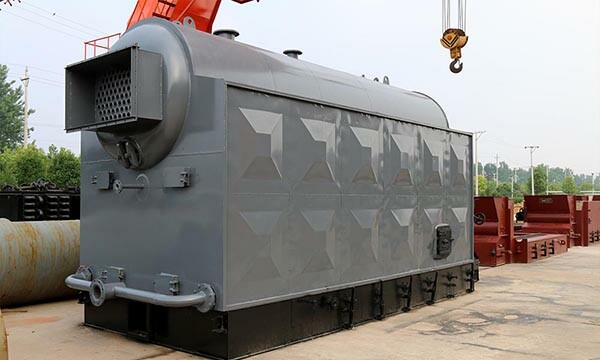
7-70 MW hot water
Hot water boiler package for district heating networks. SZL coal or SZS gas fired, 7-70 MW. Suitable for primary network supply, p...
View detailsExternal links open the publisher’s website and are provided for background reading.
Include the capacity (t/h or MW), fuel, working pressure and site country so the proposal matches your permit limits.
We appoint one or two partners per country to quote, deliver and service our boilers locally. Territory protection, factory pricing and commissioning support are part of the agreement.