
0.5-20 t/h
Dual-Fuel Boilers: Coal with Gas, Biomass or Electricity
One pressure shell with two combustion systems: coal with gas, biomass or electric elements, 0.5-20 t/h, switched as fuel supply o...
View detailsAssembled water-tube coal boiler, 2-20 t/h at 1.25-2.5 MPa, with six air compartments and an S-pass convective bank.
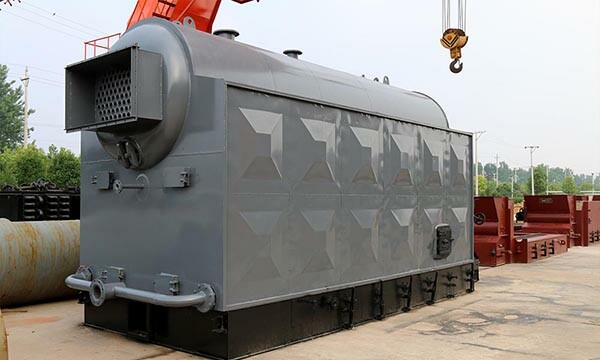
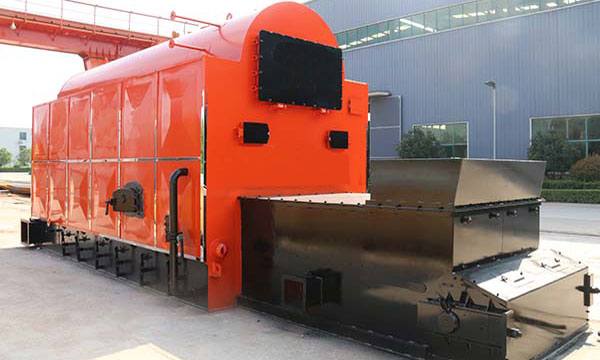
SZL is the assembled water-tube answer for coal: two longitudinal drums, a convective tube bank between them, plain water walls on both sides of the furnace and a light chain grate underneath. It ships as two sections, the upper carrying drums, bank, frame and upper wall, the lower carrying hopper, grate, base and lower wall, with only the division wall built on site. Ratings run 2-20 t/h at 1.25 or 2.5 MPa and 194 or 225 °C, so the range covers plants that need more pressure than a fire-tube can hold.
The configuration is chosen for pressure and for size, not for efficiency. A water-tube boiler puts the pressure in small tubes rather than a large shell, which is how 2.5 MPa is reached at 10-20 t/h without a heavy drum; the trade is a smaller water content, faster response and less tolerance of poor feedwater.
Six independent air compartments sit under the grate, with dampers on both sides. Air from the forced-draft fan enters the base, passes the dampers and reaches each compartment, so the drying zone can run lean while the ignition zone runs rich. That split is where most of the unburnt carbon is won or lost on a chain grate, because the fuel passes through physically distinct stages that want different air quantities.
The design coal is AII bituminous: lower calorific value at least 17,750 kJ/kg, volatiles above 38.5%, ash up to 32.4%, screened to 0-25 mm. The coal gate sets a bed of 100-150 mm, and grate speed is trimmed so burn-out occurs before the grate end. Slag drops into the hopper and leaves by screw conveyor; the six compartments are adjusted seasonally as coal deliveries change, since a coal with 30% ash needs a different air profile from washed coal of the same calorific value.
Excess air runs 1.35-1.5 at the economiser outlet, and secondary air above the bed completes the volatiles. Below about 1.3 the flame lengthens and CO rises; above 1.6 the stack loss takes more than the carbon gain is worth.
The published figures climb with size: 78.8% at 4 t/h, 80.2% at 10 t/h, 82% at 15-20 t/h. Small units lose more to excess air and to unburnt carbon carried out with the fly ash, because the convection bank runs at higher gas velocity than a fire-tube and the residence time in the furnace is shorter. The larger models recover the loss through surface area, a deeper economiser and a steadier bed.
An economiser taking feedwater to 100-105 °C is the first upgrade; variable-frequency drives on both fans and oxygen trim are the second. Together they are worth 2-3 points on a plant that runs at fixed air and fixed grate speed. A 10 t/h unit at 6,000 hours makes 60,000 t of steam; at 80% and a 17,750 kJ/kg coal that is about 11,000 t of coal, so one point is roughly 140 t.
Feedwater quality is not optional here. Deposits inside a 51 mm tube are a flow restriction, not just an efficiency loss, and the bank cannot be rodded from outside. Softening to 0.03 mmol/L hardness and deaeration to 0.05 mg/L oxygen are part of the plant specification.
Bottom ash leaves through the slag remover, while the bank and economiser shed their fly ash into hoppers below. On a 20% ash coal a 10 t/h unit produces roughly 700 kg of ash an hour, so the removal chain is sized on continuous duty. Particulate control is a cyclone and pulse-jet bag filter, holding under 30 mg/Nm³; SO2 follows coal sulphur and is handled by limestone injection or a scrubber; NOx is 200-300 mg/Nm³ with staging and 150-200 with SNCR.
Choose SZL over DZL when the pressure is above 1.6 MPa, when the rating is 10 t/h or more, or when the plant wants a water-tube pressure part for its own insurance reasons. Choose DZL when the load is under 10 t/h at 1.25 MPa and floor space is tight, because the packaged fire-tube is cheaper to install and more tolerant of part-load running.
| Item | SZL2 | SZL4 | SZL6 | SZL10 | SZL15 | SZL20 |
|---|---|---|---|---|---|---|
| Rated evaporation | 2 t/h | 4 t/h | 6 t/h | 10 t/h | 15 t/h | 20 t/h |
| Rated pressure | 1.25/2.5 MPa | 1.25/2.5 MPa | 1.25/2.5 MPa | 1.25/2.5 MPa | 1.25/2.5 MPa | 1.25/2.5 MPa |
| Steam temperature | 194/225 °C | 194/225 °C | 194/225 °C | 194/225 °C | 194/225 °C | 194/225 °C |
| Grate area | 3.22 m² | 6.72 m² | 7.52 m² | 11.8 m² | 18 m² | 23 m² |
| Thermal efficiency | 79.6% | 78.8% | 79.5% | 80.2% | 82% | 82% |
| Shipping weight | 25 t | 30 t | 22.5 t | 26.5 t | 30 t | 35 t |
1.25 or 2.5 MPa, with saturated steam at 194 or 225 °C. Above 2.5 MPa a different pressure-part design is needed, so the range stops there.
Larger units have a better surface-to-volume ratio, a deeper economiser and a steadier fuel bed, so excess air and unburnt carbon fall. The 4 t/h model is rated 78.8% and the 15-20 t/h models 82%.
At 20% ash and roughly 3.5 t/h of coal, about 700 kg/h. The slag remover and hoppers are sized for continuous duty, and the fly ash carbon content decides whether it can be sold.
| Model | SZL2 | SZL4 | SZL6 | SZL10 | SZL15 | SZL20 |
|---|---|---|---|---|---|---|
| Rated evaporation | 2 t/h | 4 t/h | 6 t/h | 10 t/h | 15 t/h | 20 t/h |
| Rated pressure | 1.25/2.5 MPa | 1.25/2.5 MPa | 1.25/2.5 MPa | 1.25/2.5 MPa | 1.25/2.5 MPa | 1.25/2.5 MPa |
| Steam temperature | 194/225 °C | 194/225 °C | 194/225 °C | 194/225 °C | 194/225 °C | 194/225 °C |
| Grate area | 3.22 m² | 6.72 m² | 7.52 m² | 11.8 m² | 18 m² | 23 m² |
| Thermal efficiency | 79.6% | 78.8% | 79.5% | 80.2% | 82% | 82% |
| Shipping weight | 25 t | 30 t | 22.5 t | 26.5 t | 30 t | 35 t |
0.5-20 t/h
One pressure shell with two combustion systems: coal with gas, biomass or electric elements, 0.5-20 t/h, switched as fuel supply o...
View details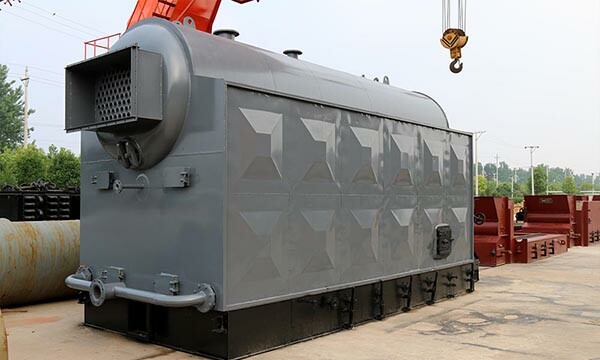
10 t/h
The DZL10-1.25-AII is a 10 t/h single-drum chain-grate coal steam boiler producing 1.25 MPa steam at 194 °C, with threaded smoke t...
View details7-70 MW hot water
Hot water boiler package for district heating networks. SZL coal or SZS gas fired, 7-70 MW. Suitable for primary network supply, p...
View detailsExternal links open the publisher’s website and are provided for background reading.
Include the capacity (t/h or MW), fuel, working pressure and site country so the proposal matches your permit limits.
We appoint one or two partners per country to quote, deliver and service our boilers locally. Territory protection, factory pricing and commissioning support are part of the agreement.