
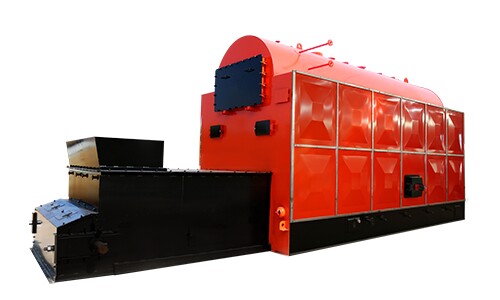
2-10 t/h (series to 100 t/h)
DZL Chain Grate Biomass Steam Boiler
Packaged three-pass biomass steam boiler, 2-10 t/h at up to 1.6 MPa, with a light chain grate and water-cooled arches.
View detailsTwo 4 t/h biomass boilers on palm kernel shell and fibre supply steriliser and digester steam at a crude palm oil mill near Medan, with one unit on standby.

A crude palm oil mill near Medan processes about 30 t of fresh fruit bunch an hour. Steriliser cycles are the dominant steam load: each 25-30 t cage takes a hard charge of steam for 50-60 minutes, then the demand falls away while the next cage is filled. Digesters and the kernel plant take a steadier 1-2 t/h. The mill’s two 4 t/h boilers are arranged so one carries the base and both run during the steriliser peak.
Steam is at 1.0 MPa and 184 °C, which is the usual steriliser pressure; higher pressure buys nothing and costs fuel.
Palm kernel shell has an LHV around 16-17 MJ/kg, low moisture and a hard, dense structure that suits a chain grate. Fibre from the press is wetter, 35-45% moisture, and is better burned mixed with shell or used as mulch. The boilers were set up for a mix of about 60% shell and 40% fibre, with the furnace arch and air zones adjusted for the wetter fraction.
At 4 t/h and 1.0 MPa each boiler absorbs about 2.8 MW. On a 15.5 MJ/kg mix the fuel rate is roughly 700 kg/h per unit, so the pair consumes around 1.4 t/h during the peak.
| Item | Value |
|---|---|
| Rated evaporation | 4 t/h |
| Steam pressure | 1.0 MPa saturated |
| Fuel | palm kernel shell with fibre |
| Fuel LHV | about 15.5 MJ/kg (mix) |
| Fuel rate at rating | about 700 kg/h |
| Feedwater | softened, deaerated |
The mill originally wanted one 8 t/h boiler. Two 4 t/h units cost slightly more in equipment but give the mill something a single shell cannot: during the monthly grate clean the second boiler carries the plant, and a steriliser peak can be met without pushing one unit to its limit. The two units share a header and a common feedwater tank, with non-return valves and a pressure cascade that brings the standby unit online automatically when header pressure falls below 0.85 MPa.
Fuel handling is manual: shell is loaded by wheel loader into a hopper with a variable-speed feeder. The mill tried an automatic silo and abandoned it because the shell bridges in the humid air; a simple hopper with a vibrating bottom works better in this climate.
Both units have run since 2024 on the mill’s own residue, with diesel only for start-up. The grate needs a manual clean every 500-600 hours because of clinker from the fibre fraction; the mill has learned to keep fibre share below 40% to control it. Steam pressure at the steriliser stays above 0.9 MPa through the cycle, and the mill reports a clear reduction in the shell it sells because more of it now goes to steam.
2-10 t/h (series to 100 t/h)
Packaged three-pass biomass steam boiler, 2-10 t/h at up to 1.6 MPa, with a light chain grate and water-cooled arches.
View details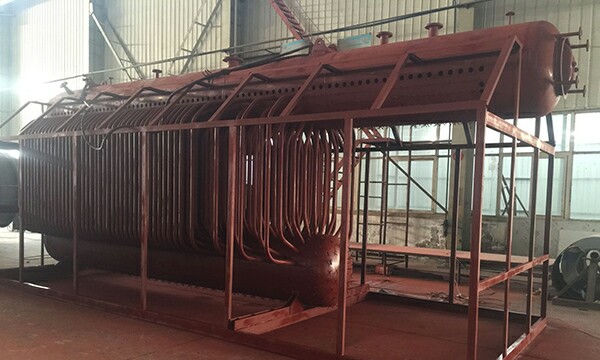
4-20 t/h (2 t/h model also built)
Double-drum water-tube biomass boiler, 4-20 t/h, shipped in two sections with membrane walls and an S-pass dust drop.
View details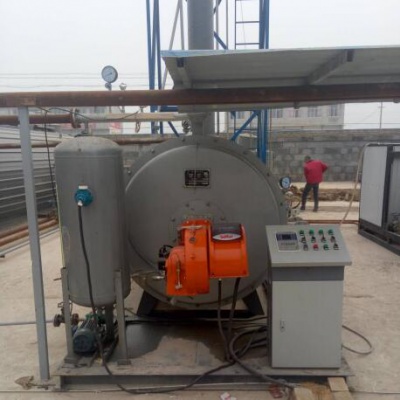
5,000-200,000 Nm³/h
Cyclone, pulse-jet bag filter and ESP selection for coal and biomass boilers, sized 5,000-200,000 Nm³/h.
View detailsExternal links open the publisher’s website and are provided for background reading.
Steriliser peaks and maintenance. Two units let the mill keep running during grate cleaning and meet the peak without running a single shell flat out.
Up to about 35% in the fibre fraction when mixed with shell. Above that the furnace temperature falls and the unit loses capacity.
Yes. It is dense and low in moisture, and it burns well on a chain grate with a refractory arch. The main maintenance item is clinker from wet fibre.
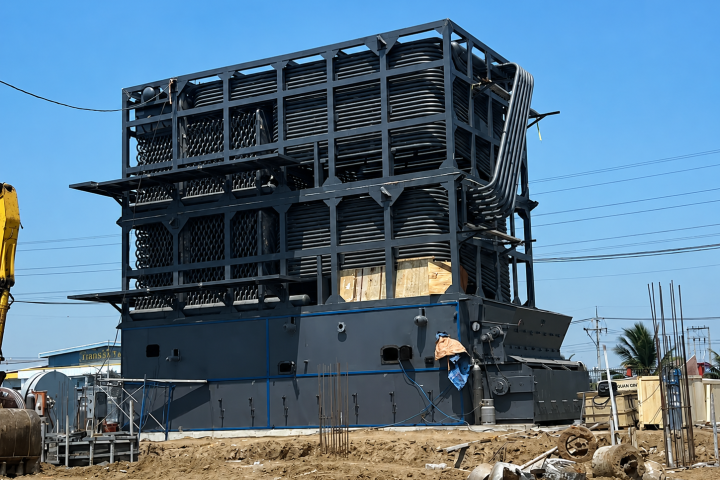
2023
Medan, North Sumatra, Indonesia
A heat transfer oil furnace was supplied for the hot press line at an MDF production plant in Medan, North Sumatra, Indonesia, wit...
View project
2024
Ulaanbaatar, Mongolia
A 20 t/h chain-grate coal boiler at 1.6 MPa supplies 14 MW to a district heating network in Ulaanbaatar, designed for -35 C and lo...
View project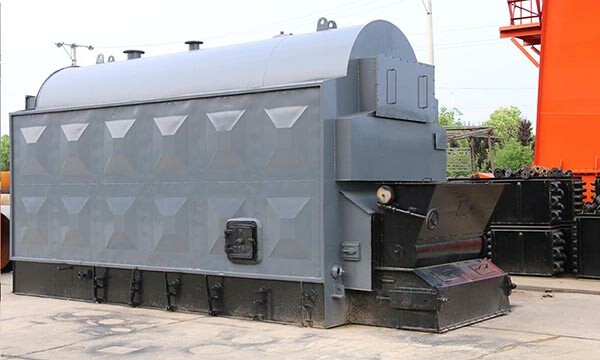
2024
Chattogram, Bangladesh
A 2 t/h chain-grate boiler burning rice husk and wood waste supplies process steam at a food plant near Chattogram, cutting fuel c...
View projectWe appoint one or two partners per country to quote, deliver and service our boilers locally. Territory protection, factory pricing and commissioning support are part of the agreement.