
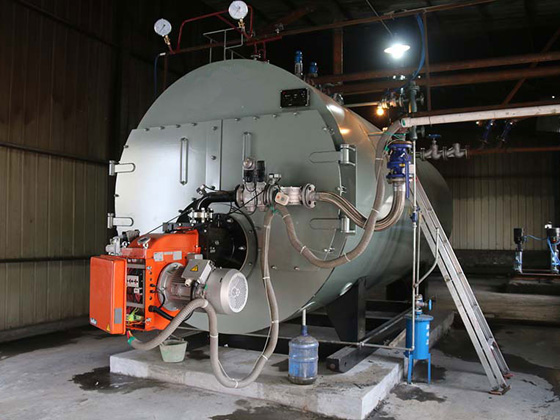
0.35-14 MW
WNS Pressurized Hot Water Boiler, 0.35-14 MW
Closed-loop pressurized hot water boiler for 95/70 and 115/70 systems, 0.35-14 MW, three-pass wet-back shell with modulating burne...
View detailsA 20 t/h chain-grate coal boiler at 1.6 MPa supplies 14 MW to a district heating network in Ulaanbaatar, designed for -35 C and low-grade Mongolian coal.
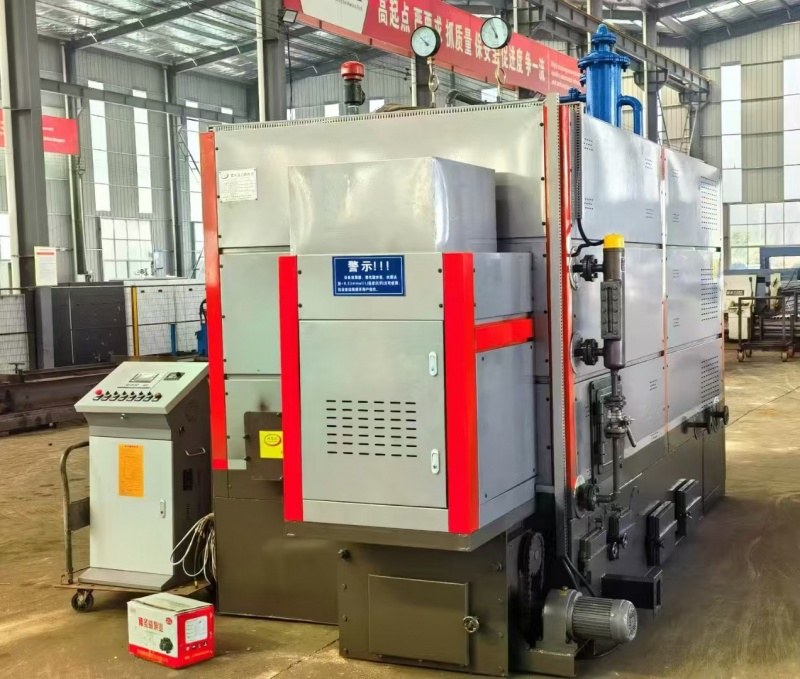
The plant supplies a district heating network on the edge of Ulaanbaatar, where the design outdoor temperature is -35 °C and the heating season runs from September to May. The heat source is a 20 t/h chain-grate boiler producing hot water at 1.6 MPa, 130/70 °C, which is about 14 MW at the network. The fuel is Mongolian coal with 25-30% ash, 1.0-1.5% sulphur and an LHV around 17-19 MJ/kg – not a fuel that a standard grate handles without thought.
The boiler is an SZL assembled water-tube unit with a chain grate, a refractory front arch and a two-stage air preheater. The furnace is sized on the coal’s high ash content: a smaller furnace would slag at the arch and lose the bed.
At -35 °C the air preheater is not a luxury. Combustion air is heated to about 120 °C before it reaches the grate, which keeps the bed stable and stops the air ducts from frosting. The preheater is a two-stage tubular unit with an intermediate water circuit, and the cold-end baskets are enamel-coated to resist acid condensation when the coal’s sulphur triples the dew point.
The boiler house is enclosed and kept at 10 °C; the feed and combustion air fans are indoors, and the ash system is a dry scraper with an enclosed conveyor so the ash does not freeze in the trough. The stack is insulated and the flue is drained at the low point.
| Item | Value |
|---|---|
| Rated evaporation | 20 t/h (about 14 MW) |
| Pressure | 1.6 MPa |
| Network supply / return | 130 / 70 °C |
| Design outdoor temperature | -35 °C |
| Coal LHV | 17-19 MJ/kg |
| Coal ash | 25-30% |
| Dust control | multi-cyclone plus bag filter |
Ulaanbaatar’s air quality rules are strict, and the plant’s permit required particulate control. The flue gas passes a multi-cyclone and a bag filter, with outlet dust below 50 mg/Nm3; the bag filter is heated and insulated so it does not condense during start-up. Sulphur is handled by keeping the flue above the acid dew point rather than by a scrubber, which is adequate at 1.0-1.5% sulphur with a tall stack.
Ash is the bigger logistical issue: at 25-30% ash the boiler produces 5-6 t of ash a day at full load. The plant sells the coarse ash to a block maker and disposes of the fly ash in a lined cell. Ash handling runs one shift a day and is the plant’s main labour cost.
Commissioning was done in September, and the first -30 °C week was the real test. The boiler held 125 °C supply with the grate at 65% speed. Two issues came up: the bag filter’s inlet damper iced during a cold start, fixed with a heated plenum; and the coal feeder’s speed control was too coarse, causing pressure swings of 0.1 MPa. A variable-frequency drive on the feeder fixed that.
The plant now runs at 12-14 MW through the design week, with coal consumption around 2.6-2.9 t/h at rating and a boiler efficiency of 80-82% on LHV – normal for this fuel and a chain grate.
0.35-14 MW
Closed-loop pressurized hot water boiler for 95/70 and 115/70 systems, 0.35-14 MW, three-pass wet-back shell with modulating burne...
View details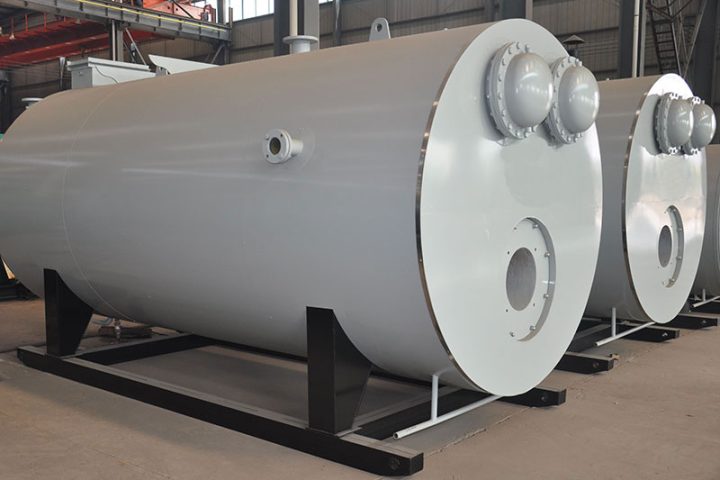
0.7-14 MW
Sealed vacuum hot water boiler, 0.7-14 MW, 85/60 C, heat medium water boiling under negative pressure and condensing on a stainles...
View details
6-100 t/h
Membrane-wall water-tube steam boiler with staged combustion and FGR, 6-100 t/h at up to 2.5 MPa and 98% efficiency with heat reco...
View detailsExternal links open the publisher’s website and are provided for background reading.
Yes, with a larger furnace, a refractory arch and a grate sized for the ash load. The limit is usually the ash handling system, not the grate itself.
Cold combustion air destabilises the fuel bed and lowers furnace temperature. Preheating to about 120 C keeps ignition reliable and improves efficiency.
80-83% on LHV for a chain-grate unit with an air preheater and economizer. High ash and moisture prevent the 90% figures quoted for gas.
2025
Metro Manila, Philippines
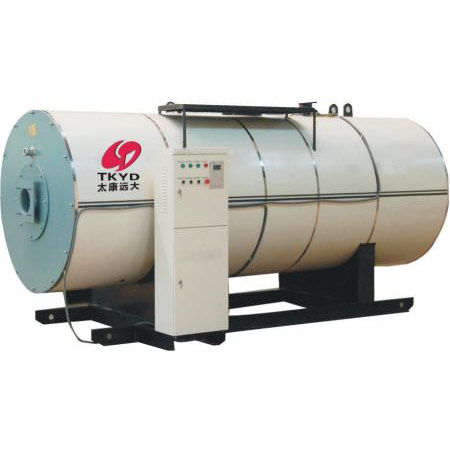
A 3 t/h biomass boiler on coconut shell and wood waste supplies cooking and sterilising steam at a food plant in Metro Manila, wit...
View project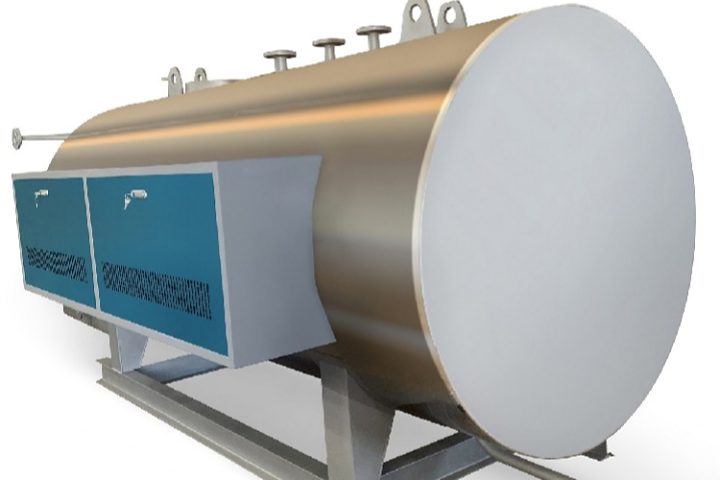
2024
Johor Bahru, Malaysia
6 t/h gas steam boiler at 1.25 MPa on natural gas, commissioned in 2024 in Johor Bahru, Malaysia: the plant is inside an industria...
View project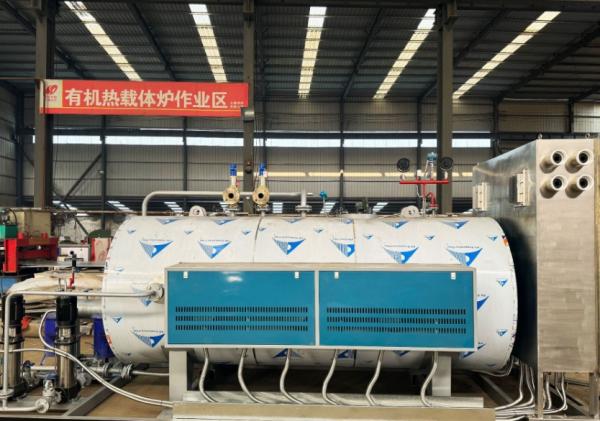
2024
Barranquilla, Colombia
4 t/h gas steam boiler at 1.0 MPa on natural gas, commissioned in 2024 in Barranquilla, Colombia: the plant is on the coast and th...
View projectWe appoint one or two partners per country to quote, deliver and service our boilers locally. Territory protection, factory pricing and commissioning support are part of the agreement.