
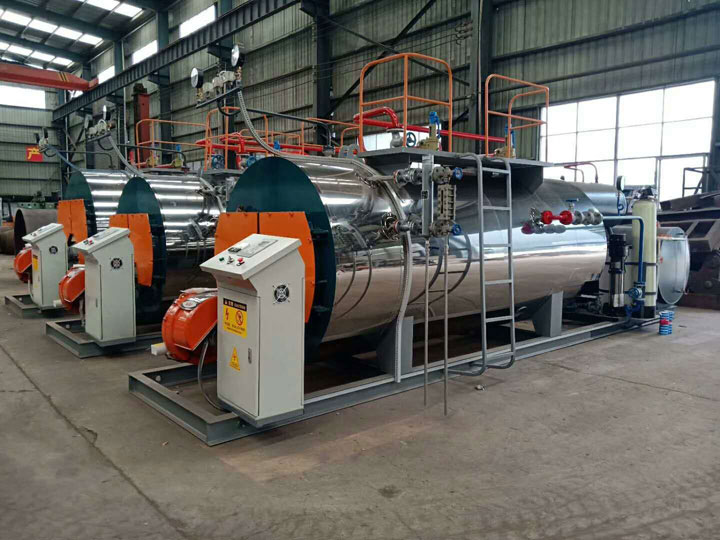
Converting a coal-fired boiler to natural gas is often considered to reduce emissions and improve operational flexibility. However, a successful conversion requires careful evaluation of the existing boiler’s design, especially the furnace volume, burner compatibility, and control system. This article outlines the key engineering changes involved, with concrete numbers and assumptions, to help you plan a safe and efficient conversion.
Furnace Volume and Heat Release Rate
Coal boilers typically have larger furnaces than gas boilers because coal requires longer residence time for complete combustion. When firing gas, the furnace volume may be excessive, but the heat release rate becomes critical. Gas flames have higher adiabatic flame temperatures and higher heat release per unit volume. A common rule: for natural gas, the furnace heat release rate should not exceed about 1.5 MW/m³ (approximately 150,000 Btu/ft³·h) to avoid overheating and NOx issues. For coal, it might be 0.8–1.2 MW/m³. If the existing furnace volume is too small for the gas input, derating is necessary.
Example: A coal boiler with a furnace volume of 30 m³ designed for 30 MW (heat release 1.0 MW/m³) may need derating to 45 MW? No, check: 30 m³ × 1.5 MW/m³ = 45 MW, so actually it could handle more, but the burner and convection section may limit. Conversely, if the furnace is 20 m³ and original coal input 24 MW (1.2 MW/m³), gas firing at 1.5 MW/m³ would allow 30 MW, but other factors like tube spacing and burner size may limit. Always verify with a heat transfer model.
Burner Selection and Retrofit
The original coal burner (e.g., spreader stoker or pulverized coal) must be replaced with a gas burner. Key considerations:
- Burner capacity and turndown: Gas burners typically offer 5:1 to 10:1 turndown, compared to 3:1 for coal. Select a burner that matches the derated boiler capacity.
- Furnace opening: The burner throat and quart must fit the existing opening. Often, the opening needs modification to accommodate the larger gas burner and to ensure proper flame shape.
- Flame geometry: Gas flames are shorter and more intense. Ensure the flame does not impinge on tubes or refractory. Computational fluid dynamics (CFD) modeling is recommended for furnaces with complex geometry.
- NOx control: Low-NOx burners (e.g., staged air or flue gas recirculation) may be required to meet local emission limits. This affects burner size and control complexity.
Controls and Safety Systems
Coal-fired boilers often have simple electromechanical controls. Gas firing demands a modern burner management system (BMS) compliant with standards such as NFPA 85 or EN 298. The BMS must include:
- Flame monitoring (UV or ionization)
- Automatic ignition and shutdown sequences
- Fuel train with double block and bleed valves, pressure switches, and leak test
- Interlocks for low water, high pressure, and airflow
Additionally, the combustion control system should be upgraded to handle gas flow, air/fuel ratio, and oxygen trim. This typically involves new actuators, sensors, and a PLC or DCS. The control upgrade often represents 20–30% of the conversion cost.
Derating and Performance Impacts
Derating is common because the existing boiler’s pressure parts and convection section may not handle the higher heat flux or different flue gas composition. Table 1 summarizes typical derating factors and performance changes.
| Parameter | Coal firing | Gas firing (after conversion) | Notes |
|---|---|---|---|
| Furnace heat release rate | 0.8–1.2 MW/m³ | 1.2–1.5 MW/m³ | Higher for gas; may require derating if furnace volume small |
| Excess air (typical) | 20–30% | 5–10% | Lower excess air improves efficiency |
| Flue gas volume (per MW) | ~1.4 kg/s | ~1.1 kg/s | Gas produces less flue gas per unit heat input |
| Boiler efficiency (LHV) | 78–82% | 82–88% | Efficiency may improve due to lower excess air and no unburned carbon |
| Maximum continuous rating (MCR) | 100% | 80–100% | Derating depends on furnace size, burner, and convection section |
Derating is often necessary if the furnace volume is below 1.2 m³ per MW of gas input. For example, a boiler with 20 m³ furnace volume should be limited to about 16 MW gas input (20/1.2). Also, the convection section may need modification to handle the lower flue gas volume; sometimes, adding economizer surface is beneficial.
Permits and Regulatory Considerations
Converting to gas typically triggers permitting requirements. These may include:
- Air permit modification: Even though gas is cleaner, the permit must reflect the new fuel and emission limits (NOx, CO).
- Boiler code compliance: The conversion must comply with local boiler and pressure vessel codes (e.g., ASME BPVC). Inspections may be required.
- Gas supply and safety: Approval from the gas utility, installation of gas metering, and compliance with NFPA 54 or local gas codes.
- Environmental assessment: Some jurisdictions require an environmental impact assessment even for fuel switching.
Permitting can take 3–12 months, so early engagement with authorities is advised.
Checklist for Conversion Planning
- Measure furnace dimensions and calculate current heat release rate.
- Determine required gas input and check if derating is needed.
- Select gas burner with appropriate capacity, turndown, and NOx rating.
- Assess need for furnace opening modification and CFD modeling.
- Upgrade controls to BMS and combustion control system.
- Evaluate convection section and economizer for flue gas volume changes.
- Check gas supply pressure and availability; coordinate with utility.
- Review permitting requirements and timeline.
- Plan for inspection and testing (e.g., performance test).
- Consider training for operators on gas firing.
What to send us for a proposal
To prepare a tailored proposal for your coal-to-gas conversion, please provide the following information:
- Boiler nameplate data: capacity, pressure, temperature, year of manufacture.
- Furnace dimensions (length, width, height) and burner opening details.
- Current fuel properties and consumption rates.
- Existing controls and safety systems description.
- Site constraints: gas supply pressure, space limitations, emission limits.
- Any previous inspection reports or modifications.
With this data, we can assess feasibility, estimate derating, and propose a scope including burner, controls, and necessary modifications. For a broader overview of boiler capacities and cost factors, see our capacity and cost guide. Explore our product range for gas burners and control systems.


