
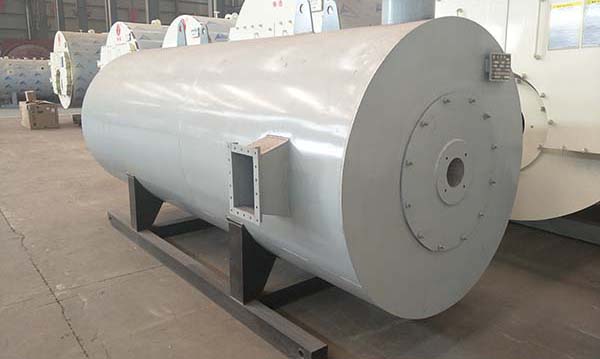
10-600 ×10⁴ kcal/h
Gas/Oil Hot Air Furnace for Drying and Curing
Indirect air heater delivering clean hot air to 350-550 C, or direct-fired hot gas to 1,000 C, for drying, curing and oven retrofi...
View detailsPackaged three-pass wet-back fire-tube steam boiler for gas and oil, 1-100 t/h at 1.25 MPa, with matched modulating burner and full water-level protection.
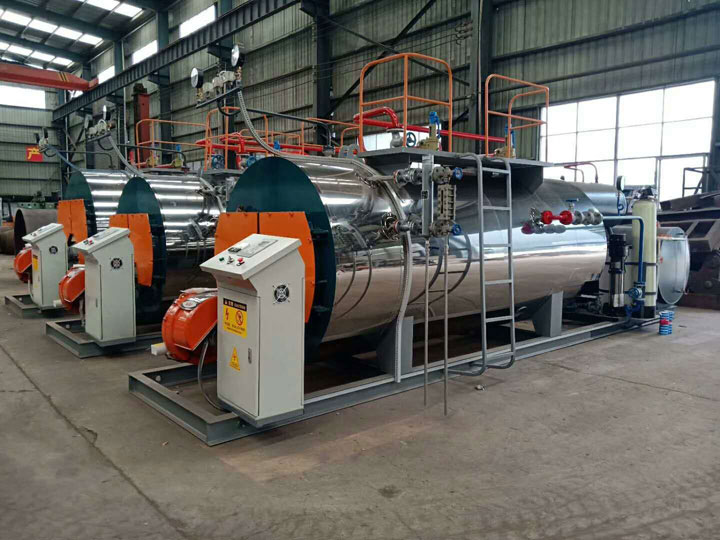
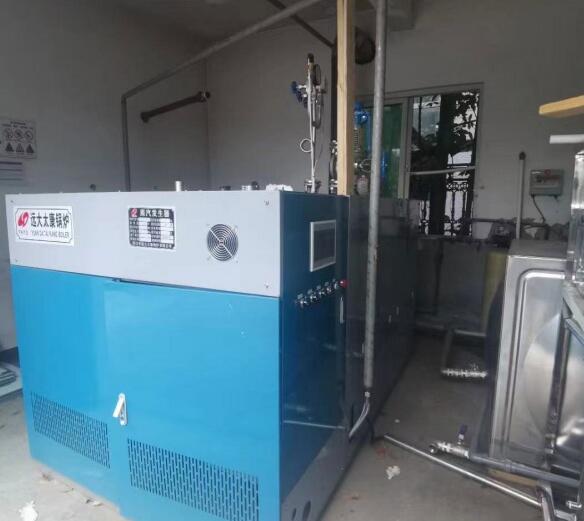
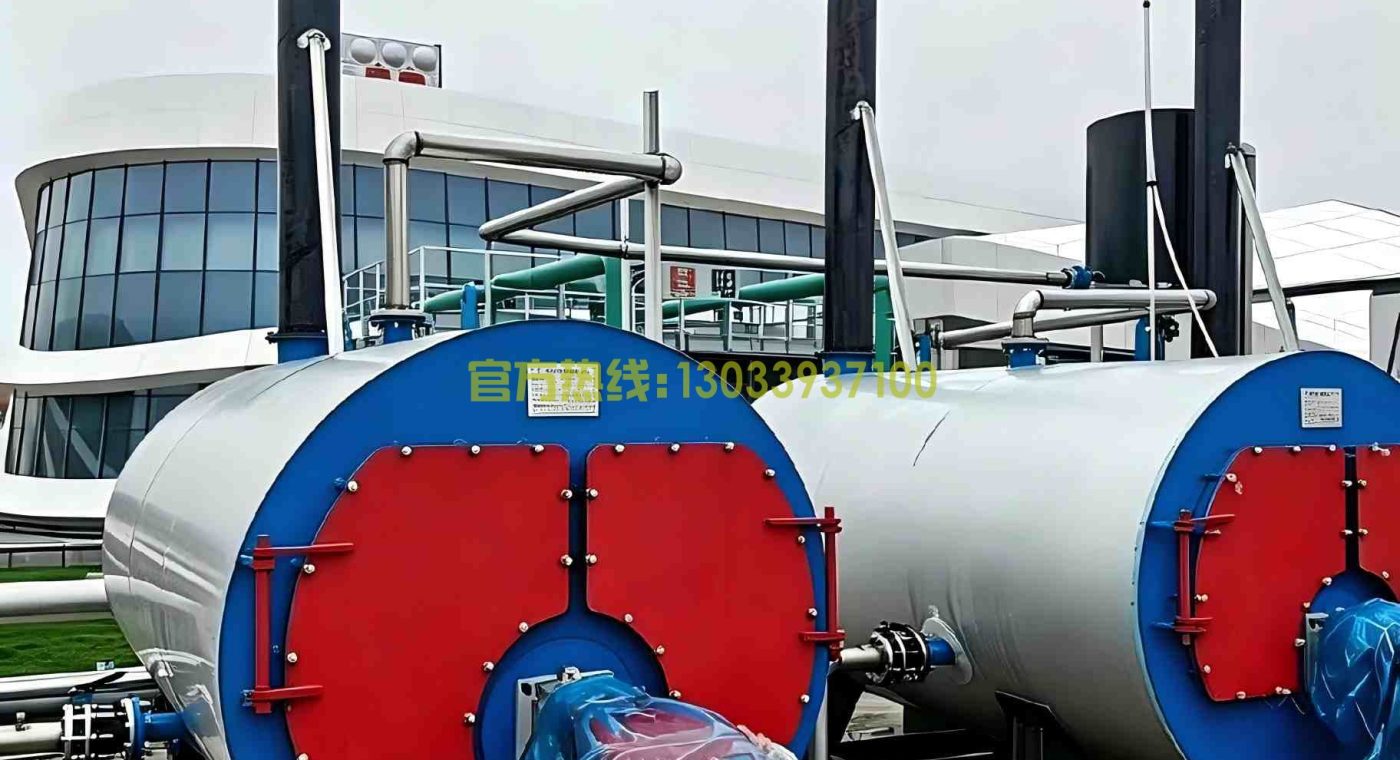
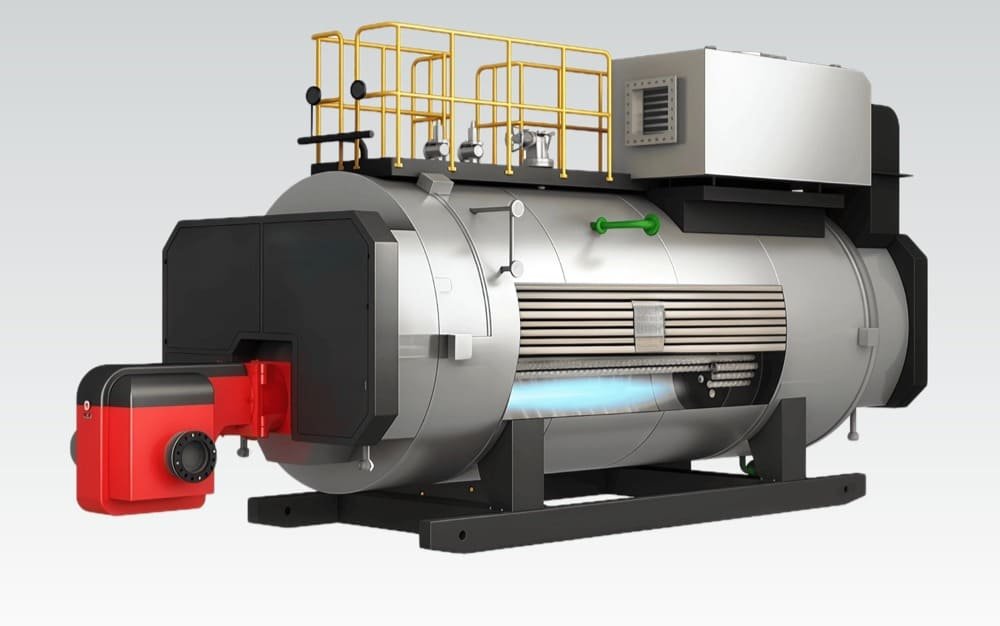
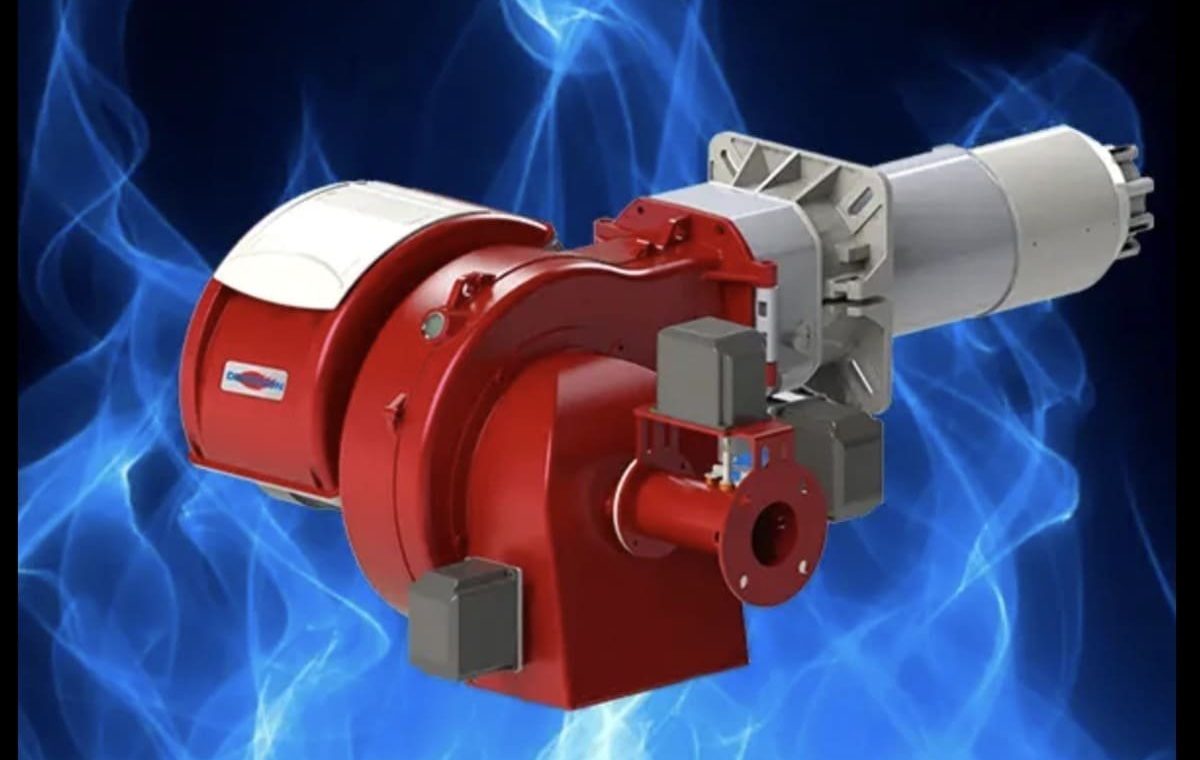
A WNS boiler is a horizontal shell boiler with the furnace inside the water space. The burner fires along a corrugated furnace tube that runs the length of the shell, and that tube is the first pass. At the rear the gas turns through 180 degrees in a reversal chamber and returns through a bundle of smoke tubes to the front smoke box: the second pass. It turns again, travels back through a cooler bundle, and leaves from the rear flue box to the chimney. The third pass is there because a single return would leave the gas at 250-300 °C, and every 20 °C of stack temperature is worth roughly one point of efficiency.
Heat transfer in passes two and three is convective. The tubes are threaded, which keeps the gas spinning instead of forming a slow laminar core, and raises the gas-side film coefficient without adding surface area. The result is a compact unit: a 4 t/h boiler fits inside a 4.8 m by 3.1 m footprint and leaves the factory on one frame.
Older shell boilers used a dry, refractory-lined rear chamber. Wet-back means the reversal chamber is a water-jacketed box welded to the tubesheets, so the hot turn happens against a water-cooled surface. Three things follow. The rear tubesheet is not exposed to direct flame radiation, so it runs cooler and the tube-to-tubesheet welds see less thermal cycling. There is no brickwork to spall, crack or reline at each inspection. And the casing stays cool enough that radiant loss at the back of the unit is small.
The trade-off is a slightly larger shell and more water content, which adds weight and a little to cold start time. For a packaged boiler expected to run for fifteen years, that is a good trade.
Furnace volume is the design variable buyers most often ignore. A small furnace with high heat release per cubic metre gives a short, hot flame: compact, cheap, and a reliable source of thermal NOx. A generous furnace drops peak flame temperature below the point where atmospheric nitrogen begins to oxidise, and gives the flame room to finish combustion at low excess air. The corrugated furnace also absorbs axial expansion and stiffens the tube against external pressure.
Radiant surface, gas velocity and tube pitch are set together. Too much velocity erodes the tube entries within a few years; too little and the bundle fouls. The standard layout sits between the two, and heavy-oil versions widen the pitch and add sootblower connections.
The packaged scope is a working boiler, not a pressure vessel on its own: matched forced-draft burner with mechanical or electronic modulation, feed pump, feedwater regulator, control panel, safety valves, gauge glass and electrodes, blowdown valves, and a base frame drilled for the foundation. A turndown of 5:1 is normal; below that the flame becomes unstable and carbon monoxide rises sharply.
Protection is interlocked rather than advisory. Low water cuts the burner, very low water locks it out, high pressure cuts and the safety valve is the last line, and flame failure closes the gas train within the proven purge time. A programmed pre-purge before every ignition is what keeps an unburnt pocket out of the furnace.
Natural gas, LPG, light diesel, heavy fuel oil and town gas are all workable, but the burner is set for one family and dual-fuel versions need a second train. Heavy oil must be heated to 120-140 °C for atomisation and it carries sulphur, so the stack has to stay above the acid dew point. Gas carries no sulphur and tolerates a lower stack temperature, which is why a flue-gas economiser is worth fitting: fitted after the last pass it recovers four to six points and pays for itself quickly on continuous duty.
Size on peak demand plus 10-15%, not on the monthly average. Steam demand in food, textile and hotel plants swings two to one inside a shift, and a boiler held at its maximum continuous rating has nothing left for the next washdown. Above roughly 20 t/h, compare a water-tube design before the plant room layout is fixed.
The range runs from 1 t/h to 20 t/h per shell in the standard table, and larger shells are built to order up to about 100 t/h. Above 20 t/h the water-tube SZS series is usually the better choice on footprint and pressure capability.
Yes, with a dual-fuel burner and two fuel trains. The furnace and tube pitch are chosen for the heavier fuel, and the stack temperature is then set by the oil's sulphur content, so the gas-only efficiency benefit of a low stack temperature is partly given up.
Softened water at minimum, with a deaerator and continuous blowdown once the unit runs above about 10 t/h. Hardness scales the furnace tube where heat flux is highest, and that is the failure that shortens shell boiler life most often.
| Model | WNS1-1.25-Q | WNS1.5-1.25-Q | WNS2-1.25-Q | WNS4-1.25-Q | WNS6-1.25-Q | WNS8-1.25-Q | WNS15-1.25-Q | WNS20-1.25-Q |
|---|---|---|---|---|---|---|---|---|
| Rated evaporation | 1 t/h | 1.5 t/h | 2 t/h | 4 t/h | 6 t/h | 8 t/h | 15 t/h | 20 t/h |
| Rated steam pressure | 1.25 MPa | 1.25 MPa | 1.25 MPa | 1.25 MPa | 1.25 MPa | 1.25 MPa | 1.25 MPa | 1.25 MPa |
| Rated steam temperature | 194 °C | 194 °C | 194 °C | 194 °C | 194 °C | 194 °C | 194 °C | 194 °C |
| Heating surface (body) | 28.6 m² | 34.7 m² | 57.63 m² | 107.16 m² | 197.61 m² | 291.33 m² | 427.15 m² | 517.2 m² |
| Design efficiency (bare unit) | 90.6% | 92.9% | 90.4% | 90.6% | 90.8% | 94.2% | 93.5% | 93.1% |
| Gas consumption (LNG) | 85.6 Nm³/h | 123.5 Nm³/h | 172.8 Nm³/h | 321.2 Nm³/h | 498 Nm³/h | 631.5 Nm³/h | 1094.5 Nm³/h | 1598.5 Nm³/h |
10-600 ×10⁴ kcal/h
Indirect air heater delivering clean hot air to 350-550 C, or direct-fired hot gas to 1,000 C, for drying, curing and oven retrofi...
View details
0.7-14 MW
Sealed vacuum hot water boiler, 0.7-14 MW, 85/60 C, heat medium water boiling under negative pressure and condensing on a stainles...
View details
0.5-4 t/h
Trailer-mounted packaged steam boiler, 0.5-4 t/h at 1.0-1.25 MPa, with burner, feed pump, water tank, control panel and stack on o...
View detailsExternal links open the publisher’s website and are provided for background reading.
Include the capacity (t/h or MW), fuel, working pressure and site country so the proposal matches your permit limits.
We appoint one or two partners per country to quote, deliver and service our boilers locally. Territory protection, factory pricing and commissioning support are part of the agreement.