
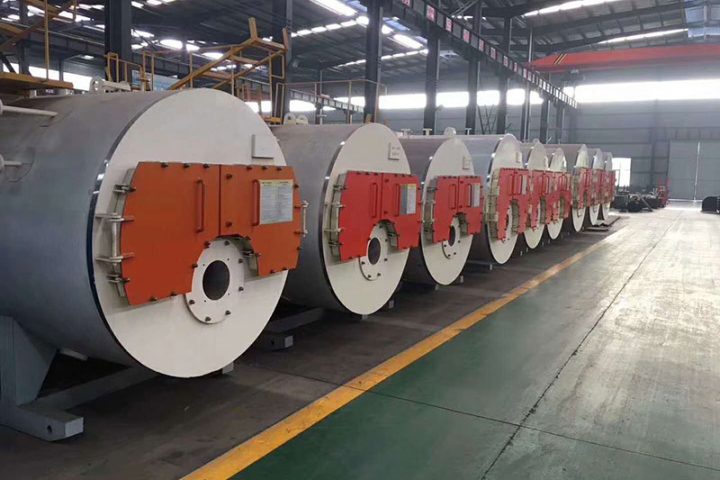
0.35-70 MW (30-6000 ×10⁴ kcal/h)
WNS/CWNS Gas/Oil Hot Water Boiler, 0.35-70 MW
Horizontal three-pass hot water boiler for gas and oil, 0.35-70 MW at 85/65 °C, atmospheric shell with large water volume for stab...
View detailsDomestic hot water, laundry and kitchen steam sized on occupancy and diversity, with a 300-room hotel worked example and storage sizing.
Hotel and hospital heat loads follow the weather and the occupancy chart rather than a production schedule. Domestic hot water dominates, at 60 °C delivered and 55 °C at the tap, with a morning and an evening peak that are sharper than most industrial loads. Space heating follows outdoor temperature and is idle for half the year in many climates. Laundry and kitchen steam run on shift patterns, with a laundry peak that often coincides with the morning DHW peak.
Hospitals add continuous loads that hotels do not have: sterilisation, CSSD, humidification and a 24-hour demand that never falls to zero. That changes the sizing logic. A hotel can accept a boiler that cycles; a hospital generally cannot, because the cost of an outage is measured in cancelled procedures rather than in uncomfortable guests.
The design mistake in both cases is the same: taking a litres-per-person figure, multiplying by beds or rooms, and treating the result as a boiler size. The daily energy is one number; the peak hour is another, and the storage volume sits between them.
Domestic hot water is best served by a hot water boiler feeding plate heat exchangers and storage calorifiers, or by a vacuum hot water unit that combines the two. The ZKS vacuum series from 0.7 to 4.2 MW suits hotels and hospitals because the shell runs below atmospheric pressure, so the unit is not a pressure vessel in the usual sense and the inspection regime is correspondingly lighter.
Steam is kept for the users that genuinely need it: laundry presses and tumble dryers, kitchen kettles and dishwashers, and hospital sterilisers. That is usually 1-3 t/h, supplied by a small fire-tube unit or a packaged steam generator, and it should be a separate boiler rather than a large steam boiler serving everything through exchangers.
Storage is the third element. Two calorifiers of 5,000 litres give a buffer that lets a 700 kW boiler meet a 1.5 MW draw for twenty minutes, which is exactly the shape of a morning peak. Without storage, the boiler is sized for the peak and then cycles for the rest of the day.
| Parameter | Value | Note |
|---|---|---|
| Hot water capacity | 0.7 MW | vacuum unit, 85/60 °C |
| Daily DHW volume | 68.7 m³ at 60 °C | 300 rooms, 78% occupancy |
| Peak hour demand | 10.3 m³/h | 15% of daily in one hour |
| Storage | 2 × 5,000 L | calorifiers with anti-legionella cycle |
| Steam capacity | 2 t/h at 1.0 MPa | laundry, kitchen, sterilisation |
| Cold water inlet | 12 °C winter | design case |
| Fuel | Natural gas, 35.6 MJ/Nm³ | metered supply |
At 78% occupancy and 2.1 guests per occupied room, the hotel holds 491 guests. At 140 litres per guest per day of 60 °C water, daily demand is 68,700 litres. Heating from 12 °C to 60 °C takes 68,700 × 48 × 4.19 kJ = 13.81 GJ per day, which averages 160 kW over 24 hours.
The average is not the design case. The morning peak draws about 15% of the daily volume in one hour: 10.3 m³/h, or 10,300 × 48 × 4.19 / 3,600 = 576 kW. A 700 kW boiler covers that peak directly, and with 10 m³ of storage it covers a 1.4 MW surge for twenty minutes without the burner leaving high fire.
The steam side is separate. Laundry at 700 kg/h, kitchen at 400 kg/h and humidification at 200 kg/h total 1.3 t/h, so a 2 t/h unit at 1.0 MPa has ample margin for the laundry’s own peak when the dryers start together.
Check the annual gas. The DHW load is 13.81 GJ/day, or 5.04 TJ a year. At 95% efficiency that is 5.3 TJ of fuel, or 149,000 Nm³ of gas. The steam side, at 1.3 t/h for 6 hours a day, adds roughly 200,000 Nm³. Together the plant burns about 350,000 Nm³ a year, and that is the number to compare against a heat pump or solar preheat proposal.
Condensing only happens when the return water is cool. A hot water boiler at 85/60 °C cannot condense; the same boiler at 70/40 °C recovers latent heat from the flue gas and gains 4-6 points. That means designing the DHW exchanger for a 40 °C return, not 60 °C, and accepting a larger exchanger surface.
Solar preheat is the second lever: 40 m² of flat-plate collectors on a 300-room hotel can supply 20-30% of the annual DHW energy in a sunny climate, and more importantly it cuts the summer gas demand to near zero. Laundry heat recovery and pipe insulation are smaller but quick.
City-centre hotels and hospitals face NOx limits of 30 mg/Nm³, which on gas means flue-gas recirculation and a correctly matched burner. Stack height is often constrained by the building outline, and a rooftop plant room needs a dispersion check rather than the standard 8 m assumption. Noise at the nearest bedroom window is a real constraint for rooftop units.
Legionella control governs the whole DHW design. Storage is held at 60 °C and distributed at 55 °C with a return above 50 °C, which conflicts with the low return temperature that condensing wants. The usual resolution is a plate exchanger that cools the primary return while the calorifier stays hot, plus a weekly pasteurisation cycle.
Give us the occupancy and the peak-hour assumption and we will size boiler, storage and steam side together, with the storage volume stated rather than implied.
0.35-70 MW (30-6000 ×10⁴ kcal/h)
Horizontal three-pass hot water boiler for gas and oil, 0.35-70 MW at 85/65 °C, atmospheric shell with large water volume for stab...
View details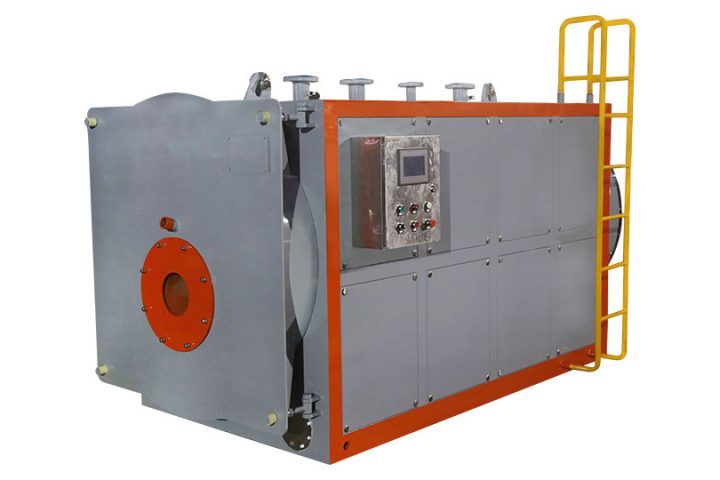
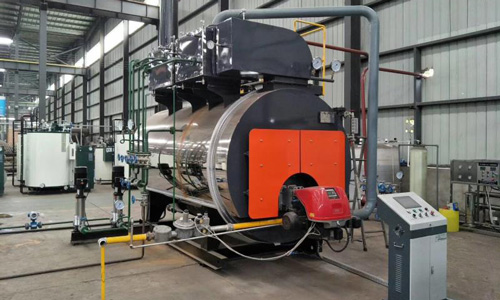
0.7-14 MW (larger on request)
Three-pass wet-back hot water boiler with a large furnace, FGR or surface premix burner and an internal condenser for 95/70 and 11...
View details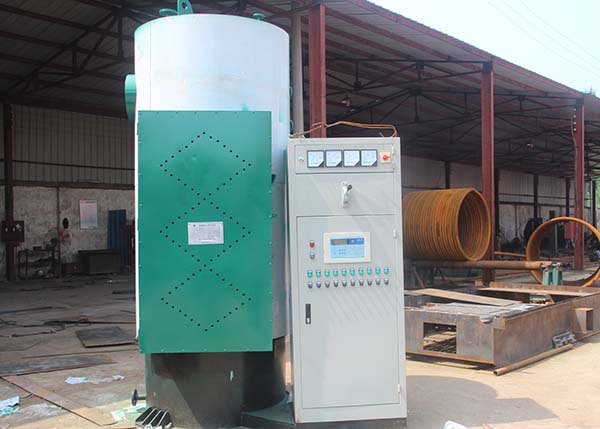
0.1-1 t/h
Vertical electric steam boiler, 0.1-1 t/h at 0.4-0.7 MPa, for laundries, sterilisers and small process loads where floor space is...
View detailsExternal links open the publisher’s website and are provided for background reading.
Roughly one to two hours of average demand, or enough to cover the morning peak for 20-30 minutes. For 300 rooms that is 10,000 litres in two calorifiers, which lets a 700 kW boiler serve a 1.4 MW peak.
In most cases yes. Sterilisation, CSSD and kitchen equipment need steam at 0.4-1.0 MPa, while hot water is better made in a hot water boiler. Separate units also mean a steam failure does not take out the domestic water.
The boiler can, but it will not condense unless the return is below about 55 °C. Use a plate heat exchanger to isolate the 60 °C calorifier from the boiler circuit and return water at 40 °C to the boiler.
30 mg/Nm³ is the figure applied in many urban districts, and it requires flue-gas recirculation on a gas burner. Check the local permit before the burner is selected, because retrofitting recirculation later is expensive.
Industry solution
Dust, SO2 and NOx retrofits compared on efficiency and footprint, the real ceiling for a chain-grate boiler, and how to phase the...
View details
Industry solution
Sizing steam plant for pasteurisers, retorts, CIP and kettles, with a worked 6 t/h example, accumulator logic and fuel-saving leve...
View details
Industry solution
Bitumen storage, tank coils and line tracing sized for a 320 t/h plant, with a 700 kW worked example and dryer heat demand cross-c...
View detailsWe appoint one or two partners per country to quote, deliver and service our boilers locally. Territory protection, factory pricing and commissioning support are part of the agreement.