
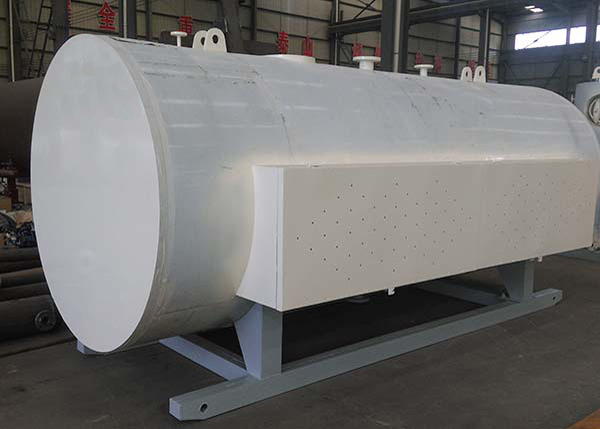
1 t/h
1 t/h Electric Steam Boiler WDR1-0.7
The WDR1-0.7 is a 1 t/h electric steam boiler producing 0.7 MPa steam at 170 °C. Heating elements sit in a horizontal shell with n...
View detailsVertical electric steam boiler, 0.1-1 t/h at 0.4-0.7 MPa, for laundries, sterilisers and small process loads where floor space is short.
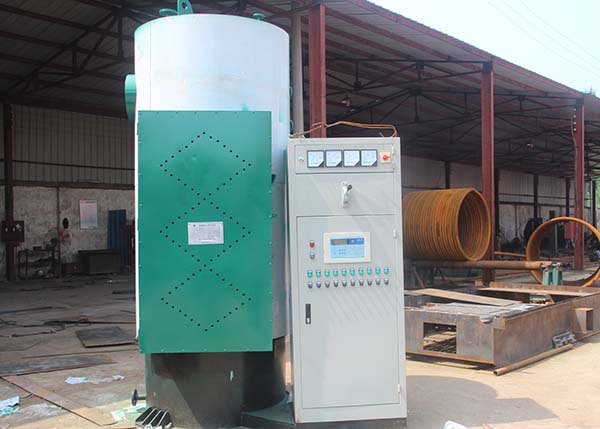
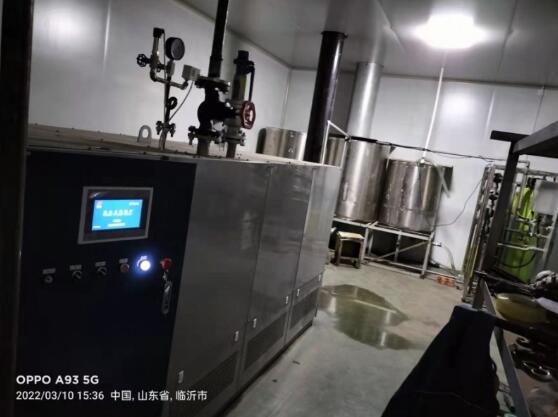
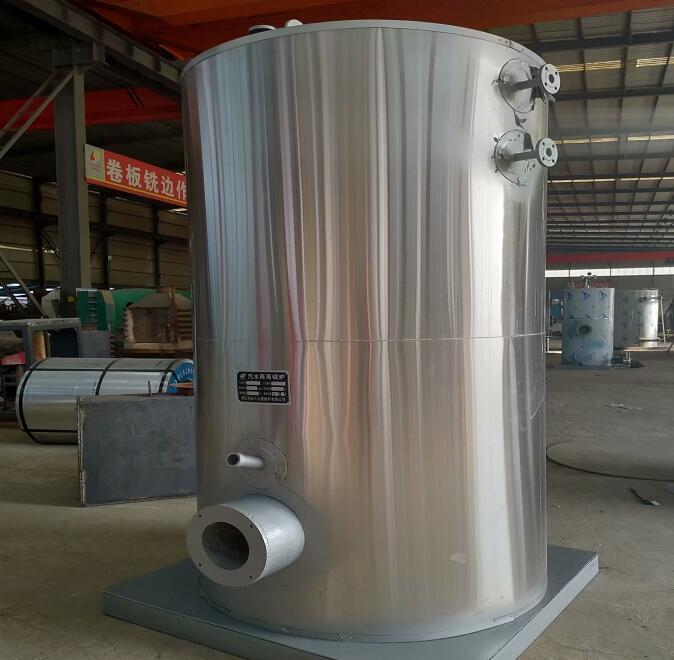
The LDR stands the pressure vessel upright. Water and elements sit in a cylindrical shell, the steam space is at the top, and the whole unit occupies a footprint of roughly one square metre to 1.6 m by 1.6 m, with a height of 2.2 to 3.6 m. For a laundry in a city centre, a hospital steriliser room or a garment factory where the boiler house was an afterthought, that geometry decides the project. The unit can be brought in through a standard double door and set on a normal industrial floor slab.
Output runs from 0.1 t/h to 1 t/h at 0.4 or 0.7 MPa. Small as it is, the LDR is a real pressure vessel with a real steam space, not a once-through coil: it holds a water volume of 0.7 to 1.65 m³, which gives a useful buffer against short, sharp draws such as a steriliser cycle or a press surge.
The heating elements are grouped into flanged bundles, each one independent and separately protected. The control cabinet is mounted apart from the boiler body rather than bolted to it. This separation matters more on a vertical unit than on a horizontal one, because the top of the shell is the hottest part of the package and any panel fixed there would run its contactors and boards at an unnecessary temperature. Keeping the electrics at floor level, connected by a protected cable run, is the difference between ten years of board life and five.
Control is by PLC with a touchscreen panel, operator authorisation levels and a live display of pressure, level, current and fault history. Heating is stepped in groups so that the supply sees a series of modest current increments. Automatic feedwater control, low-water cut-off, over-pressure trip, over-temperature protection and earth-leakage protection are all built into the same logic, and the unit can run unattended once the alarms are routed to a duty phone.
With less than two tonnes of water and steel to heat, the LDR raises steam from cold in 10 to 20 minutes. That short start matters for plants that work one shift: a gas boiler of the same output would spend the first hour of the shift bringing refractory and water up to temperature. It also matters for cycling loads, where the unit may start and stop several times a day.
Fast cycling puts the level control under pressure, because the water line swells when pressure drops and collapses when it rises. Electrode probes with temperature compensation and a feedwater valve sized for the boiler, not for the site, keep this manageable. The steam space is deliberately generous relative to output so that carry-over stays below the usual contractual limit; where the load is a steriliser or an autoclave that demands dry steam, a small separator and trap set at the outlet is worth specifying.
Electric elements fail for one reason above all others: scale. A film of hardness salts on the element surface insulates it from the water, the metal runs hotter than the design temperature, and the sheath eventually splits. Softened feedwater at the correct hardness, plus blowdown at the rate recommended for the local water, will take element life past the nominal 20,000 hours. Where raw water is hard and a softener is not practical, a small reverse-osmosis unit or a scale inhibitor dosing set is cheaper than a habit of element replacement.
Blowdown on a small vertical boiler is often neglected because the volume is small and the operator sees no consequence. In practice a 0.5 t/h unit evaporating for eight hours a day concentrates salts quickly; a timed automatic blowdown valve, set to discharge a fixed percentage of feedwater, removes the guesswork.
Typical duties are laundry presses and dryers, hospital and laboratory sterilisers, small autoclaves, food kettles, garment steaming, and humidification. In each case the load is intermittent, the steam demand is under a tonne an hour, and the site either has no gas connection or cannot justify a flue. Two or three units can be piped in parallel where redundancy matters, with a header and non-return valves so any one can be isolated without stopping the plant.
Allow 25 to 45 days from approval of drawings for delivery, and 5 to 10 days on site for commissioning, water treatment set-up and operator training.
The tallest standard unit is about 3.6 m. Allow a further 800 mm above the shell for element bundle withdrawal and safety valve removal, and check that the door and corridor on the route in will pass the installed width.
Yes, with the alarm output routed to a monitored point. Automatic feedwater control, low-water cut-off and over-pressure trip protect the unit; the operator's role is water treatment checks and periodic blowdown verification.
Small vertical shells are usually built for 0.4 or 0.7 MPa because that covers laundry, steriliser and food duties. Higher pressures are available in the horizontal WDR range, where the shell geometry suits thicker plate.
| Model | LDR0.1-0.4 | LDR0.2-0.4 | LDR0.3-0.4 | LDR0.5-0.7 | LDR0.7-0.7 | LDR1-0.7 |
|---|---|---|---|---|---|---|
| Rated evaporation | 0.1 t/h | 0.2 t/h | 0.3 t/h | 0.5 t/h | 0.7 t/h | 1 t/h |
| Rated pressure | 0.4 MPa | 0.4 MPa | 0.4 MPa | 0.7 MPa | 0.7 MPa | 0.7 MPa |
| Steam temperature | 151 °C | 151 °C | 151 °C | 170 °C | 170 °C | 184 °C |
| Installed power | 70 kW | 140 kW | 210 kW | 350 kW | 490 kW | 700 kW |
| Empty weight | 615 kg | 750 kg | 920 kg | 1350 kg | 1800 kg | 2100 kg |
| Width × height | 900×2200 mm | 1000×2500 mm | 1100×2600 mm | 1400×3200 mm | 1300×3500 mm | 1600×3600 mm |
1 t/h
The WDR1-0.7 is a 1 t/h electric steam boiler producing 0.7 MPa steam at 170 °C. Heating elements sit in a horizontal shell with n...
View details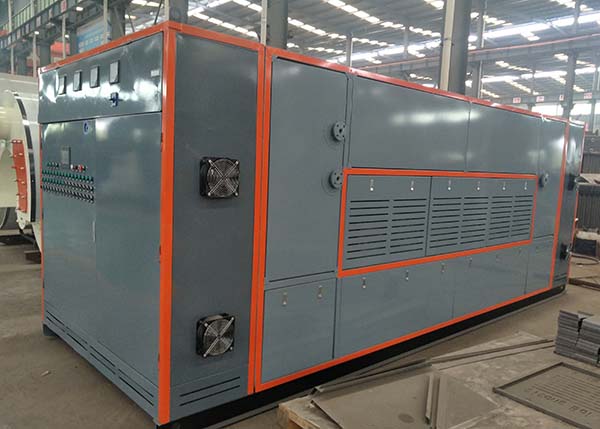
0.35-2.8 MW
Horizontal electric hot water boiler, 0.35-2.8 MW at 85/60 °C, for district heating, hospitals and process hot water without a flu...
View details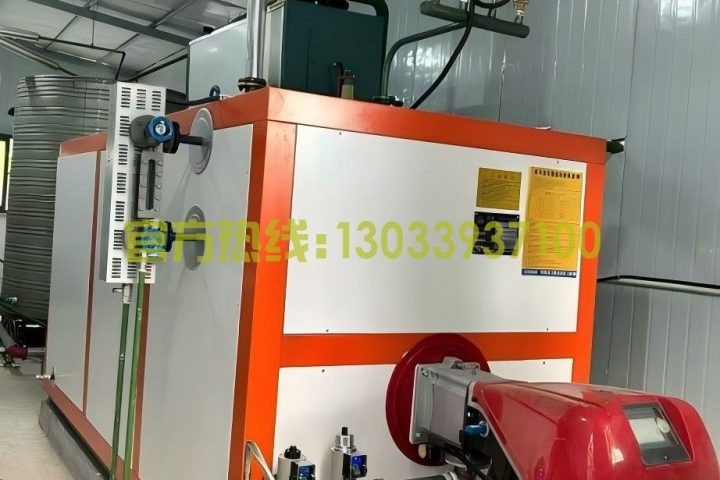
0.1-1 t/h from 50, 60, 80 or 100 kW modules
Parallel 50-100 kW electric steam modules, 0.1-1 t/h at 0.4-0.7 MPa, staged by PLC so part-load efficiency holds and one module is...
View detailsExternal links open the publisher’s website and are provided for background reading.
Include the capacity (t/h or MW), fuel, working pressure and site country so the proposal matches your permit limits.
We appoint one or two partners per country to quote, deliver and service our boilers locally. Territory protection, factory pricing and commissioning support are part of the agreement.