
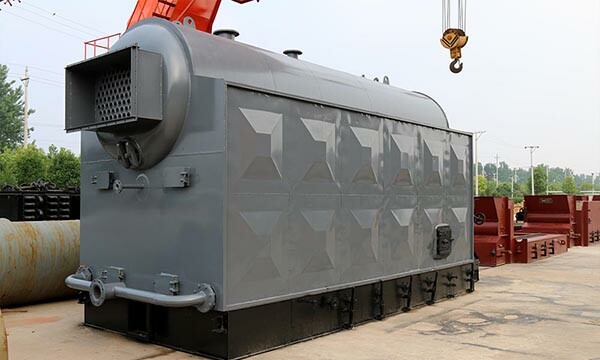
6 t/h
6 t/h Coal Steam Boiler DZL6-1.25-AII
The DZL6-1.25-AII is a 6 t/h single-drum chain-grate coal steam boiler delivering 1.25 MPa steam at 194 °C. It burns bituminous co...
View detailsIndirect coal-fired hot air furnace, 0.5-20 Gcal/h, delivering 150-600 °C clean air for grain, timber, brick and gypsum drying without combustion gas in the product.
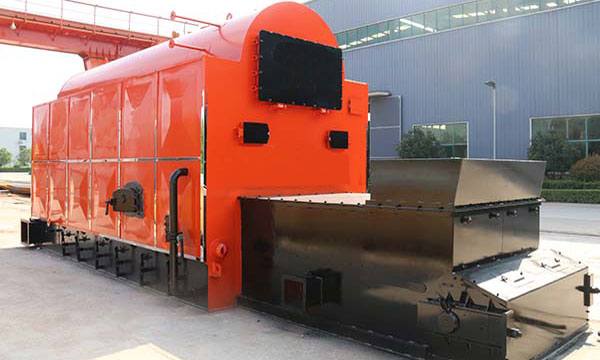
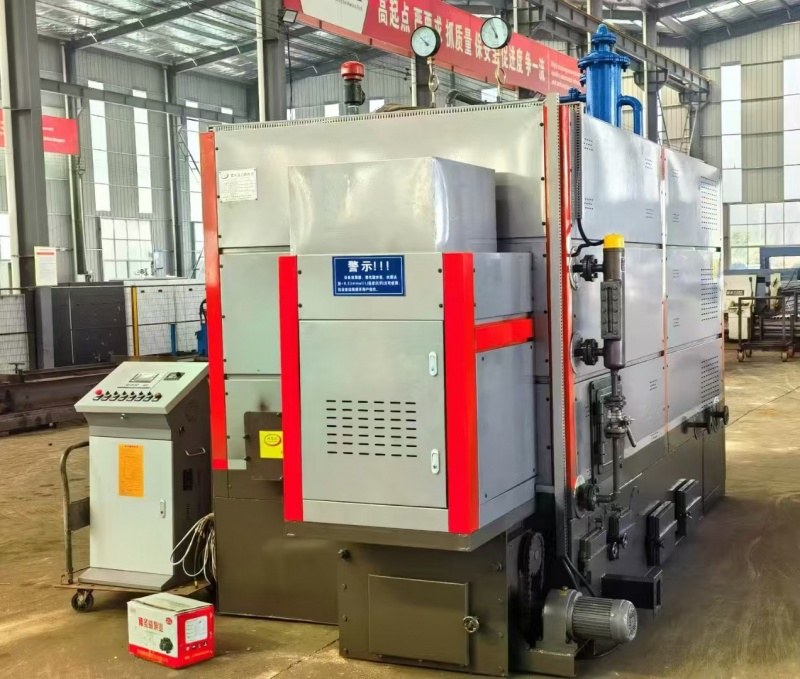
A coal-fired hot air furnace burns coal in a refractory chamber and passes the flue gas over the outside of a heat exchanger while process air travels through the inside. The streams never meet, so the air leaves at 150 to 600 °C carrying no fly ash, sulphur dioxide or combustion water vapour, which is what lets a coal fire dry grain, timber, brick, gypsum or tea without contaminating it. Output runs from 0.5 to 20 Gcal/h, or 0.58 to 23 MW.
A direct-fired furnace is cheaper and 10 to 15 points more efficient, but its gas is wet, oxygen-poor and carries everything the coal produced. Where a gas main reaches the plant, an indirect gas furnace does the same clean-air job at about 90 per cent with no ash, and has taken most of this market.
The chamber is a refractory-lined box with a fixed grate, sized for 350 to 500 kW/m³ so the flame does not impinge on the bundle. Coal needs that volume: volatiles must have time and temperature to burn above the bed.
The heat exchanger decides life. Air-side metal runs 20 to 50 K above the air it heats, so 600 °C air means a 620 to 650 °C wall. Carbon steel stops near 400 °C; type 321 or 316 holds to about 550 °C of wall, and 310S carries the top of the range. A 5 m bundle grows 45 to 60 mm between cold and 600 °C, so one end must be free to move or the tube welds crack within a few hundred cycles.
Efficiency is 70 to 75 per cent on the lower calorific value, with losses in flue gas at 250 to 350 °C, excess air above 1.5 that a fixed grate cannot trim, and unburnt carbon in the ash. At 72 per cent and 22 MJ/kg coal, a gigacalorie of delivered air costs about 264 kg of coal; per gigajoule, 63 kg.
| Size class | Delivered heat | Coal burn | Combustion air | Outlet air, max |
|---|---|---|---|---|
| 0.5 Gcal/h | 0.58 MW | 132 kg/h | 1,070 Nm³/h | 300 °C |
| 2 Gcal/h | 2.3 MW | 530 kg/h | 4,300 Nm³/h | 400 °C |
| 6 Gcal/h | 7.0 MW | 1,580 kg/h | 12,800 Nm³/h | 500 °C |
| 12 Gcal/h | 14.0 MW | 3,170 kg/h | 25,700 Nm³/h | 600 °C |
| 20 Gcal/h | 23.3 MW | 5,280 kg/h | 42,800 Nm³/h | 600 °C |
Combustion air runs about 8 Nm³ per kg of coal at 1.4 excess air, so the 6 Gcal/h unit moves some 12,800 Nm³/h.
Coal at 15 to 25 per cent ash leaves a fifth to a third as fly ash, and raw flue gas carries 1 to 3 g/Nm³. A settling chamber takes the coarse fraction, a multiclone brings it to 200 to 400 mg/Nm³, and a bag filter is needed below 50 mg/Nm³, kept above the acid dew point, near 140 °C for coal at 1 per cent sulphur, or wet ash blinds the bags. A fixed-grate fire also smokes at every stoking, and secondary air only shortens the plume.
There is no oxygen trim on a hand-stoked bed, and little point fitting one: the bed is uneven, coal quality varies, and grate air distribution is fixed by the casting. Index the forced-draught damper against load, check oxygen at low, medium and full fire, and accept 6 to 9 per cent oxygen, or 1.4 to 1.7 excess air. Below 5 per cent the fire goes lazy; above 10 per cent stack loss eats two points.
A first start after a refractory rebuild is a 4 to 8 hour dry-out at low fire with the dampers open, or the lining spalls; a daily start from cold takes 40 to 90 minutes. Slag is routine: 20 to 30 per cent of the ash melts into clinker, broken out through the fire door or dropped through a dump grate each shift. A unit that is not de-clinkered loses grate area, then output, then the fire.
These furnaces are being closed rather than replaced across most Chinese urban areas, and new units inside defined zones are effectively unavailable. What remains is a service fleet in grain-drying regions, brick and gypsum works, tea drying and timber kilns, where the dryer, coal store and ash pit exist and the capital to change them does not. Where gas arrives, an indirect gas furnace fits the same ductwork and needs no fireman. That is why this page describes a technology in service rather than a growth product.
Because the combustion gas carries fly ash, sulphur dioxide and water vapour into the product. Direct firing is 10 to 15 points more efficient and cheaper, but it discolours grain, marks brick and contaminates tea. The indirect bundle costs that efficiency and keeps the air clean.
150 to 600 °C of delivered air, with the metal running 20 to 50 K hotter. Above about 550 °C of wall the alloy changes: 321 or 316 to that point, 310S above it, and thicker tubes with closer supports as the temperature climbs.
A multiclone reaches 200 to 400 mg/Nm³, which satisfies many older permits. Below 50 mg/Nm³ needs a bag filter held above the acid dew point, near 140 °C for coal at 1 per cent sulphur; running cooler blinds the bags with wet ash.
| Size class | 0.5 Gcal/h | 2 Gcal/h | 6 Gcal/h | 12 Gcal/h | 20 Gcal/h |
|---|---|---|---|---|---|
| Delivered heat | 0.58 MW | 2.3 MW | 7.0 MW | 14.0 MW | 23.3 MW |
| Coal burn at 72% | 132 kg/h | 530 kg/h | 1,580 kg/h | 3,170 kg/h | 5,280 kg/h |
| Combustion air at 1.4 excess | 1,070 Nm³/h | 4,300 Nm³/h | 12,800 Nm³/h | 25,700 Nm³/h | 42,800 Nm³/h |
| Outlet air, maximum | 300 °C | 400 °C | 500 °C | 600 °C | 600 °C |
6 t/h
The DZL6-1.25-AII is a 6 t/h single-drum chain-grate coal steam boiler delivering 1.25 MPa steam at 194 °C. It burns bituminous co...
View details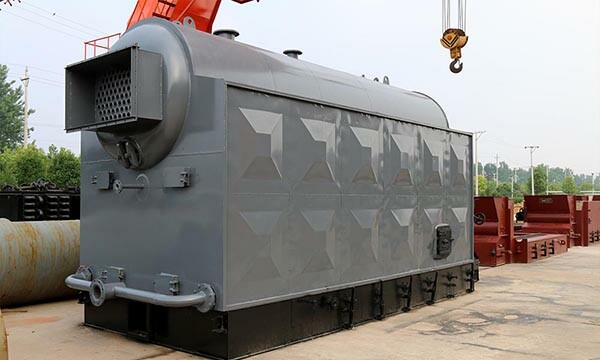
7-70 MW hot water
Hot water boiler package for district heating networks. SZL coal or SZS gas fired, 7-70 MW. Suitable for primary network supply, p...
View details10 t/h
The DZL10-1.25-AII is a 10 t/h single-drum chain-grate coal steam boiler producing 1.25 MPa steam at 194 °C, with threaded smoke t...
View detailsExternal links open the publisher’s website and are provided for background reading.
Include the capacity (t/h or MW), fuel, working pressure and site country so the proposal matches your permit limits.
We appoint one or two partners per country to quote, deliver and service our boilers locally. Territory protection, factory pricing and commissioning support are part of the agreement.