

6-100 t/h
SZS Water-Tube Gas/Oil Steam Boiler, 6-100 t/h
Membrane-wall water-tube steam boiler with staged combustion and FGR, 6-100 t/h at up to 2.5 MPa and 98% efficiency with heat reco...
View detailsA 6 t/h biomass boiler on eucalyptus and cotton waste supplies dyeing and finishing steam in Addis Ababa, with a bag filter for the plant's environmental permit.
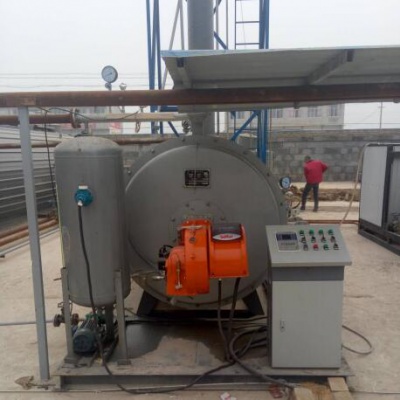
The plant in Addis Ababa spins, knits, dyes and finishes cotton for export. Its dye house runs 14 machines and the finishing line has two stenters, so steam demand is 4-5 t/h for most of the day and 5.5 t/h when the dye-house peak coincides with the finishing shift. A 6 t/h biomass boiler at 1.25 MPa covers it.
Ethiopia’s industrial parks have been pushing biomass as a replacement for heavy fuel oil, and this plant took that route with eucalyptus from plantations south of the city, mixed with the plant’s own cotton waste and fabric trimmings.
Eucalyptus logs are chipped to 50 mm and dried to under 25% moisture; cotton waste is dry and burns fast. The boiler is a DZL chain-grate unit with a water-cooled grate and a refractory arch, and the fuel mix is limited to 15% cotton waste because the light fibres carry over into the flue.
At 6 t/h the boiler absorbs about 4.2 MW. On a 14 MJ/kg mix the fuel rate is about 1.1 t/h, and the plant’s chipping and drying line is sized for 1.5 t/h so it can build a stock before the rainy season.
| Item | Value |
|---|---|
| Rated evaporation | 6 t/h |
| Pressure | 1.25 MPa |
| Fuel | eucalyptus chips, cotton waste |
| Fuel rate at rating | about 1.1 t/h |
| Efficiency | about 78% |
| Dust control | multi-cyclone plus bag filter |
The plant’s environmental certificate required visible-emission control, and the bag filter was sized for 25 mg/Nm3 outlet dust. The filter is preceded by a multi-cyclone that removes the coarse fly ash, and the bags are pulse-jet cleaned with compressed air. The plant keeps a spare set of bags and a differential-pressure gauge, because a torn bag shows up as a rise in stack opacity before the monitor alarms.
Ash goes to a local brick works. The boiler produces about 1.5 t of ash a day at full load, mostly from the eucalyptus, and the plant has a covered ash bay to keep it from blowing around the site.
Installation took ten weeks, including the fuel yard. Commissioning was eight days, and the first month exposed a feedwater problem: the softener was undersized for the plant’s 8 m3/h make-up, so hardness slipped through during the dye-house peak. A second resin vessel fixed it, and the plant now logs hardness every shift.
The boiler holds 1.2 MPa at the dye-house header, and the plant reports a 40% reduction in steam cost against heavy fuel oil. Grate maintenance is planned every 700 hours, and the plant has trained two operators to read the flue-gas analyser.
6-100 t/h
Membrane-wall water-tube steam boiler with staged combustion and FGR, 6-100 t/h at up to 2.5 MPa and 98% efficiency with heat reco...
View details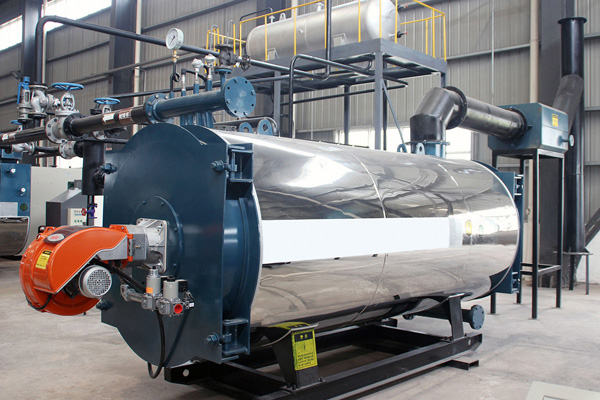
120-5,800 kW
Horizontal liquid-phase thermal oil heater, 120-5,800 kW, disc coil heating surface, 300-340 C at 0.8-1.0 MPa working pressure.
View details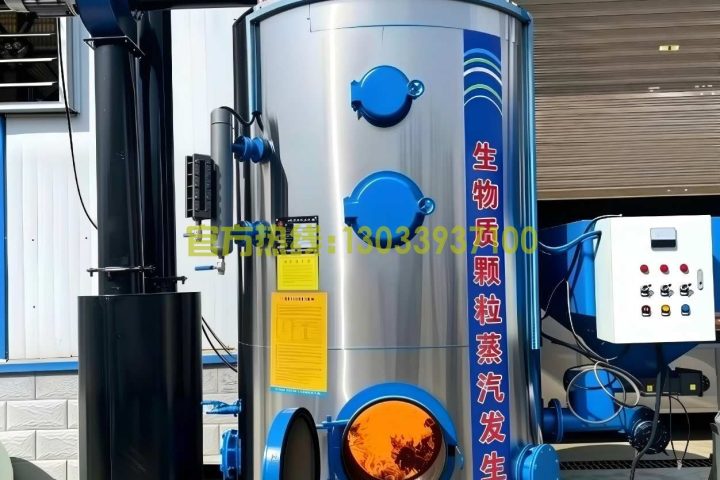
10-50 t/h feedwater
Tray-type thermal deaerator, 10-50 t/h, removing oxygen to below 15 ppb and heating feedwater to 104-105 °C before it reaches the...
View detailsExternal links open the publisher’s website and are provided for background reading.
About 15% of the fuel mix. Higher shares carry fibres into the flue and foul the bag filter.
The plant's permit requires low visible emissions. A cyclone removes coarse ash; the bag filter captures the fine fraction that causes the plume.
Chipping to about 50 mm and drying to below 25% moisture. Wet chips reduce furnace temperature and boiler capacity.
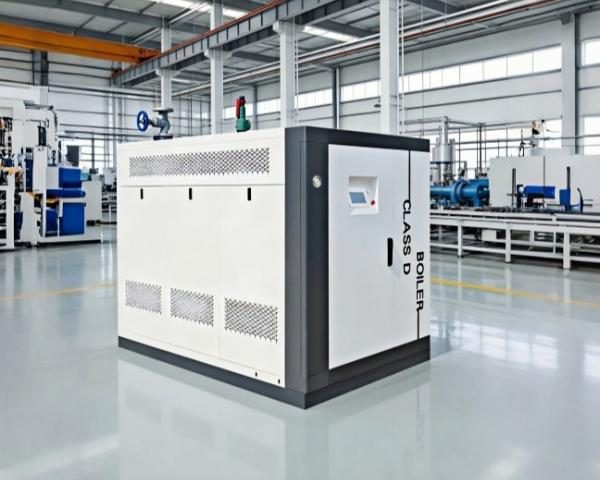
2022
Santiago, Chile
4 t/h gas steam boiler at 1.0 MPa on natural gas, commissioned in 2022 in Santiago, Chile: the site is at 570 m with summer ambien...
View project
2018
Pekanbaru, Riau Province, Indonesia
A heat transfer oil heating system was supplied for a palm oil refining operation in Pekanbaru, Riau Province, Indonesia, supporti...
View project
2025
Colombo, Sri Lanka
A 2 t/h biomass boiler on rubber wood and cinnamon waste supplies pressing and finishing steam at an apparel plant in Colombo, cut...
View projectWe appoint one or two partners per country to quote, deliver and service our boilers locally. Territory protection, factory pricing and commissioning support are part of the agreement.