
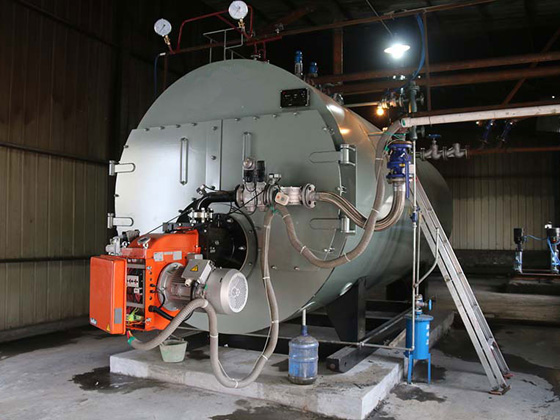
0.35-14 MW
WNS Pressurized Hot Water Boiler, 0.35-14 MW
Closed-loop pressurized hot water boiler for 95/70 and 115/70 systems, 0.35-14 MW, three-pass wet-back shell with modulating burne...
View detailsThe WNS15-1.25-Q is a packaged three-pass wet-back fire-tube boiler delivering 15 t/h of steam at 1.25 MPa and 194 °C, firing natural gas, LPG, light diesel or heavy fuel oil at 95% efficiency (LHV basis).
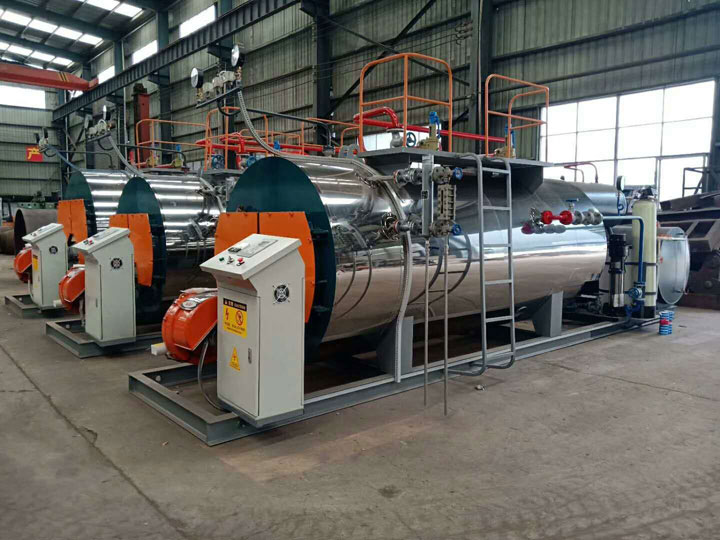
The WNS15-1.25-Q is a 15 t/h unit of the WNS gas/oil steam boiler series. It is a three-pass wet-back fire-tube boiler, factory-packaged with a low-NOx burner. Rated steam output is 15 t/h at 1.25 MPa and 194 °C, with thermal efficiency of 95% on an LHV basis. The unit fires natural gas, LPG, light diesel or heavy fuel oil.
At 15 t/h, this model sits in the mid-to-large packaged range. It suits plants whose steam demand runs continuously in the low-to-mid teens of tonnes per hour and where a single packaged unit is preferred over multiple smaller boilers. Typical duty is process steam for continuous operations, with the boiler sized so that normal demand falls below rated output and the burner modulates rather than cycling at the top of its range.
The published fuel consumption is 1115 Nm³/h at rated output, stated for natural gas at 95% efficiency. The figure is a rated-output value: it represents the gas flow needed to hold 15 t/h of steam at the stated pressure and temperature with the burner at full firing. It is not an average or an annual figure. Consumption scales with actual output, so a boiler held at part load draws proportionally less fuel, subject to the efficiency curve at that point.
At 15 t/h the furnace and convection surfaces are large enough that part-load operation is practical rather than a compromise. The low-NOx burner modulates across its firing range, and the three-pass wet-back layout keeps gas-side velocities and heat transfer reasonably stable as load falls. In practice the boiler is usually selected so that the most common steam demand sits in the middle of the firing range, leaving headroom for peaks and keeping the burner out of its lowest, least efficient band. Steam pressure is held by burner modulation rather than frequent start-stop cycling.
The unit is packaged, so the pressure parts, burner and controls arrive as a single assembly and site work is mainly foundations, connections and commissioning. In general terms, plan for the boiler body plus front and rear access for burner service and tube inspection, and side clearance for the control panel and pipework. The boiler house should provide combustion and ventilation air, a flue route sized for the burner, and a feedwater and blowdown arrangement. Final layout should follow the manufacturer’s general arrangement drawing for the model.
Fire-tube boilers at this capacity depend on consistent feedwater quality. Scale on the fire-tube surfaces reduces heat transfer and raises metal temperatures, and carryover affects steam quality. A feedwater treatment programme matched to the site’s raw water, together with routine blowdown and monitoring of dissolved solids, is part of normal operation. Water treatment is specified per site; it is not a fixed part of the boiler package.
The packaged control system covers burner management, flame supervision, modulation on steam pressure and the standard safety interlocks. The low-NOx burner is matched to the boiler and commissioned as a unit. Control philosophy and any plant-level integration are agreed at the project stage.
Choosing 15 t/h rather than the next size down keeps margin for peak demand and avoids running a smaller boiler flat out. Choosing it rather than the next size up avoids a unit that spends most of its life at low firing, where part-load efficiency and flame stability are less favourable. The right point is where normal demand sits comfortably inside the modulation range.
| Parameter | Value |
|---|---|
| Model | WNS15-1.25-Q |
| Capacity | 15 t/h |
| Pressure | 1.25 MPa |
| Steam temperature | 194 °C |
| Feedwater temperature | Not specified in brief |
| Fuel | Natural gas, LPG, light diesel, heavy fuel oil |
| Fuel consumption at rated output | 1115 Nm³/h (natural gas, 95% efficiency) |
| Efficiency | 95% (LHV basis) |
| Burner/control | Low-NOx burner, packaged controls |
| Application | Process steam, continuous duty |
It suits plants with continuous demand in the low-to-mid teens of tonnes per hour, sized so normal demand sits inside the burner's modulation range with headroom for peaks.
It is the natural gas flow at rated output, 15 t/h, at 95% efficiency (LHV). Actual consumption scales with output; it is not an average or annual figure.
No. Feedwater treatment is specified per site and is not part of the packaged boiler. Consistent water quality and routine blowdown are required for reliable fire-tube operation.
| Model | WNS15-1.25-Q |
|---|---|
| Capacity | 15 t/h |
| Pressure | 1.25 MPa |
| Steam temperature | 194 °C |
| Feedwater temperature | Not specified in brief |
| Fuel | Natural gas, LPG, light diesel, heavy fuel oil |
| Fuel consumption at rated output | 1115 Nm³/h (natural gas, 95% efficiency) |
| Efficiency | 95% (LHV basis) |
| Burner/control | Low-NOx burner, packaged controls |
| Application | Process steam, continuous duty |
0.35-14 MW
Closed-loop pressurized hot water boiler for 95/70 and 115/70 systems, 0.35-14 MW, three-pass wet-back shell with modulating burne...
View details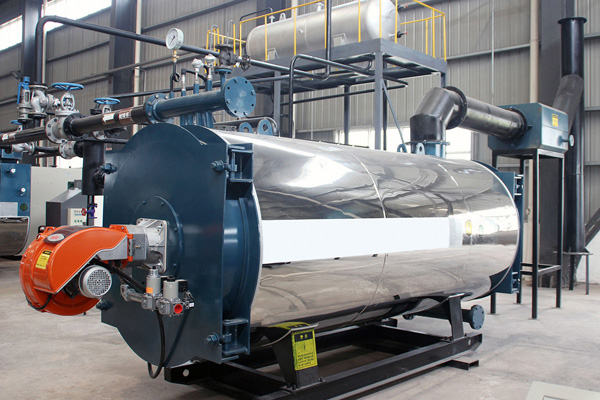
1-7 MW thermal oil
A YY(Q)W thermal oil heater package for asphalt mixing plants, sized 1-7 MW for bitumen tank heating at 150-170 °C and aggregate d...
View details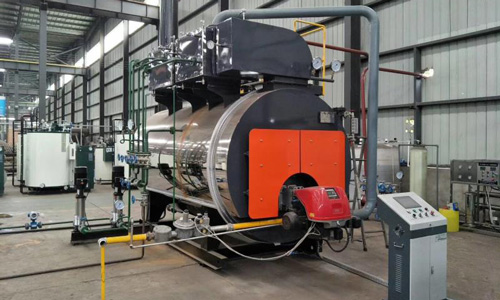
1-100 t/h
Two-pass wet-back steam boiler with economiser and condensing tail, designed for 30 mg/Nm³ NOx and a stack temperature near 55 °C.
View detailsExternal links open the publisher’s website and are provided for background reading.
Include the capacity (t/h or MW), fuel, working pressure and site country so the proposal matches your permit limits.
We appoint one or two partners per country to quote, deliver and service our boilers locally. Territory protection, factory pricing and commissioning support are part of the agreement.