

35 t/h
35 t/h Water-Tube Gas/Oil Steam Boiler SZS35-1.6-Q
The SZS35-1.6-Q is a 35 t/h D-type double-drum water-tube boiler delivering 1.6 MPa steam at 204°C. It fires natural gas, LPG, lig...
View detailsMethanol, diesel and gas fired steam boiler, 0.5-10 t/h at 1.0-1.25 MPa, with a methanol-compatible fuel train, infrared flame scanning and low sulphur and particulate.
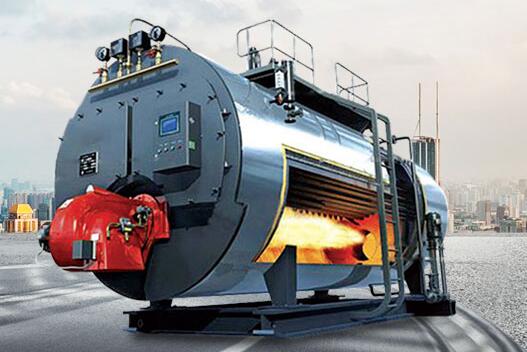
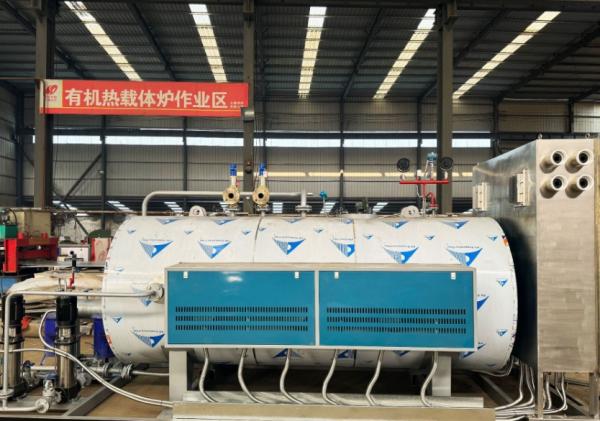
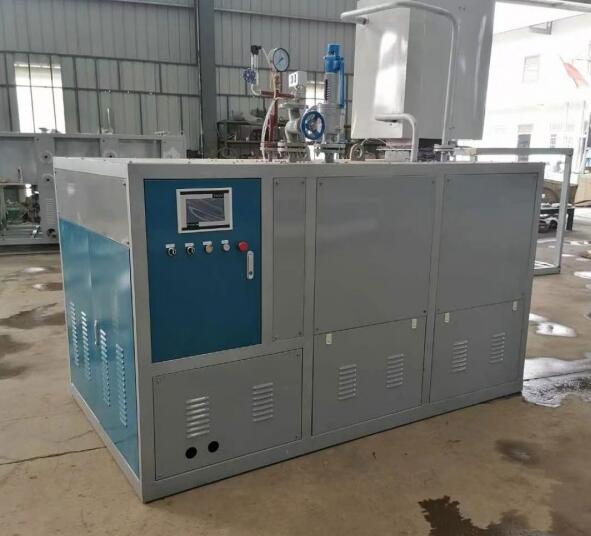
Methanol is a liquid at ambient conditions, CH3OH, with a lower calorific value near 19.9 MJ/kg and a density of 0.79 kg/L. That is 15.8 MJ per litre against 35.8 for diesel, so a methanol boiler burns about 2.3 litres for every litre of diesel it replaces. It contains no sulphur, no ash and no fuel-bound nitrogen, and it burns with a pale blue flame that is nearly invisible in daylight.
Multi-fuel units in this range, 0.5 to 10 t/h at 1.0 to 1.25 MPa, carry a burner and fuel train that accept methanol, diesel and, in some builds, natural gas or LPG, because the fuel decision is often made after the boiler is ordered.
The fuel train is the first difference. Methanol flow is 2.3 times the diesel volume for the same heat, so nozzle, pump and pipe are all larger: a 4 t/h unit burns about 610 kg/h, or 770 L/h, against 339 L/h of diesel. Methanol has low viscosity and almost no lubricity, so gear pumps wear and seals weep; magnetically coupled or diaphragm pumps with fluoroelastomer or PTFE seals are the usual answer. It attacks zinc, aluminium and some elastomers, so lines avoid galvanised and aluminium parts and the seals are methanol-compatible; tanks are usually mild steel.
The flame is the second difference. Methanol radiates far less than diesel, so furnace walls stay cooler and the burner needs a larger flame volume for the same heat release. Flame scanners that work on diesel’s luminous flame fail here: a UV sensor sees a weak signal through the pale flame, and the reliable choice is an infrared or visible-light scanner tuned to methanol, with the flame-failure response time proved at commissioning.
Methanol is toxic, flammable at an 11 °C flash point, and burns with a flame that is hard to see. A tank needs 110 per cent bunding, a leak detector in the bund sump, earthing and bonding at every fill point, a flame arrestor on the vent, and signage that says what the liquid is. A methanol leak looks like water on the floor, and a water hose makes it worse because methanol is fully miscible; alcohol-resistant foam or a fine water spray is the extinguishing medium, and the local fire service needs to know the tank is there.
Storage volume follows consumption. A 4 t/h unit at 610 kg/h over sixteen hours takes 9.8 t a day, or 12 m³, so a 40 m³ tank gives about three days. That is a hazardous-material store, not a fuel can, and it changes the site’s fire plan.
Methanol’s adiabatic flame temperature is around 1,870 °C against 2,100 °C for diesel, and it carries no fuel nitrogen, so nitrogen oxides come out at 60 to 120 mg/Nm³ without flue-gas recirculation, against 150 to 250 for an unmodified diesel flame. That is a real reduction, and it is still higher than a modern premixed gas burner at 30 to 50 mg/Nm³. With recirculation, 50 to 80 mg/Nm³ is reachable. Claims of gas-level NOx from a methanol boiler should be read as with recirculation and a well-tuned burner.
Not on cost. Per gigajoule, methanol usually lands at 1.5 to 2.5 times natural gas where a main exists, and above diesel in many markets. It is chosen for three reasons: gas is unavailable and diesel is expensive or dirty to store; the site is under an emissions cap counting sulphur, particulate and nitrogen oxides, where methanol is clean on all three; or the methanol is a by-product of an existing chemical plant and the alternative is flaring it.
Converting an existing diesel boiler is possible and common, but it is not a nozzle swap. The burner head needs a wider throat for the larger volumetric flow, the pump and seals change material, the flame scanner changes type, the tank and lines lose any zinc or aluminium parts, and the fuel train needs its own leak detection. Budget the conversion at 15 to 25 per cent of a new boiler, and prove the flame-failure response at commissioning rather than assuming the old scanner still sees a flame it was never designed for.
That is a niche, and it should be sold as one. A methanol boiler is a well-understood machine with a fuel train and a hazard regime around it. It is not a cheap route to low emissions, and a plant that can get gas should take gas.
Yes, with a fuel train sized for methanol's larger volume and a burner head that accepts both. The nozzle, pump and flame scanner are chosen for the wider duty; a diesel-only train converted later will be undersized on flow and blind on flame detection.
Nearly, in daylight. Methanol burns pale blue with low radiation, so a spill fire is hard to see and a UV scanner may not see the flame at all. Infrared or visible-light scanning, plus a bund leak detector, is the practical answer.
No. It gives much lower NOx than an unmodified diesel flame, 60 to 120 mg/Nm³ against 150 to 250, but a modern premixed gas burner reaches 30 to 50. Methanol is a low-sulphur, low-particulate fuel, not a lower-NOx fuel than gas.
| Size class | 0.5 t/h | 1 t/h | 2 t/h | 4 t/h | 6 t/h | 10 t/h |
|---|---|---|---|---|---|---|
| Rated evaporation | 0.5 t/h | 1 t/h | 2 t/h | 4 t/h | 6 t/h | 10 t/h |
| Methanol burn at 89% | 76 kg/h | 152 kg/h | 305 kg/h | 610 kg/h | 915 kg/h | 1,524 kg/h |
| Methanol volume | 96 L/h | 192 L/h | 385 L/h | 770 L/h | 1,155 L/h | 1,924 L/h |
| Diesel equivalent | 42 L/h | 85 L/h | 170 L/h | 339 L/h | 509 L/h | 848 L/h |
| Tank for 3 days, 16 h/day | 4.6 m³ | 9.2 m³ | 18.5 m³ | 37 m³ | 55 m³ | 92 m³ |
35 t/h
The SZS35-1.6-Q is a 35 t/h D-type double-drum water-tube boiler delivering 1.6 MPa steam at 204°C. It fires natural gas, LPG, lig...
View details
1-7 MW thermal oil
A YY(Q)W thermal oil heater package for asphalt mixing plants, sized 1-7 MW for bitumen tank heating at 150-170 °C and aggregate d...
View details
1-20 t/h
Gas-fired steam boiler package for textile and dyeing plants. SZS or WNS boilers deliver 1-20 t/h at 1.0-1.6 MPa, handling batch d...
View detailsExternal links open the publisher’s website and are provided for background reading.
Include the capacity (t/h or MW), fuel, working pressure and site country so the proposal matches your permit limits.
We appoint one or two partners per country to quote, deliver and service our boilers locally. Territory protection, factory pricing and commissioning support are part of the agreement.