
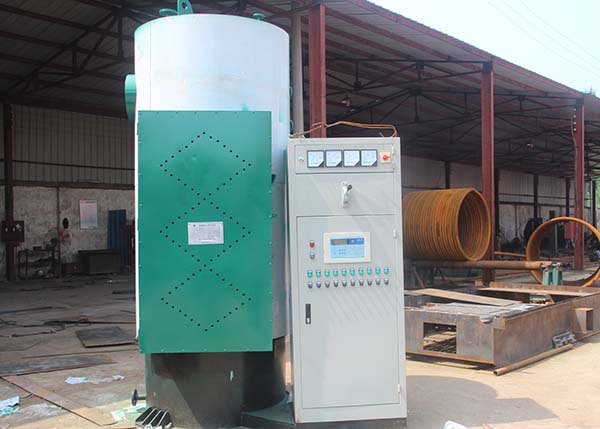
0.1-1 t/h
LDR Vertical Electric Steam Boiler
Vertical electric steam boiler, 0.1-1 t/h at 0.4-0.7 MPa, for laundries, sterilisers and small process loads where floor space is...
View detailsThe WDR0.5-0.7 is a 0.5 t/h electric steam boiler producing 0.7 MPa steam at 170 °C. Heating elements sit in a horizontal shell with no flue or fuel storage, drawing 40 kW at rated output at 98% efficiency.
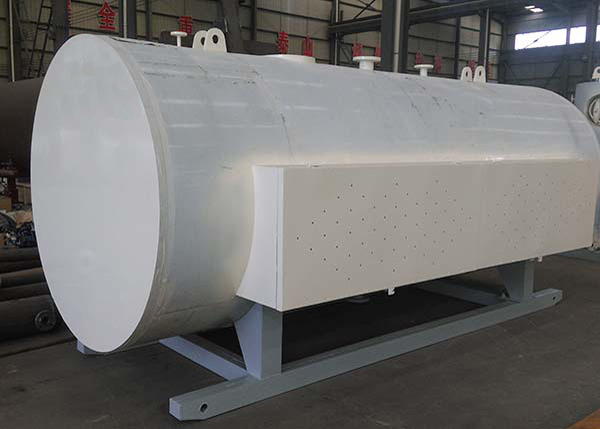
The WDR0.5-0.7 is the 0.5 t/h model in the WDR Electric Steam Boiler series. It produces saturated steam at 0.7 MPa and 170 °C using electric heating elements mounted in a horizontal shell. Because the heat source is electricity, the unit has no flue, no combustion air path and no fuel storage. The rated electric power draw at full output is 40 kW, quoted at 98% efficiency on an LHV basis.
At 0.5 t/h, this boiler fits loads that are steady but modest: small process steam users, batch heating where steam is drawn intermittently, clean-steam duties where the absence of combustion products matters, and sites where a flue or fuel store is impractical. It is a single-boiler answer for a plant whose steam demand sits comfortably below half a tonne per hour, with headroom for warm-up and short peaks.
The fuel figure is an electrical input, not a combustion rate. At rated output the boiler draws 40 kW of electric power, and that figure already reflects the 98% efficiency (LHV basis) quoted for the series. In other words, the 40 kW is the power taken from the supply at rated steam output, with the 2% balance representing losses rather than useful heat. Buyers sizing electrical supply and protection should work from this 40 kW rated input.
Electric heating is modular by nature: elements stage in and out as demand falls, so part-load operation at 0.5 t/h does not carry the fixed flue and standby losses of a fuel-fired unit. At low draw the boiler simply energises fewer elements, and the efficiency figure holds more closely across the turn-down range than a single-burner design would allow. For batch users this means the boiler tracks demand rather than cycling a large heat source against a small load.
The horizontal shell layout keeps the installation simple: the unit needs a level foundation, electrical supply and protection sized to the 40 kW rating, feedwater connection, steam outlet and blowdown provision. There is no flue to route, no chimney height to satisfy and no fuel store to accommodate. Access for element inspection and shell internals should be allowed on the relevant sides. Site the boiler with clearance for maintenance and in line with local electrical and pressure-system requirements.
As with any steam boiler, feedwater quality governs shell and element life. Scale deposits on heating elements insulate them from the water, raise element temperature and reduce output, so feedwater conditioning and regular blowdown are part of normal operation. Treatment should match the local water analysis; the boiler is not a substitute for a feedwater programme.
Control is by pressure-responsive staging of the electric elements, with the working pressure set at 0.7 MPa. Because there is no burner, there is no fuel/air ratio control, no flame supervision and no flue gas path to monitor. Safety and operating interlocks follow the pressure-system design for the unit; the control package is matched to the electrical staging arrangement.
Choose the 0.5 t/h model when demand sits below half a tonne per hour and a larger shell would mean paying for capacity that is rarely used. Step up to the next size when sustained demand approaches or exceeds 0.5 t/h, when peaks are frequent, or when future load growth is expected. Step down when the load is clearly smaller and a 0.5 t/h unit would run at low output for long periods.
| Parameter | Value |
|---|---|
| Model | WDR0.5-0.7 |
| Capacity | 0.5 t/h |
| Pressure | 0.7 MPa |
| Steam temperature | 170 °C |
| Feedwater temperature | Not specified in brief |
| Fuel | Electricity |
| Fuel consumption at rated output | 40 kW (electric power, 98% efficiency) |
| Efficiency | 98% (LHV basis) |
| Burner/control | Electric heating elements in horizontal shell; no burner, no flue |
| Application | Small process, batch and clean-steam duties |
The rated electric input at full output is 40 kW, quoted at 98% efficiency (LHV basis). Supply voltage, phase arrangement and protection are not stated in the brief; size the electrical installation to the 40 kW rating and confirm details with the supplier.
No. The heating elements sit in a horizontal shell, so there is no flue and no fuel storage. The installation needs a level foundation, electrical supply, feedwater connection, steam outlet and blowdown provision.
Electric elements stage in and out with demand, so at part load fewer elements are energised. There is no burner to cycle and no flue loss, which suits batch users whose draw varies through the day.
| Model | WDR0.5-0.7 |
|---|---|
| Capacity | 0.5 t/h |
| Pressure | 0.7 MPa |
| Steam temperature | 170 °C |
| Feedwater temperature | Not specified in brief |
| Fuel | Electricity |
| Fuel consumption at rated output | 40 kW (electric power, 98% efficiency) |
| Efficiency | 98% (LHV basis) |
| Burner/control | Electric heating elements in horizontal shell; no burner, no flue |
| Application | Small process, batch and clean-steam duties |
0.1-1 t/h
Vertical electric steam boiler, 0.1-1 t/h at 0.4-0.7 MPa, for laundries, sterilisers and small process loads where floor space is...
View details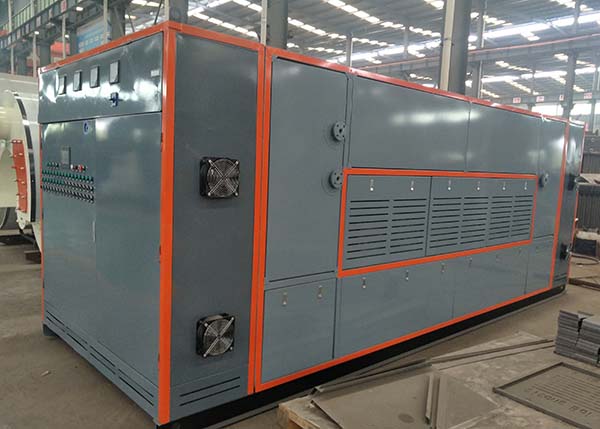
0.35-2.8 MW
Horizontal electric hot water boiler, 0.35-2.8 MW at 85/60 °C, for district heating, hospitals and process hot water without a flu...
View details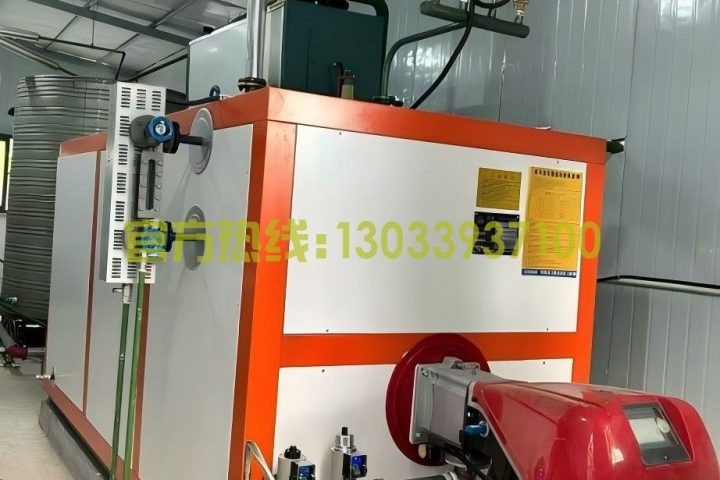
0.1-1 t/h from 50, 60, 80 or 100 kW modules
Parallel 50-100 kW electric steam modules, 0.1-1 t/h at 0.4-0.7 MPa, staged by PLC so part-load efficiency holds and one module is...
View detailsExternal links open the publisher’s website and are provided for background reading.
Include the capacity (t/h or MW), fuel, working pressure and site country so the proposal matches your permit limits.
We appoint one or two partners per country to quote, deliver and service our boilers locally. Territory protection, factory pricing and commissioning support are part of the agreement.