
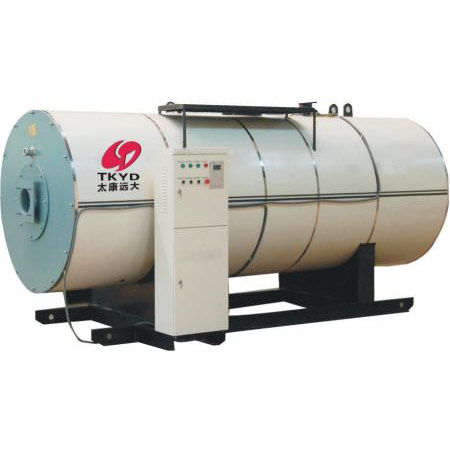
0.35-7 MW
High-Temperature Hot Air Furnace, 350-800 °C
Indirect gas or oil fired hot air furnace, 0.35-7 MW, delivering clean air at 350-800 °C through a stainless air-side heat exchang...
View detailsSteam boiler package for food processing: WNS gas or electric, 0.5-10 t/h at 0.7-1.25 MPa. Handles shift-based loads and sharp CIP peaks. Culinary steam with food-grade treatment.
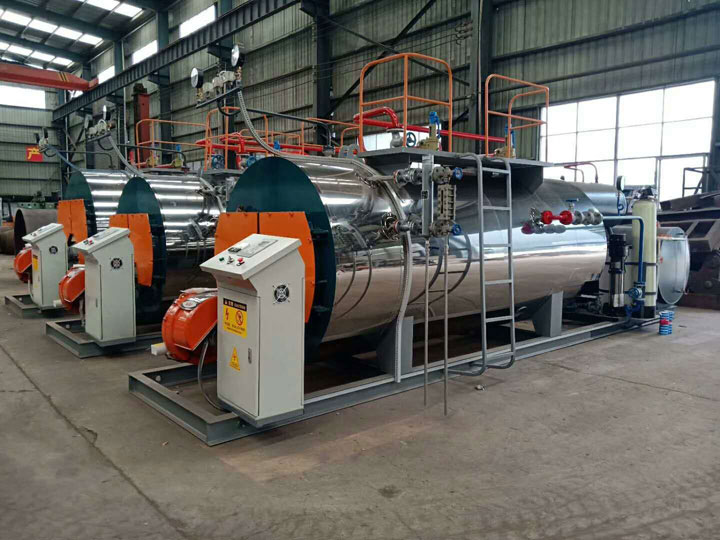
Food processing relies on steam for direct and indirect duties: cooking, sterilization, clean-in-place (CIP), and pasteurization. Each duty imposes specific requirements on steam quality, pressure stability, and response speed. Culinary steam—used where steam contacts food directly—must be produced with food-grade treatment to prevent contamination. Indirect duties such as jacket heating and pasteurization require dry saturated steam at consistent pressure to maintain temperature control. The boiler package must deliver reliable steam across these varied demands while accommodating the cyclic nature of food plant operations.
Steam demand in food plants typically follows shift patterns, with steady baseload during production and sharp, short peaks during CIP cycles. CIP peaks can be several times the average demand but last only minutes. Proper sizing requires analyzing both the maximum simultaneous demand and the frequency of peaks. A boiler sized only for average load will struggle during CIP; one sized for peak may be inefficient at baseload. The recommended capacity range of 0.5–10 t/h at 0.7–1.25 MPa covers most food processing applications. For plants with highly variable loads, modular boiler configurations or steam accumulators can help manage peaks without oversizing the boiler.
The package offers two fuel options: WNS gas steam boilers and electric steam boilers. WNS gas boilers are suitable for sites with natural gas supply and offer high efficiency through economizers and condensing operation where applicable. Electric boilers provide zero on-site emissions, quiet operation, and precise control, making them ideal for clean environments or where gas infrastructure is limited. The choice depends on operating costs, site utilities, and environmental considerations. Both options are available with heat recovery features to improve overall efficiency.
Steam quality is critical in food processing. For culinary steam, the boiler feedwater must be treated to food-grade standards, and steam must be filtered and sampled to ensure purity. Indirect steam also requires proper water treatment to prevent scale and corrosion, which can lead to carryover and reduced efficiency. The package includes water treatment equipment tailored to the site’s water analysis. Steam dryness and purity are maintained through proper boiler design, separator selection, and blowdown control. Regular testing and monitoring are essential to uphold steam quality.
Advanced control systems ensure stable pressure and temperature, adapting to load changes. For shift-based operation, boilers can be programmed for automatic start/stop or standby modes to save energy. Safety features include flame failure detection, high-pressure limits, low-water cutoffs, and safety valves. Electric boilers include overcurrent and overtemperature protection. The control panel can integrate with plant SCADA for remote monitoring and alarms. Compliance with relevant safety standards is built into the design, though specific certifications depend on local regulations.
To prepare an accurate proposal, please provide: required steam capacity (t/h) and pressure (MPa); load profile including peak demands and duration; fuel preference (gas or electric); water analysis report; steam quality requirements (culinary or indirect); available space and utilities; control integration needs; and any site-specific safety or environmental requirements. With this information, we can recommend the optimal boiler package and provide a detailed quotation.
Culinary steam directly contacts food products. Food-grade treatment ensures the steam is free from contaminants, using purified water and stainless steel components in the steam path.
Analyze the maximum simultaneous demand and peak frequency. Consider modular boilers or steam accumulators to handle short, sharp CIP peaks without oversizing the main boiler.
Yes, electric boilers are suitable for food processing, especially where gas is unavailable or zero on-site emissions are desired. They offer precise control and quiet operation.
| Typical capacity | 0.5–10 t/h |
|---|---|
| Pressure/temperature | 0.7–1.25 MPa (saturated) |
| Fuel options | Natural gas, electric |
| Efficiency | Up to 95% (gas, with economizer) |
| Steam quality | Dry saturated, 0.98–0.99 dryness |
| Controls | PLC-based, automatic modulation |
| Water treatment | Softening, reverse osmosis, chemical dosing |
| Scope of supply | Boiler, burner, controls, water treatment, accessories |
0.35-7 MW
Indirect gas or oil fired hot air furnace, 0.35-7 MW, delivering clean air at 350-800 °C through a stainless air-side heat exchang...
View details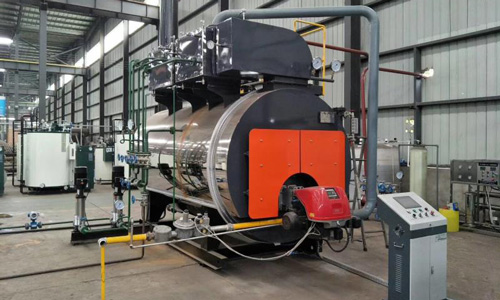
1-100 t/h
Two-pass wet-back steam boiler with economiser and condensing tail, designed for 30 mg/Nm³ NOx and a stack temperature near 55 °C.
View details
10 t/h
The WNS10-1.25-Q is a packaged three-pass wet-back fire-tube boiler delivering 10 t/h of steam at 1.25 MPa and 194 °C, firing natu...
View detailsExternal links open the publisher’s website and are provided for background reading.
Include the capacity (t/h or MW), fuel, working pressure and site country so the proposal matches your permit limits.
We appoint one or two partners per country to quote, deliver and service our boilers locally. Territory protection, factory pricing and commissioning support are part of the agreement.