
1-20 t/h boiler equivalent
Boiler Economizer and Air Preheater
Finned tube economizers and tubular air preheaters for fire-tube, water-tube and thermal oil systems, with cold-end protection aga...
View detailsCyclone, pulse-jet bag filter and ESP selection for coal and biomass boilers, sized 5,000-200,000 Nm³/h.
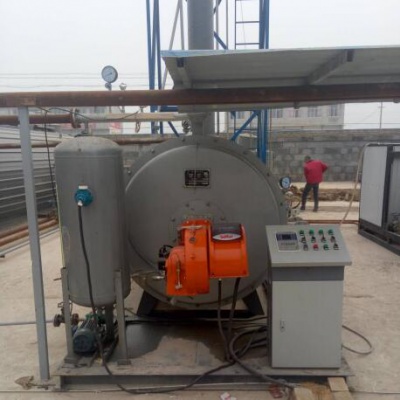
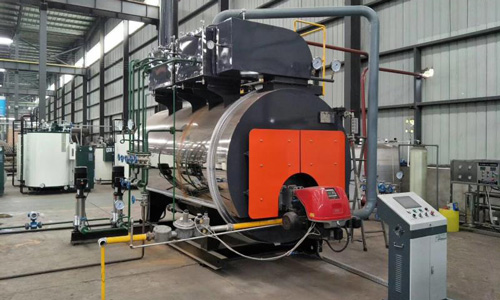
A coal or biomass boiler does not produce a clean gas that needs polishing; it produces dust at 1-8 g/Nm³, and the fly ash often contains 15-25% unburnt carbon. The collector therefore does two jobs: it meets the particulate limit, usually 20-30 mg/Nm³, and it determines how much of the unburnt fuel leaves the plant as waste. The choice between cyclone, bag filter and electrostatic precipitator is a balance of efficiency, pressure drop, temperature and maintainable cost.
Gas volume follows the fuel and the excess air. A 10 t/h coal unit at 1.4 excess air passes roughly 35,000-40,000 Nm³/h at the collector inlet, and a biomass unit of the same rating passes more, because the fuel carries more moisture and the excess air is higher.
A multi-tube cyclone spins the gas and throws particles to the wall, where they fall into a hopper. It has no moving parts, tolerates 400 °C and any dust load, and costs little to run beyond its 800-1,200 Pa pressure drop. Efficiency reaches 85-92% for particles above 20 µm, falling sharply below 10 µm, which is why a cyclone alone rarely meets a modern limit on a chain-grate boiler.
Its real value is as a pre-cleaner. Placed ahead of a bag filter it removes the coarse, abrasive fraction, cuts the dust load on the bags by an order of magnitude, and recovers a carbon-rich stream that can be returned to the furnace. That protects bag life, and where fly-ash reinjection is fitted it pays for the cyclone twice.
A pulse-jet bag filter passes gas through woven or felted media and cleans the bags with short compressed-air pulses at 0.5-0.7 MPa. Efficiency is 99.5-99.9% across the particle size range, including the sub-micron fraction that cyclones and ESPs handle poorly, and outlet concentration of 20-30 mg/Nm³ is routine.
Design centres on the air-to-cloth ratio, typically 0.8-1.2 m/min for boiler duty, and on media selection. Polyester suits 130 °C; PPS runs to about 170 °C and resists sulphur; PTFE and glass fibre go higher but cost more. The casing must stay above the acid dew point, which for coal with 1% sulphur and 8% moisture sits near 120-130 °C, so the collector is insulated and often preheated at start-up. Pressure drop runs 1,000-1,500 Pa clean to dirty, and bag life is 2-4 years depending on cycling and pulse frequency.
An electrostatic precipitator charges the dust and collects it on plates, rapping it into hoppers. Pressure drop is only 200-400 Pa, which saves fan power, and efficiency reaches 99-99.5% at 350-400 °C, so it can sit ahead of an air preheater. It suits large coal units above roughly 40 t/h where the gas volume justifies the plate area.
The weakness is resistivity. Low-sulphur coal produces a high-resistivity ash that resists charging and re-entrains on rapping, so an ESP sized on a high-sulphur coal can miss its guarantee after a fuel switch. Carbon in the ash lowers resistivity and helps; ammonia or SO3 conditioning is the usual remedy. For small and medium boilers the ESP’s capital cost and its sensitivity to fuel change outweigh the fan-power saving.
The practical rule: cyclone plus bag filter for boilers up to about 40 t/h, bag filter alone where the dust is fine and the load low, ESP for large coal units with steady fuel, and a cyclone ahead of either where the dust is coarse or abrasive. Hybrids are common: cyclone and bag on biomass, where alkali salts and moisture make bag media selection the critical decision.
Pressure drop is a running cost, not a detail. A 10 t/h coal boiler at 40,000 Nm³/h against 3,000 Pa total (cyclone 900, bag 1,500, ducting 600) needs about 50 kW at the fan shaft; at 6,000 hours that is 300,000 kWh a year. An ESP at 2,000 Pa total would need about 34 kW, saving roughly RMB 70,000 a year, which is why the choice flips at scale.
| Item | Multi-tube cyclone | Pulse-jet bag | ESP, two-field | Cyclone + bag |
|---|---|---|---|---|
| Gas volume | 5,000-100,000 Nm³/h | 10,000-200,000 Nm³/h | 50,000-1,000,000 Nm³/h | 5,000-100,000 Nm³/h |
| Inlet dust load | ≤20 g/Nm³ | ≤20 g/Nm³ | ≤50 g/Nm³ | ≤20 g/Nm³ |
| Outlet concentration | 100-300 mg/Nm³ | ≤20-30 mg/Nm³ | ≤50 mg/Nm³ | ≤20 mg/Nm³ |
| Pressure drop | 800-1,200 Pa | 1,000-1,500 Pa | 200-400 Pa | 1,800-2,700 Pa |
| Collection efficiency | 85-92% | 99.5-99.9% | 99-99.5% | 99.5%+ |
| Temperature limit | 400 °C | 190-260 °C by media | 350-400 °C | 190 °C |
Send the gas volume, temperature, dust load, particle size, sulphur and moisture content, and the applicable limit. Those six numbers decide the type; the fan and ducting then follow from the pressure drop the selected type imposes.
No. A cyclone reaches 85-92% and leaves 100-300 mg/Nm³ on boiler duty, so it is a pre-cleaner rather than a final filter. It earns its place by protecting the bags and recovering carbon-rich coarse ash.
Polyester to 130 °C, PPS to about 170 °C where sulphur is present, PTFE or glass fibre above that. The casing must stay above the acid dew point, near 120-130 °C for coal at 1% sulphur and 8% moisture.
Capital cost and fuel sensitivity. An ESP is cheap to run at 200-400 Pa but expensive to build, and high-resistivity ash from low-sulphur coal can pull efficiency below guarantee. Below about 40 t/h a bag filter is the better buy.
| Type | Multi-tube cyclone | Pulse-jet bag filter | ESP, two-field | Cyclone + bag |
|---|---|---|---|---|
| Gas volume | 5,000-100,000 Nm³/h | 10,000-200,000 Nm³/h | 50,000-1,000,000 Nm³/h | 5,000-100,000 Nm³/h |
| Inlet dust load | ≤20 g/Nm³ | ≤20 g/Nm³ | ≤50 g/Nm³ | ≤20 g/Nm³ |
| Outlet concentration | 100-300 mg/Nm³ | ≤20-30 mg/Nm³ | ≤50 mg/Nm³ | ≤20 mg/Nm³ |
| Pressure drop | 800-1,200 Pa | 1,000-1,500 Pa | 200-400 Pa | 1,800-2,700 Pa |
| Collection efficiency | 85-92% | 99.5-99.9% | 99-99.5% | 99.5%+ |
| Temperature limit | 400 °C | 190-260 °C by media | 350-400 °C | 190 °C |
1-20 t/h boiler equivalent
Finned tube economizers and tubular air preheaters for fire-tube, water-tube and thermal oil systems, with cold-end protection aga...
View details
2-50 m³/h treated water
Softener and deaerator package for boiler make-up, holding hardness below 0.03 mmol/L and oxygen below 0.05 mg/L.
View detailsExternal links open the publisher’s website and are provided for background reading.
Include the capacity (t/h or MW), fuel, working pressure and site country so the proposal matches your permit limits.
We appoint one or two partners per country to quote, deliver and service our boilers locally. Territory protection, factory pricing and commissioning support are part of the agreement.