How to Choose a Steam Boiler for Food Processing
Steam is a critical utility in food processing plants. It is used for cooking, sterilization, pasteurization, drying, cleaning, and temperature control. A stable steam supply directly affects production efficiency, product quality, and operating cost.
Selecting a steam boiler for food processing involves more than choosing the right capacity. It also requires consideration of steam pressure, fuel type, energy efficiency, water quality, safety standards, installation space, automation level, and long-term maintenance. A well-matched boiler system can help a food factory improve production stability, reduce fuel consumption, and meet hygiene and safety requirements.
This guide explains the key factors to consider when selecting a steam boiler for food processing applications.
1. Understand Your Steam Application
Before choosing a steam boiler, the first step is to understand how steam will be used in your production line. Different food processes have different steam demands.
Common steam applications in food processing include:
- Cooking and boiling
- Pasteurization
- Sterilization
- Jacketed kettle heating
- Sauce and beverage processing
- Meat processing
- Dairy production
- Bakery production
- Drying and dehydration
- Cleaning and CIP systems
- Bottle or container washing
Some processes require continuous steam, while others require steam only during certain production stages. If the steam demand changes frequently, the boiler should have good load adjustment ability and fast response performance.
For example, a food factory using several jacketed kettles may need stable medium-pressure steam. A factory using steam for cleaning and sterilization may require fast steam output during short peak periods.
2. Calculate the Required Steam Capacity
Steam capacity is one of the most important parameters when selecting a boiler. It is usually expressed in kg/h, ton/h, or lb/h.
If the boiler capacity is too small, the steam pressure may drop during production, affecting heating speed and product quality. If the boiler capacity is too large, the factory may face higher investment cost, lower operating efficiency, and unnecessary fuel consumption.
To estimate the required steam capacity, you should consider:
- Number of steam-using equipment
- Steam consumption of each machine
- Simultaneous operating rate
- Heating time requirements
- Steam loss in pipelines
- Future production expansion
For food processing plants, it is usually better to reserve a reasonable capacity margin, but not oversize the boiler blindly. A professional boiler supplier can help calculate steam demand based on your actual production process.
3. Choose the Right Steam Pressure
Steam pressure affects steam temperature and heat transfer performance. Different food processes require different pressure levels.
Low-pressure steam is often used for simple heating, cleaning, and some cooking processes. Medium-pressure steam may be required for sterilization, pasteurization, drying, or larger production lines.
Common steam boiler pressure options for food processing include:
- 0.7 MPa
- 1.0 MPa
- 1.25 MPa
- 1.6 MPa
The selected pressure should match the requirements of the steam-using equipment. It is not necessary to choose a higher pressure if the process does not need it. Higher pressure may increase equipment cost, inspection requirements, and system complexity.
For many food processing factories, 1.0 MPa or 1.25 MPa steam boilers are commonly used, depending on the production process and local regulations.
4. Select a Suitable Fuel Type
Fuel type has a direct impact on operating cost, installation conditions, emissions, and maintenance. Food processing plants usually choose the boiler fuel based on local energy availability and cost.
Common steam boiler fuel options include:
Gas-Fired Steam Boiler
Gas-fired steam boilers are widely used in food processing because they are clean, efficient, and easy to operate. Natural gas and LPG are common fuel options.
Gas boilers are suitable for factories that require stable steam supply, automatic operation, and low emissions.
Oil-Fired Steam Boiler
Oil-fired steam boilers are suitable for areas where natural gas is not available. Diesel, light oil, or heavy oil may be used depending on the burner and local fuel conditions.
Oil boilers are often used in industrial areas with limited gas pipeline access.
Biomass Steam Boiler
Biomass steam boilers can use wood chips, palm shells, rice husks, bagasse, and other biomass fuels. They are suitable for food factories with access to low-cost biomass fuel.
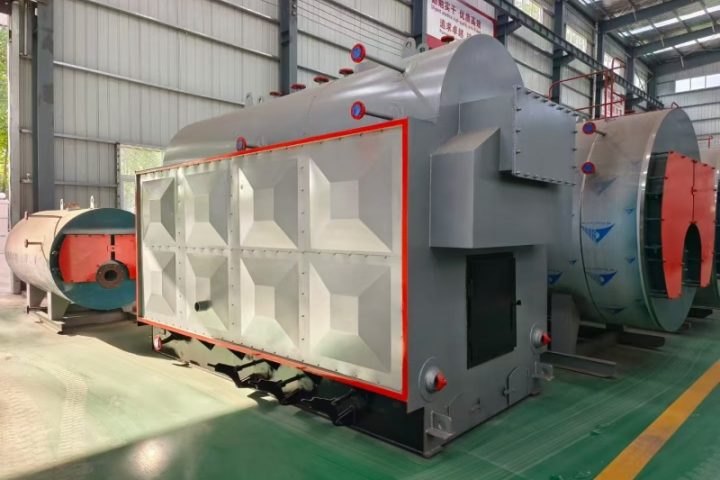
Biomass boilers usually require more space for fuel storage, feeding systems, ash handling, and dust removal equipment.
Electric Steam Boiler
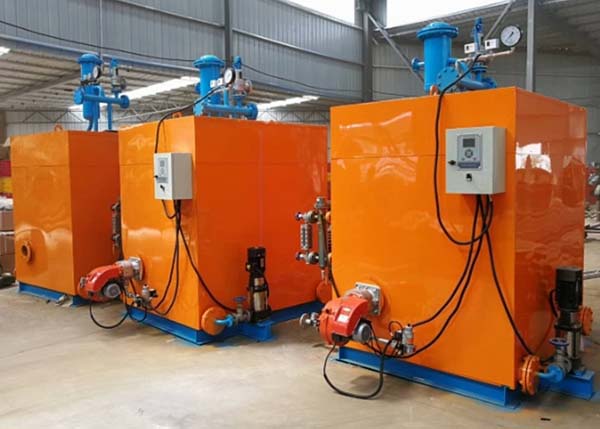
Electric steam boilers are clean, compact, and easy to install. They are suitable for small food factories, laboratories, pilot production lines, or areas with strict emission requirements.
However, the operating cost depends heavily on local electricity prices.
5. Pay Attention to Boiler Efficiency
Energy cost is one of the main long-term costs of a steam boiler system. A high-efficiency boiler can significantly reduce fuel consumption over years of operation.
When comparing boiler efficiency, you should look at the whole system, not only the boiler body. Important energy-saving components may include:
- Economizer
- Condenser
- High-efficiency burner
- Automatic combustion control
- Good insulation
- Proper steam piping design
- Condensate recovery system
For gas-fired steam boilers, adding an economizer or condenser can help recover heat from flue gas and improve overall efficiency. For food processing plants with continuous operation, the fuel-saving effect can be especially important.
6. Consider Steam Quality and Water Treatment
Food processing requires stable and clean steam supply. Even when steam does not directly contact food, poor steam quality can still affect equipment performance, heating stability, and maintenance cost.
Boiler water quality is very important. Poor water treatment may cause:
- Scaling
- Corrosion
- Poor heat transfer
- Higher fuel consumption
- Tube damage
- Shorter boiler service life
A complete steam boiler system should usually include proper water treatment equipment, such as a softener, dosing system, deaeration system, or reverse osmosis system, depending on local water quality and boiler requirements.
For applications where steam may directly or indirectly contact food, the system design should follow relevant food safety and hygiene requirements. The steam pipeline, valves, and contact materials should also be selected carefully.
7. Choose the Right Boiler Structure
Different boiler structures are suitable for different capacities and applications.
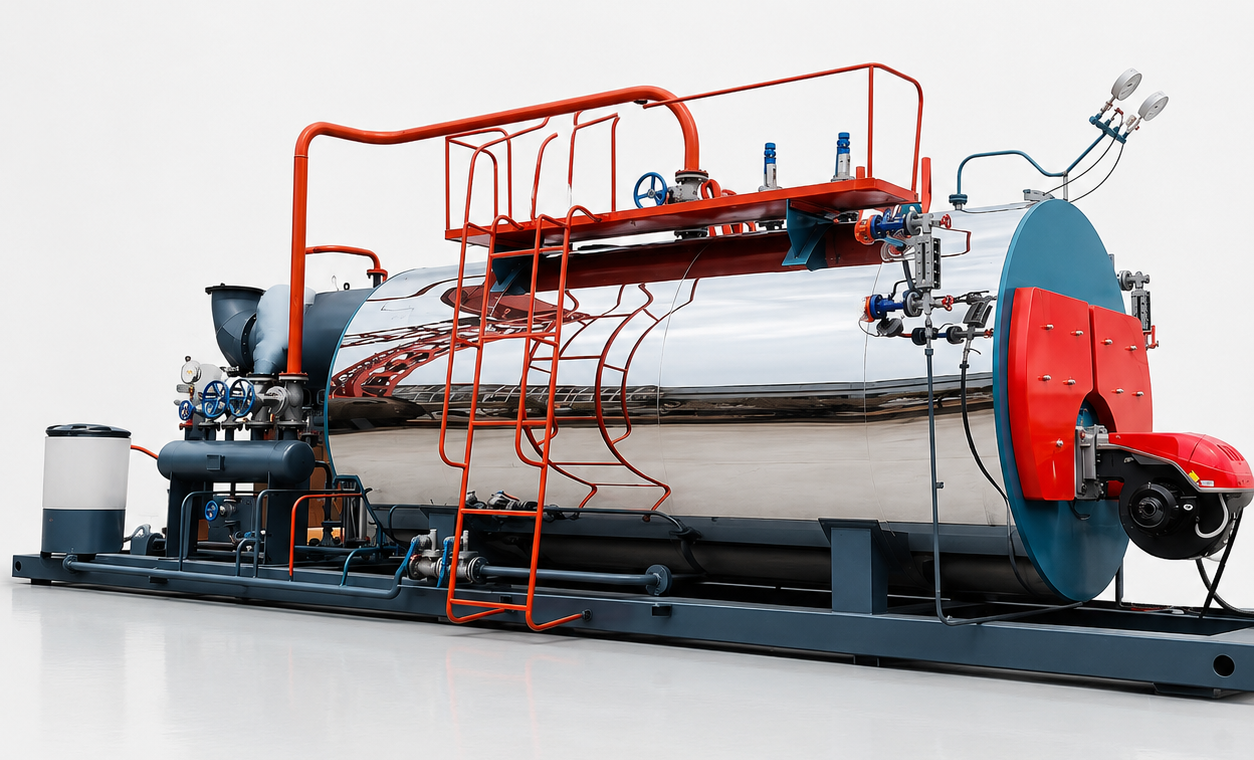
For many food processing plants, horizontal fire tube steam boilers are a common choice because they offer stable steam output, reliable operation, and relatively simple maintenance.
For smaller steam demand, compact steam generators or electric steam boilers may be more suitable. They can provide fast steam generation and occupy less installation space.
For larger food factories, a central steam boiler system may be more efficient, especially when multiple production lines need steam at the same time.
The right structure should be selected according to steam capacity, pressure, fuel type, installation space, and operating habits.
8. Check Safety and Compliance Requirements
Steam boilers are pressure equipment, so safety and compliance are essential. Before purchasing a boiler, food factories should confirm the applicable local regulations, inspection requirements, and certification standards.
Important safety and compliance points include:
- Boiler pressure rating
- Safety valve configuration
- Water level protection
- Pressure protection
- Flame failure protection
- Automatic shutdown system
- Control cabinet safety
- Local inspection requirements
- Required certificates and technical documents
Different countries and regions may require different standards or certifications. A reliable boiler manufacturer should be able to provide technical drawings, pressure vessel documents, inspection reports, operation manuals, and other necessary documents according to the project requirements.
9. Evaluate Automation and Operation Control
Modern food processing plants usually need stable and easy boiler operation. A boiler with automatic control can reduce labor intensity and improve operating stability.
Useful automation functions may include:
- Automatic water feeding
- Automatic ignition
- Automatic pressure control
- Burner modulation
- Fault alarm
- Low water level protection
- Overpressure protection
- Touch screen control
- Remote monitoring option
For factories with continuous production, stable automatic control is especially important. It helps keep steam pressure stable and reduces the risk of production interruption.
10. Consider Installation Space and Boiler Room Layout
Before ordering a boiler, the factory should check the available installation space and boiler room conditions.
Important layout factors include:
- Boiler body size
- Maintenance clearance
- Burner operation space
- Chimney position
- Water treatment equipment space
- Steam header position
- Fuel supply system
- Ventilation requirements
- Drainage conditions
- Electrical cabinet location
A good boiler room layout can make installation, operation, inspection, and maintenance much easier. If the boiler room is limited in space, a compact packaged boiler system may be a better choice.
11. Do Not Ignore Condensate Recovery
In many food processing plants, a large amount of condensate can be recovered after steam releases heat. Condensate is already hot and treated, so recovering it can reduce fuel consumption, water consumption, and chemical treatment cost.
A proper condensate recovery system can help improve the overall efficiency of the steam system. It is especially valuable for factories with long production hours and stable steam consumption.
12. Choose an Experienced Boiler Manufacturer
Choosing the right boiler manufacturer is as important as choosing the right boiler model. Food processing projects require not only boiler equipment, but also system design experience.
A reliable steam boiler manufacturer should be able to provide:
- Boiler selection support
- Steam load calculation
- Fuel consumption estimation
- Boiler room layout suggestions
- Complete auxiliary equipment
- Technical drawings
- Installation guidance
- Operation training
- Spare parts support
- After-sales service
For overseas projects, export experience is also important. The manufacturer should understand packaging, shipping, documentation, voltage requirements, local fuel conditions, and installation support.
Conclusion
Choosing a steam boiler for food processing requires careful evaluation of steam demand, pressure, fuel type, efficiency, steam quality, safety, installation conditions, and long-term operating cost.
A suitable steam boiler should not only meet current production needs, but also support stable operation, energy saving, food safety, and future expansion.
If you are planning a food processing steam boiler project, it is recommended to provide your production process, steam-using equipment list, required steam pressure, fuel type, working hours, and installation conditions. With this information, a professional boiler manufacturer can help you select the most suitable steam boiler solution for your factory.
FAQ
What type of steam boiler is commonly used in food processing?
Gas-fired steam boilers, oil-fired steam boilers, biomass steam boilers, and electric steam boilers are all used in food processing. The best choice depends on steam capacity, fuel availability, operating cost, and local emission requirements.
What steam pressure is suitable for food processing?
Many food processing plants use steam pressure around 0.7 MPa to 1.25 MPa. The exact pressure should be selected according to the requirements of the production equipment and process.
Is an electric steam boiler suitable for food factories?
Yes. Electric steam boilers are clean, compact, and easy to install. They are suitable for small production lines, laboratories, pilot plants, or factories with strict emission limits. However, electricity cost should be considered.
Why is water treatment important for steam boilers?
Water treatment helps prevent scaling, corrosion, and boiler damage. Good water quality improves heat transfer efficiency, reduces maintenance cost, and extends boiler service life.
Can a steam boiler be customized for food processing?
Yes. Steam boilers can be customized according to steam capacity, pressure, fuel type, voltage, installation space, control system, emission requirements, and local standards.