Reactor heating is usually decided by three numbers: the maximum process temperature, the heat-transfer area available, and how fast the batch must heat or cool. Steam suits reactors up to roughly 150–180 °C, thermal oil covers the range up to about 300–350 °C at atmospheric pressure, and electric heating (resistance, or induction on small vessels) is chosen where no heat-transfer fluid is wanted or where loads are small and intermittent. The jacket-versus-coil choice and the control scheme matter as much as the heat source, especially on exothermic batches where the reactor must remove heat as well as add it. This article sets out the engineering trade-offs; for equipment options see our product range, and for sizing context the capacity and cost guide.
Jacket vs coil: where the heat-transfer area is
A jacket is the default for glass-lined and stainless reactors. It gives a large, uniform area but a limited pressure rating (commonly 6–10 bar on glass-lined jackets, higher on some stainless designs) and a relatively slow response because of the jacket volume. A coil or half-pipe coil inside the vessel gives more area per unit volume and faster response, but it occupies working volume, complicates cleaning, and is less common on glass-lined equipment.
Rough heat-transfer coefficients (U) for jacket heating, water-based fluids, with good agitation:
- Steam condensing to stainless jacket: 600–1200 W/m²·K
- Steam condensing to glass-lined jacket: 300–600 W/m²·K
- Thermal oil to stainless jacket: 200–500 W/m²·K
- Thermal oil to glass-lined jacket: 150–300 W/m²·K
- Electric resistance heaters in a thermal-oil circuit: same as oil, limited by the fluid side
Assume a 5 m³ stainless reactor with 8 m² of jacket area, a 40 K mean temperature difference and U = 800 W/m²·K. Heat duty is about 8 × 800 × 40 = 256 kW, enough to heat roughly 5 t of water-like batch by 40 K in about 20 minutes ignoring losses. The same vessel with a glass-lined jacket at U = 400 W/m²·K gives about 128 kW, doubling the heat-up time. That single ratio often decides the heat source.
Steam: fast, cheap per kWh, temperature-capped
Saturated steam at 10 bar gauge is about 184 °C; at 6 bar gauge about 165 °C. Because steam condenses at constant temperature, control is by valve position and jacket pressure, and response is fast. The practical ceiling is the jacket pressure rating and the film temperature at the wall, which matters for heat-sensitive products. Steam is also the natural choice where the same plant already runs a steam boiler, since the marginal cost of heat is low. Sub-atmospheric or low-pressure steam is used where wall temperature must stay below about 130 °C.
Thermal oil: high temperature without high pressure
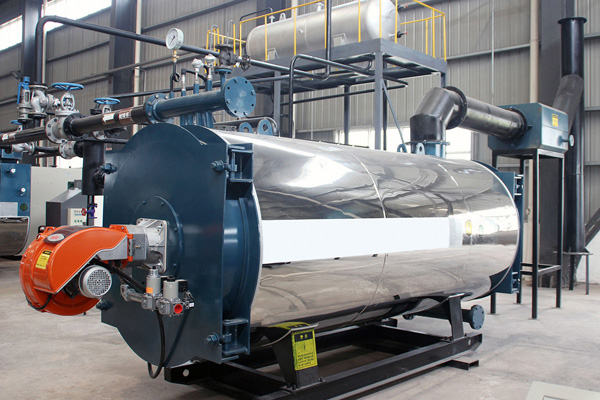
Thermal oil reaches 300 °C at near-atmospheric pressure, so jackets and piping need not be thick-walled. The trade-offs are lower U values, higher pump energy, a larger inventory, and slower response because the loop must be heated or cooled as a whole. Oil also degrades over time and needs periodic testing. For reactors running above about 180 °C, oil is usually the only practical fluid choice short of electric heating.
Electric heating: simple, precise, expensive per kWh
Electric resistance heaters are common on small reactors, pilot plants and where no boiler or oil loop exists. They give fine control and no fluid handling, but energy cost per kWh is typically several times that of steam from a gas-fired boiler, and large loads need substantial electrical capacity. Induction heating is used on some small and medium vessels for fast response. Electric is also used to trim jacket temperature or to heat small feed lines.
Temperature control and exothermic batches
On an exothermic reaction the reactor must remove heat, and the control problem is the reverse of heat-up. Key points:
- Size the cooling side for the peak heat-release rate, not the average. A common assumption is 1.5–2× the nominal heating duty, but the reaction calorimetry should set it.
- Use cascade control: jacket temperature as the inner loop, reactor temperature as the outer loop, with feed-rate limiting on the reactant.
- Provide a fail-safe path: cooling water on loss of signal, and a quench or dump facility where the reaction is strongly exothermic.
- Watch the jacket-to-reactor temperature difference. A large delta T gives fast heat-up but risks local overheating and product degradation; 20–40 K is typical for sensitive products.
For steam-heated reactors, a common arrangement is a steam jacket with a separate cooling circuit or a dual jacket; for oil systems, a single loop with a cooler and a three-way valve is usual. Electric systems often combine jacket heaters with a cooling coil.
Comparison at a glance
| Parameter | Steam | Thermal oil | Electric |
|---|---|---|---|
| Typical max temperature | 150–180 °C (10 bar g ≈ 184 °C) | 300–350 °C | 300 °C+ at the element |
| Jacket pressure | 6–10 bar g typical | Near atmospheric | n/a |
| U, stainless jacket (W/m²·K) | 600–1200 | 200–500 | Limited by fluid side |
| Response speed | Fast | Slow to moderate | Fast |
| Relative energy cost per kWh | Low | Moderate | High |
| Best fit | Existing steam plant, ≤180 °C | High temperature, no high pressure | Small/pilot, no utilities |
Values are indicative for well-agitated vessels; confirm with your own data.
Checklist before you specify
- Maximum and minimum process temperature, and the required ramp rate in K/min.
- Batch mass, specific heat, and any latent heat or reaction enthalpy.
- Peak exothermic heat-release rate from calorimetry, and the required cooling capacity.
- Jacket or coil area, pressure rating, and material (glass-lined, stainless, other).
- Available utilities: steam pressure, cooling water temperature, electrical capacity.
- Control philosophy: cascade, feed limiting, fail-safe cooling, alarms.
- Product sensitivity: maximum allowable wall temperature and delta T.
What to send us for a proposal
Send the reactor drawing with jacket or coil area and pressure rating, the process temperature range and ramp rates, batch mass and properties, and any reaction calorimetry data. Include the available steam pressure, cooling water temperature and electrical supply. With those we can size the heat source, the control scheme and the safety path. Cost is driven mainly by the heat duty, the pressure rating and material of the jacket, the control system, and whether a new boiler or oil loop is needed; see the capacity and cost guide for the drivers, and the product range for equipment options.