District heating plants must reliably meet variable heat demand while minimizing costs and emissions. The key to effective boiler selection lies in analyzing the load duration curve, separating base and peak loads, managing return temperatures, and ensuring proper hydraulic separation. This article provides concrete engineering guidance to help you specify the right boiler configuration for your district heating network.
Load Duration Curve: The Foundation of Boiler Selection
The load duration curve (LDC) plots heat demand against the percentage of time it is equaled or exceeded. It is derived from hourly load data over a typical year. The shape of the LDC determines the optimal mix of base-load and peak-load boilers. A steep curve indicates high load variability, while a flat curve suggests a more constant demand.
For a typical residential district heating network, the maximum design load might be 10 MW, with a minimum summer load of 1.5 MW. The LDC helps identify the load level that persists for a large number of hours—typically the base load—and the short-duration peaks. Base boilers should be sized to cover the load that occurs for more than 4,000–5,000 hours per year, while peak boilers handle the remainder.
Base vs Peak Boilers: Sizing and Technology
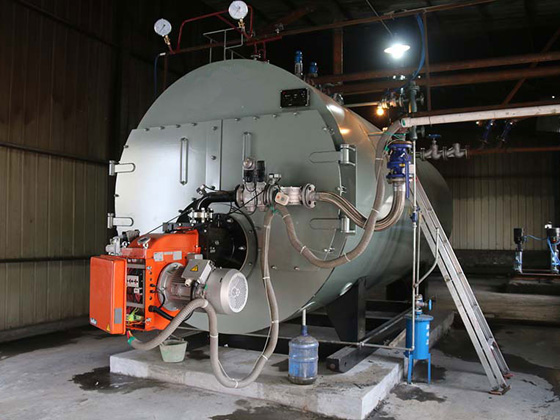
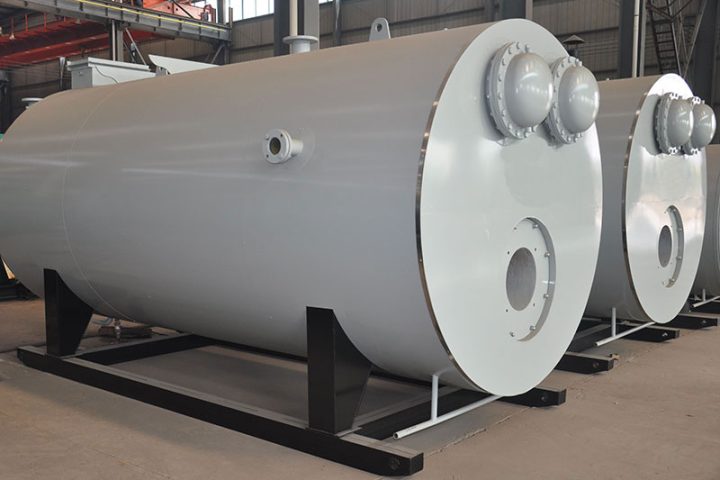
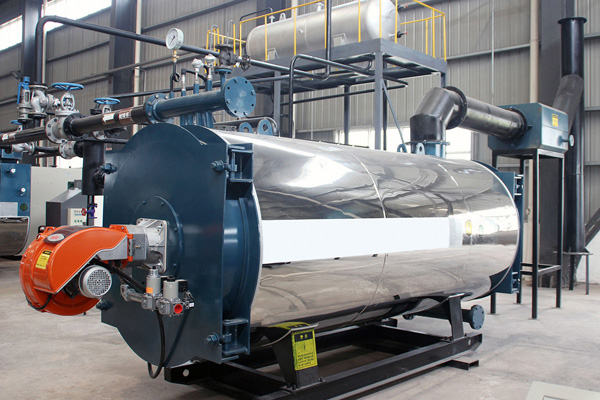
Base-load boilers are selected for high efficiency and low operating costs. They often run continuously during the heating season. Peak boilers, on the other hand, are designed for rapid response and low capital cost, as they operate only a few hundred hours per year. The economic trade-off is between capital expenditure (CAPEX) and operational expenditure (OPEX).
Table 1 provides typical sizing and technology choices for a 10 MW district heating plant. Assumptions: natural gas fuel, 90/60°C supply/return temperatures, and a load duration curve with 4,500 full-load hours for the base and 500 hours for the peak.
| Parameter | Base Boiler | Peak Boiler |
|---|---|---|
| Capacity (MW) | 6.0 | 4.0 |
| Annual operating hours (h) | 4,500 | 500 |
| Efficiency (%) | 94–96 (condensing) | 90–92 (non-condensing) |
| Turndown ratio | 5:1 | 3:1 |
| Typical technology | Fire-tube or water-tube, condensing | Fire-tube, high-efficiency |
| Capital cost driver | High efficiency, larger footprint | Lower cost, fast response |
For more details on capacity ranges and cost factors, see our capacity and cost guide.
Return Temperature: Impact on Efficiency and Condensing
Return temperature is critical for condensing boilers, as it determines the amount of latent heat recovered from flue gas. In district heating, return temperatures are often higher than ideal due to network design and consumer substations. A return temperature below 55°C allows condensing operation, boosting efficiency by up to 10% compared to non-condensing. However, many networks operate at 60–70°C return, limiting condensing benefits.
To maximize efficiency, consider installing flue gas economizers or using a separate condensing boiler for base load with lower return temperatures. Hydraulic separation (see below) can help achieve lower return temperatures by decoupling the boiler loop from the distribution network.
Hydraulic Separation: Ensuring Stable Operation
Hydraulic separation between the boiler plant and the district heating network is essential to avoid pressure fluctuations and ensure consistent flow through boilers. This is typically achieved using a hydraulic separator (also known as a low-loss header) or a plate heat exchanger. Separation allows the boiler loop to operate at constant flow and temperature, while the network flow varies with demand.
For a 10 MW plant, a hydraulic separator with a design pressure drop of 5–10 kPa and a maximum flow velocity of 1.5 m/s is recommended. This ensures minimal mixing and stable boiler operation. Plate heat exchangers offer better separation but add capital cost and require a temperature approach of 2–5°C.
Checklist for Boiler Selection and Peak Shaving
- Obtain at least one year of hourly load data to construct the load duration curve.
- Determine base load as the load exceeded for 4,000–5,000 hours per year.
- Size base boilers to cover 60–70% of maximum design load.
- Select peak boilers for fast response and low capital cost.
- Evaluate return temperature profile; consider condensing boilers if return <55°C.
- Include hydraulic separation to decouple boiler and network hydraulics.
- Assess fuel flexibility and emissions regulations for both base and peak units.
- Consider modular boilers for redundancy and part-load efficiency.
Explore our product range for suitable boiler models.
What to send us for a proposal
To prepare a tailored proposal, please provide the following information:
- Load duration curve or at least monthly heat demand data.
- Design supply and return temperatures (°C).
- Maximum and minimum load (MW).
- Fuel type and availability (e.g., natural gas, biomass).
- Space constraints and layout requirements.
- Emissions limits (NOx, CO).
- Redundancy requirements (e.g., N+1).
- Preferred technology (fire-tube, water-tube, condensing).
With this data, we can size base and peak boilers, recommend hydraulic separation, and provide a cost-effective solution. For capacity ranges and cost drivers, refer to our capacity and cost guide.