Gas / Oil Fired Steam Boiler for Textile Industry
Steam is essential in the textile industry. Many processes—dyeing, printing, washing, drying, sizing, finishing, and ironing—require a stable and continuous steam supply. For textile factories, selecting the right steam boiler directly affects production efficiency, fabric quality, fuel consumption, and long-term operating cost.
A gas / oil fired steam boiler is one of the most widely used boiler solutions in textile production. It can provide stable steam pressure, fast heating response, automatic operation, and relatively clean combustion compared with traditional coal-fired systems. For textile plants that require continuous production and accurate process temperature control, a properly selected gas or oil fired steam boiler can help improve production stability and reduce downtime.
This article explains how gas and oil fired steam boilers are used in the textile industry, what factors should be considered when selecting a boiler, and how to build a more efficient steam system for textile production.
1. Why Textile Factories Need Steam Boilers
Textile production involves many heating processes. Steam is commonly used because it provides stable heat transfer, convenient temperature control, and efficient energy delivery through pipelines.
Common steam applications in textile factories include:
- Fabric dyeing
- Yarn dyeing
- Printing and finishing
- Washing and bleaching
- Sizing process
- Drying equipment
- Setting machines
- Ironing and pressing
- Hot water preparation
- Humidification
- Chemical mixing and heating
In many textile plants, steam demand is not completely constant. Some production lines may start and stop at different times, and steam consumption may change according to fabric type, production batch, and dyeing process. Therefore, the boiler must be able to maintain stable pressure under changing load conditions.
A suitable steam boiler helps ensure uniform heating, stable dyeing quality, and reliable production output.
2. Why Choose a Gas / Oil Fired Steam Boiler
Gas and oil fired steam boilers are widely used in textile plants because they offer a good balance between efficiency, automation, and operating convenience.
Compared with solid fuel boilers, gas / oil fired boilers usually have cleaner combustion, easier operation, faster startup, and lower labor requirements. They are also easier to integrate with automatic control systems.
For textile factories, the main advantages include:
- Stable steam output
- Fast startup and pressure rise
- Automatic combustion control
- Compact boiler room layout
- Lower ash handling workload
- Cleaner working environment
- Suitable for continuous production
- Easier pressure and temperature control
Natural gas, LPG, diesel, light oil, and heavy oil may be selected according to local fuel availability and fuel cost. In areas with stable gas supply, gas-fired steam boilers are often preferred. In areas without natural gas pipelines, oil-fired steam boilers can be a practical alternative.
3. Main Boiler Types for Textile Industry
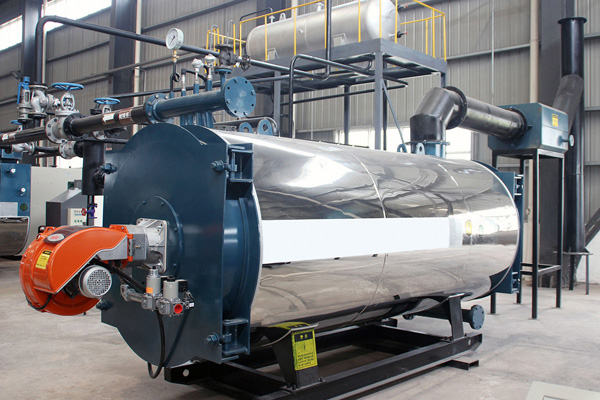
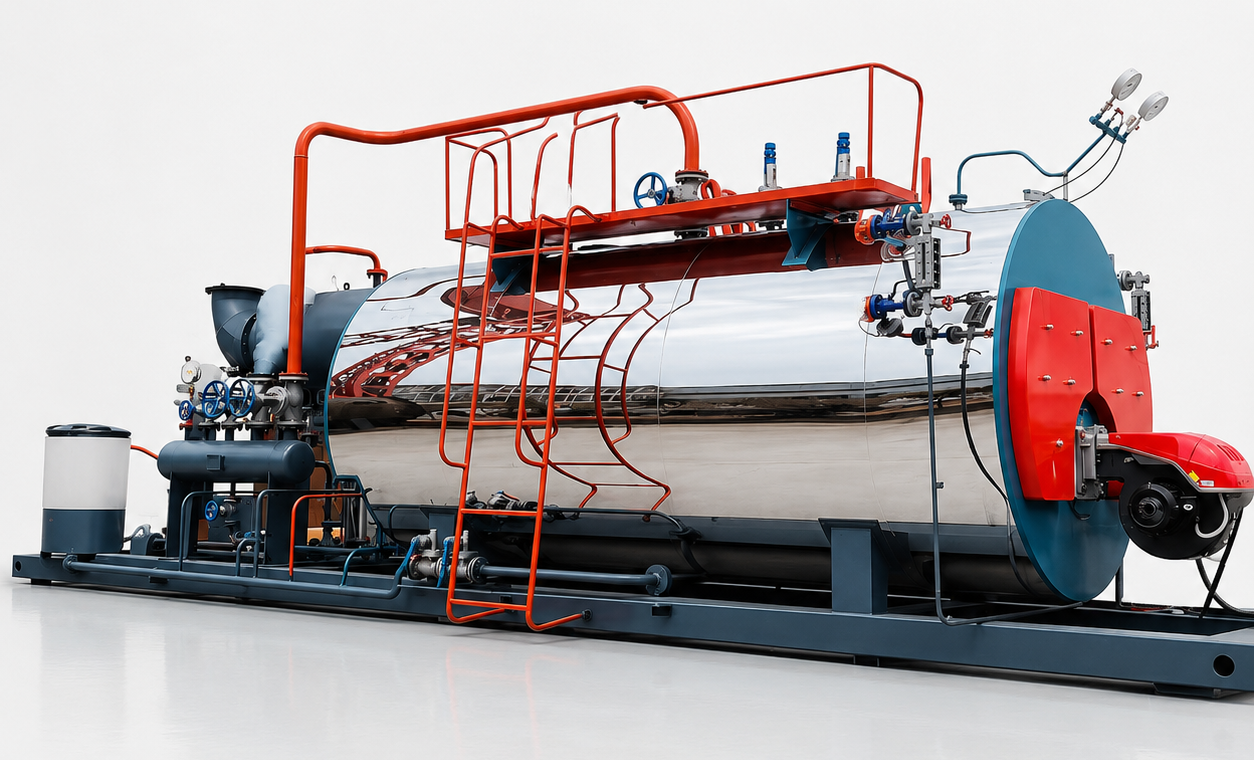
For most textile applications, horizontal fire tube steam boilers are commonly used. This type of boiler has a mature structure, stable steam generation, and convenient maintenance.
A typical gas / oil fired steam boiler for textile plants may include:
- Boiler body
- Burner system
- Control cabinet
- Feed water pump
- Water treatment equipment
- Steam header
- Economizer
- Condenser, if required
- Chimney
- Valves and safety accessories
For small textile workshops or production lines with limited steam demand, compact steam generators may also be used. For medium and large textile factories, a central steam boiler system is usually more suitable because it can supply steam to multiple dyeing machines, dryers, and finishing equipment at the same time.
The final boiler type should be selected according to steam capacity, working pressure, installation space, fuel type, and local regulations.
4. How to Select Boiler Capacity
Boiler capacity is one of the most important parameters. It is usually expressed in kg/h, ton/h, or lb/h.
If the boiler capacity is too small, the steam pressure may drop when several machines operate at the same time. This can affect dyeing temperature, drying efficiency, and production speed. If the boiler capacity is too large, the investment cost and fuel consumption may increase unnecessarily.
When calculating boiler capacity for a textile factory, the following factors should be considered:
- Number of dyeing machines
- Steam consumption of each machine
- Drying and finishing equipment demand
- Simultaneous operation rate
- Heating time requirement
- Steam pipeline loss
- Condensate recovery condition
- Future production expansion
For example, a textile factory with multiple dyeing vats and drying machines may have a much higher peak steam demand than the average daily load. The boiler system should be designed to meet peak production demand while maintaining good efficiency during partial load operation.
A professional boiler supplier should calculate the steam load based on the real production process instead of only recommending a standard boiler model.
5. Choose the Right Working Pressure
Steam pressure affects steam temperature and heating performance. In textile production, different processes may require different steam pressure levels.
Common steam pressure options include:
- 0.7 MPa
- 1.0 MPa
- 1.25 MPa
- 1.6 MPa
For many textile plants, 1.0 MPa or 1.25 MPa steam boilers are commonly used. However, the final pressure should be selected according to the requirements of the production equipment.
Choosing a higher pressure than necessary is not always better. Higher pressure may increase equipment cost, inspection requirements, and system complexity. The correct approach is to match the boiler pressure with the dyeing machines, dryers, heat exchangers, and other steam-using equipment.
If different production lines require different pressures, the system can use a pressure reducing valve to supply lower-pressure steam to specific equipment.
6. Gas-Fired Steam Boiler or Oil-Fired Steam Boiler
Both gas-fired and oil-fired steam boilers can be used in textile factories. The better choice depends on local fuel conditions and long-term operating cost.
Gas-Fired Steam Boiler
A gas-fired steam boiler is suitable for textile plants with access to natural gas or LPG. It has clean combustion, high automation, and relatively low maintenance workload.
Main advantages include:
- Clean fuel combustion
- Stable flame control
- Lower emission level
- Easy automatic operation
- Suitable for urban or industrial zones
- Less fuel storage requirement
Natural gas boilers are often used in textile plants that focus on stable production, clean operation, and environmental compliance.
Oil-Fired Steam Boiler
An oil-fired steam boiler is suitable for areas where gas supply is not available or unstable. Diesel, light oil, or heavy oil may be used depending on the burner system and local fuel quality.
Main advantages include:
- Flexible installation
- No gas pipeline required
- Suitable for remote industrial areas
- Stable heat output
- Can be used as backup fuel
For some textile factories, a dual-fuel burner can also be considered. It allows the boiler to operate with gas or oil, which improves fuel flexibility and production reliability.
7. Pay Attention to Boiler Efficiency
Fuel cost is a major operating expense for textile factories. A steam boiler may run for many hours every day, so even a small improvement in efficiency can bring significant long-term savings.
To improve boiler efficiency, textile factories can consider:
- High-efficiency burner
- Economizer
- Condensing heat recovery system
- Automatic combustion adjustment
- Good boiler insulation
- Proper steam pipeline insulation
- Condensate recovery
- Regular maintenance and cleaning
For gas-fired steam boilers, an economizer can recover heat from flue gas and preheat boiler feed water. In some applications, a condenser can further reduce exhaust gas temperature and improve total system efficiency.
However, energy-saving equipment should be selected according to fuel type, flue gas condition, return water temperature, and actual operating hours. The goal is not only to increase the rated efficiency, but to reduce real operating cost.
8. Condensate Recovery Is Important
In textile production, a large amount of steam becomes condensate after releasing heat. This condensate is still hot and has already been treated. If it is discharged directly, the factory loses both heat energy and treated water.
A condensate recovery system can help:
- Reduce fuel consumption
- Reduce water consumption
- Reduce water treatment cost
- Improve boiler feed water temperature
- Improve overall system efficiency
- Reduce thermal shock to the boiler
For textile plants with continuous production, condensate recovery is often one of the most practical energy-saving measures. The recovery system should be designed according to pipeline layout, equipment position, condensate pressure, and water quality requirements.
9. Water Treatment for Textile Steam Boilers
Water treatment is very important for steam boiler operation. Poor water quality can cause scale, corrosion, low heat transfer efficiency, and boiler tube damage.
Common water treatment equipment may include:
- Water softener
- Dosing system
- Deaerator
- Reverse osmosis system
- Blowdown system
Scaling inside the boiler will reduce heat transfer efficiency and increase fuel consumption. In serious cases, it may cause overheating and damage to pressure parts.
For textile factories, stable water treatment is especially important because boilers often operate for long hours. Regular water testing and proper blowdown management should be part of daily boiler operation.
10. Automation and Safety Control
Modern textile factories usually prefer automatic steam boilers because they reduce labor requirements and improve operation stability.
A gas / oil fired steam boiler can be equipped with:
- Automatic ignition
- Automatic water feeding
- Automatic pressure control
- Burner modulation
- Flame failure protection
- Low water level protection
- Overpressure protection
- Alarm system
- Touch screen control
- Remote monitoring option
Safety is especially important because steam boilers are pressure equipment. The boiler should be equipped with qualified safety valves, pressure gauges, water level control devices, and automatic shutdown protection.
Before purchasing a boiler, the buyer should confirm local inspection requirements, pressure vessel regulations, and required technical documents.
11. Boiler Room Layout for Textile Plants
A good boiler room layout makes installation, operation, and maintenance easier. Before selecting a boiler model, the factory should check the available space and site conditions.
Important layout points include:
- Boiler foundation size
- Maintenance clearance
- Burner operation space
- Feed water tank position
- Water treatment equipment space
- Steam header position
- Chimney position
- Fuel supply system
- Ventilation conditions
- Drainage system
- Electrical cabinet location
For oil-fired boilers, fuel storage and oil supply systems must also be considered. For gas-fired boilers, gas pipeline pressure, gas flow rate, and safety shut-off devices should be confirmed before installation.
A complete boiler room design can help reduce installation problems and improve long-term operating safety.
12. How to Choose a Reliable Boiler Manufacturer
A textile steam boiler project is not only about buying one boiler body. It is a complete steam system that includes boiler selection, auxiliary equipment, pipeline design, control system, water treatment, installation support, and after-sales service.
A reliable boiler manufacturer should be able to provide:
- Steam load calculation
- Boiler model selection
- Fuel consumption estimation
- Boiler room layout suggestions
- Complete auxiliary equipment
- Technical drawings
- Operation manuals
- Safety documents
- Installation guidance
- Spare parts support
- After-sales service
For overseas textile projects, the supplier should also consider voltage, local fuel conditions, shipping, packaging, documentation, and installation communication.
Choosing a manufacturer with real boiler production experience can help reduce project risk and improve system reliability.
Conclusion
A gas / oil fired steam boiler is a practical and reliable steam solution for the textile industry. It can provide stable steam for dyeing, washing, drying, finishing, ironing, and other textile processes.
When selecting a steam boiler, textile factories should consider steam capacity, working pressure, fuel type, efficiency, condensate recovery, water treatment, automation, safety protection, and boiler room layout.
The best boiler solution should not only meet current steam demand, but also support stable production, energy saving, easy maintenance, and future expansion.
For a textile steam boiler project, it is recommended to provide the production process, steam-using equipment list, required steam pressure, fuel type, working hours, installation space, and local regulation requirements. With this information, a professional boiler manufacturer can help design a more suitable gas or oil fired steam boiler system.
FAQ
1. What is a gas / oil fired steam boiler used for in the textile industry?
It is used to provide steam for dyeing, printing, washing, drying, finishing, sizing, ironing, hot water preparation, and other textile heating processes.
2. What steam pressure is commonly used in textile factories?
Many textile factories use steam pressure around 1.0 MPa or 1.25 MPa, but the final pressure should be selected according to the requirements of the dyeing machines, dryers, and other steam-using equipment.
3. Which is better for textile plants, gas-fired or oil-fired steam boiler?
If natural gas is available and stable, a gas-fired steam boiler is usually preferred because it is cleaner and easier to operate. If gas is not available, an oil-fired steam boiler can be a practical solution.
4. How can textile factories reduce boiler fuel consumption?
Fuel consumption can be reduced by using a high-efficiency burner, economizer, condensate recovery system, good pipeline insulation, proper water treatment, and regular boiler maintenance.
5. Can a steam boiler be customized for a textile production line?
Yes. A steam boiler system can be customized according to steam capacity, pressure, fuel type, voltage, installation space, emission requirements, automation level, and local standards.