

6-100 t/h
SZS Water-Tube Gas/Oil Steam Boiler, 6-100 t/h
Membrane-wall water-tube steam boiler with staged combustion and FGR, 6-100 t/h at up to 2.5 MPa and 98% efficiency with heat reco...
View detailsMatching steam pressure and thermal oil to reactor, reboiler and dryer duty, with a worked 6 t/h distillation and evaporation example.
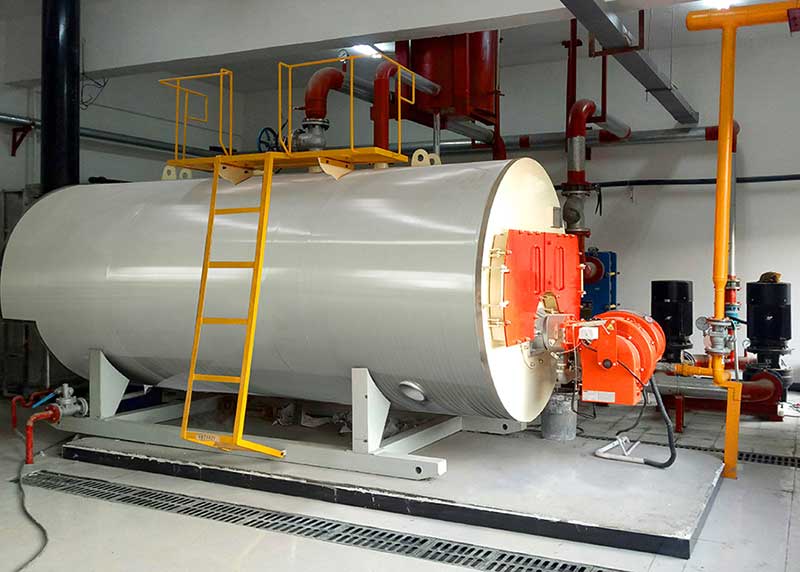
Chemical and pharmaceutical plants buy heat at a temperature, and the temperature decides the equipment. Jacketed reactors and reboilers running at 140-160 °C are served by steam at 0.6-1.0 MPa. Distillation under pressure, or a reaction held at 200-240 °C, needs 1.6-2.5 MPa saturated steam, or thermal oil if the pressure vessel would otherwise become the most expensive item in the plant. Above about 250 °C, saturated steam needs more than 4 MPa, and thermal oil becomes the cheaper route.
The demand pattern is batch. A reactor heats its jacket, holds, refluxes, cools and discharges; the steam load steps rather than ramps. Two or three vessels coming to temperature together set the boiler size, and the coincidence depends on the batch schedule rather than on the equipment list.
Pharmaceutical plants add a second, smaller demand that is easy to overlook: clean steam for sterilisation, SIP and humidification. It is generated separately from treated water, because the boiler’s amine and oxygen scavenger must not reach a product contact surface.
Up to about 20 t/h at 1.25 MPa, a packaged fire-tube boiler is the economical choice. Above that, or where 1.6-2.5 MPa is required, the water-tube SZS series from 6 to 30 t/h is the usual selection: membrane-wall furnace, top-supported, and a steam drum large enough to absorb batch steps without priming.
Around the boiler the scope is set by water quality rather than by steam quantity. Demineralised or reverse-osmosis make-up allows blowdown at 1-2% instead of 5%, which matters at 1.6 MPa where each percent of blowdown carries real energy. A deaerator, stainless condensate lines and a blowdown flash vessel complete the train. For 300 °C process duty, a YY(Q)W thermal oil heater replaces the high-pressure boiler entirely.
| Parameter | Value | Note |
|---|---|---|
| Installed steam capacity | 2 × 8 t/h at 1.6 MPa | one duty, one standby |
| Steam temperature | 204 °C | saturated, 1.6 MPa |
| Peak process demand | 6.2 t/h | reboiler plus evaporator |
| Feedwater | 105 °C, demineralised | deaerator outlet |
| Blowdown | 2% | low solids make-up |
| Clean steam | 500 kg/h | separate generator, RO feed |
| Design efficiency | 95% (LHV) | economiser and air preheater |
A solvent recovery column takes 4,200 kg/h of distillate at a reflux ratio of 2.5, so the vapour rate at the top is 4,200 × 3.5 = 14,700 kg/h. With a latent heat of 380 kJ/kg, the reboiler duty is 14,700 × 380 = 5.59 GJ/h, or 1,552 kW.
Beside it, an evaporator removes 2,000 kg/h of water and uses 1.15 kg of steam per kilogramme evaporated, which is 2.3 t/h of steam, or 2.3 × 2,352 MJ/t = 5.41 GJ/h = 1,502 kW. A tray dryer adds 800 kW.
Total 3,854 kW. Add 5% for line losses and the occasional fourth user, and the header must supply 4.05 MW, which at 2,352 kJ/kg is 6.2 t/h. The next standard size is 8 t/h, so the plant takes two of them: one duty at 78% of rating, one standby. That is what a batch plant with a single column usually wants, because losing the column for a boiler repair costs more than the second shell.
Check the pressure level before fixing 1.6 MPa. If the reboiler runs at 150 °C, steam at 1.0 MPa gives 180 °C and a 30 K approach; 1.6 MPa only earns its place if a reactor or steriliser needs 200 °C. Choosing the lower level reduces the pressure-vessel cost of every item on the header, the boiler included.
Blowdown at 1.6 MPa carries about 774 kJ per kilogramme above cold make-up, so 5% blowdown costs roughly 1.6% of the fuel and 2% costs about 0.7%. Flash recovery from continuous blowdown to the deaerator recovers part of that, and on a demineralised plant the rest is the price of protecting the drum.
Condensate return is the second lever. A chemical plant can usually return 80% at 90-100 °C, and each 10% of return replaces make-up that would otherwise be heated from 20 °C and treated from scratch. The third lever is part-load sequencing: with two units, run one at high fire and start the second only when the first passes 85%, rather than running both at half load where fixed losses dominate.
NOx limits of 30-50 mg/Nm³ are normal for gas firing in industrial zones and are met with flue-gas recirculation and a matched burner. Where the process handles solvents, the boiler house electrical classification and the combustion air intake position need checking against the site’s hazardous-area drawing; a boiler drawing air from a solvent-laden atmosphere is a safety issue, not an emissions one.
The steam system itself is a compliance item in pharmaceutical plants. Clean steam is generated from RO water in a dedicated generator, distributed in stainless steel with sanitary fittings, and monitored for conductivity and non-condensable gases. Boiler steam and clean steam must never share a header.
With the user list and the batch schedule we can produce a load duration curve, size the units and set the pressure level once for the whole header.
6-100 t/h
Membrane-wall water-tube steam boiler with staged combustion and FGR, 6-100 t/h at up to 2.5 MPa and 98% efficiency with heat reco...
View details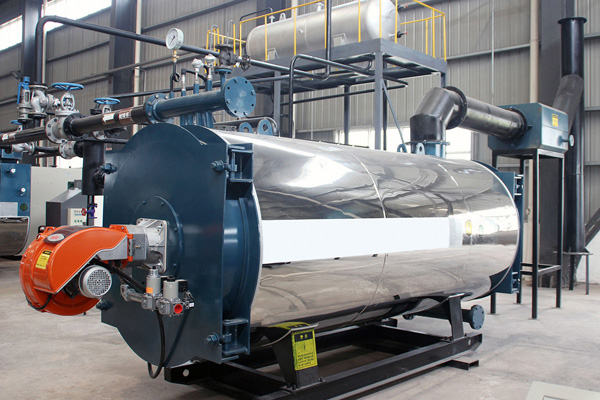
120-5,800 kW
Horizontal liquid-phase thermal oil heater, 120-5,800 kW, disc coil heating surface, 300-340 C at 0.8-1.0 MPa working pressure.
View details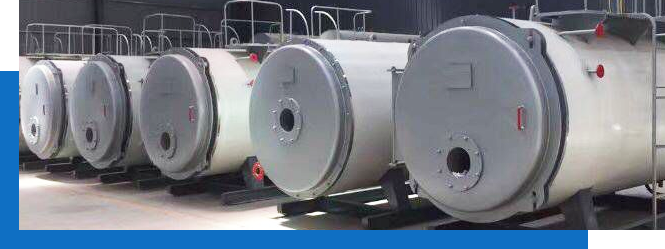
Industrial boiler
Custom pressure vessels and storage tanks, 2-100 m³, in Q245R or Q345R, built under our D1/D2 licence with full NDT and hydrostati...
View detailsExternal links open the publisher’s website and are provided for background reading.
Above roughly 250-260 °C, or when the duty needs a high temperature at low pressure. Thermal oil at 300 °C runs at 0.6-1.0 MPa, so the heater, pipework and coils stay simple, while saturated steam at 300 °C would need over 8 MPa and a very different class of equipment.
Usually one full unit, so that a single failure does not stop the column or the reactor train. For a 6.2 t/h peak that means two 8 t/h units: one duty at 78% load, one standby, which also leaves room for a process step that grows.
Not directly for product-contact surfaces. Sterilisation steam should come from a clean steam generator fed with RO water and no volatile treatment chemicals. Boiler steam can serve jackets, reboilers and air heaters through exchangers.
1-2% is typical, against 5% with softened water. The limit is usually silica or conductivity in the drum rather than hardness, and automatic conductivity control holds it there without operator intervention.
Industry solution
Plant sizing and unit selection for 7-70 MW networks: design-week load, N+1 sequencing, 115/70 °C hydraulics and a 20.6 MW worked...
View details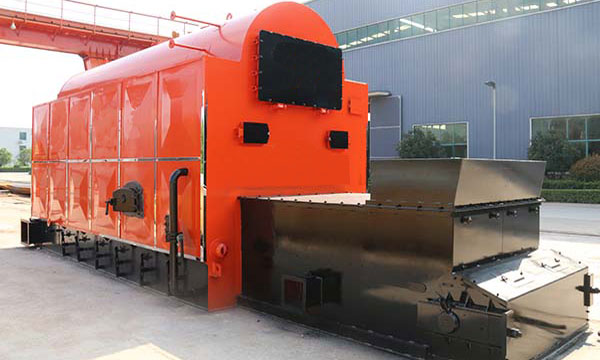
Industry solution
Cylinder drying, corrugator preheat and starch kitchen loads, with a 200 t/day board machine worked example and condensate recover...
View details
Industry solution
Plating baths, cleanroom humidity and lamination presses: why electronics plants heat indirectly, and how a two-shift load profile...
View detailsWe appoint one or two partners per country to quote, deliver and service our boilers locally. Territory protection, factory pricing and commissioning support are part of the agreement.