
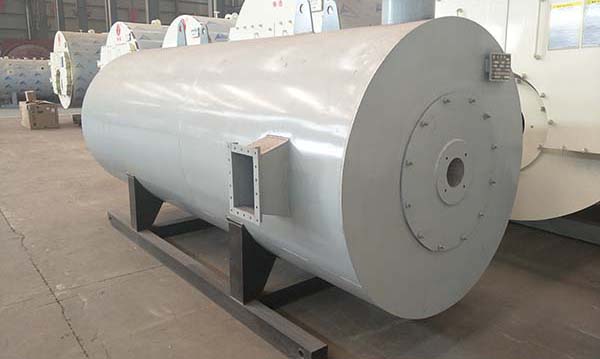
10-600 ×10⁴ kcal/h
Gas/Oil Hot Air Furnace for Drying and Curing
Indirect air heater delivering clean hot air to 350-550 C, or direct-fired hot gas to 1,000 C, for drying, curing and oven retrofi...
View detailsBitumen storage, tank coils and line tracing sized for a 320 t/h plant, with a 700 kW worked example and dryer heat demand cross-check.
An asphalt plant needs heat at two very different temperatures. Bitumen must be stored and delivered at 150-180 °C so that it pumps and coats aggregate; the thermal oil that heats it runs at 280-300 °C so that the tank coils can transfer heat through a fouling film at a sensible rate. The aggregate dryer, by contrast, needs 10-25 MW of direct heat at 150-200 °C gas temperature, and that is a burner in a drum, not a thermal oil circuit.
Keeping the two apart is the first design decision. Thermal oil serves the bitumen tanks, the line tracing, the mixer jackets and the asphalt storage silos. The dryer serves the aggregate. Attempting to heat the dryer through thermal oil would require an exchanger larger than the drum itself.
The load is also seasonal and intermittent. A plant may run flat out for eight months and stand idle for four, and the tank farm must stay hot through the idle period or the bitumen has to be reheated from cold, which is slow and damages the binder.
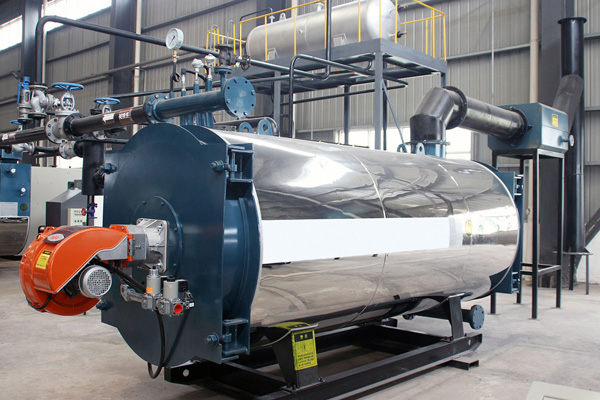
The heater is a horizontal coil unit — the YY(Q)W series from 350 to 5,800 kW — firing gas, diesel or heavy oil. Bitumen duty rarely exceeds 1,000 kW even on a large plant, so the smallest two or three sizes cover most installations.
The circuit needs as much attention as the heater. Two circulating pumps, one duty and one standby, are standard. The expansion tank must be sized for the full thermal expansion of the charge and blanketed with nitrogen if the oil is to last more than a few years; an open tank with hot oil exposed to air oxidises the oil and lays down carbon on the coil. A low-flow interlock, a high-temperature cut-out and a differential-pressure bypass across the pump complete the safety set.
| Parameter | Value | Note |
|---|---|---|
| Heater capacity | 700 kW | YY(Q)W-700 |
| Oil supply / return | 300 / 280 °C | bulk temperature |
| Working pressure | 1.0 MPa | pump head only |
| Circulation | 67 m³/h | 20 K drop, 850 kg/m³ |
| Bitumen storage | 8 tanks, 60 m³ each | coiled and insulated |
| Storage temperature | 160 °C | 170 °C at the mixer |
| Design ambient | -15 °C | winter start-up case |
At 5.4% binder content, a 320 t/h plant consumes 17.3 t/h of bitumen. Heating it from 145 °C in the tank to 170 °C at the mixer takes 17,300 × 2.1 × 25 = 908 MJ/h, which is 252 kW.
Standing losses from the tank farm are the next item. An insulated 60 m³ tank holding bitumen at 160 °C in a -5 °C ambient loses roughly 16 kW through its shell, roof and fittings. Eight tanks give 128 kW. Tracing on the transfer lines, the mixer jacket and the silo coils adds about 30 kW.
Total 410 kW. Add 20% for recovery margin and the running case calls for 492 kW. The cold-start case is higher: bringing one 60 m³ tank from 120 °C to 170 °C takes 60 × 950 × 2.1 × 50 = 5.99 GJ, which is 166 kW sustained over ten hours. That load arrives on top of production, giving 576 kW, and it is this figure rather than the running load that sets the 700 kW model.
Check the circulation. At 700 kW and a 20 K drop with oil at 2.2 kJ/kgK, flow is 700 / (2.2 × 20) = 15.9 kg/s, or 67 m³/h at 850 kg/m³. The pump must deliver that at 300 °C, where vapour pressure and viscosity both differ from the datasheet values at 20 °C.
For comparison, the dryer on the same plant needs 14.4 t/h of water evaporated at 4.5% moisture, which at 2,600 kJ/kg is 10.4 MW, plus 11.2 MW to heat the aggregate. That 21.6 MW is why the dryer is direct-fired and the thermal oil heater stays at 700 kW.
The largest efficiency loss in a thermal oil system is not the stack; it is degraded oil. Bulk oil at 300 °C with a film temperature at the coil wall of 320-340 °C oxidises slowly even with a blanket, and the carbon that forms insulates the coil permanently. Annual oil testing for carbon residue, viscosity and flash point costs little and tells you when to change the charge.
An air preheater on the heater outlet recovers 3-4 points where the stack would otherwise run at 300 °C. Insulating the tank shells, the transfer lines and the silo coils usually saves more than the preheater, and it is cheaper. Variable-speed pump control saves electrical energy in the idle season, when the plant runs on tank losses alone.
The asphalt plant permit covers the dryer burner, the heater, the silos and fugitive emissions, and they are assessed together. The dryer dominates particulate and needs a baghouse; the thermal oil heater is a small NOx source, typically 60-80 mg/Nm³ without recirculation and 30 mg/Nm³ with it.
Odour and blue smoke from the mixer and silos are the complaints that close plants, and they are addressed by capture and filtration rather than by the boiler. On the oil side, the safety case rests on leak detection, bunding of the heater area and a documented response to a coil failure.
Send the tank list and the temperatures and we will return a heater size, a circulation rate and a pump selection, with the cold-start case calculated rather than assumed.
10-600 ×10⁴ kcal/h
Indirect air heater delivering clean hot air to 350-550 C, or direct-fired hot gas to 1,000 C, for drying, curing and oven retrofi...
View details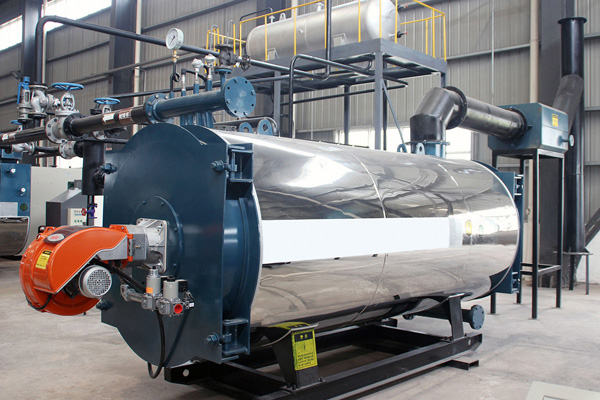
120-5,800 kW
Horizontal liquid-phase thermal oil heater, 120-5,800 kW, disc coil heating surface, 300-340 C at 0.8-1.0 MPa working pressure.
View details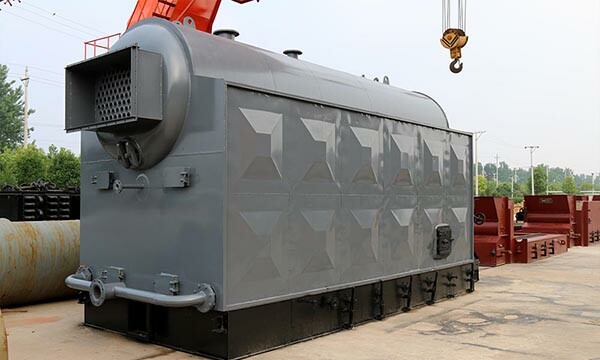
0.5-4 t/h (series to 100 t/h)
Double-drum chain-grate coal boiler, 0.5-4 t/h packaged, for AII bituminous coal at 0.7-1.6 MPa.
View detailsExternal links open the publisher’s website and are provided for background reading.
Because the tank coil is a heat exchanger with a fouling film on the bitumen side. A 300 °C oil supply gives a large enough temperature difference to transfer the duty through a coil of practical size; 200 °C oil would need a coil several times larger.
Not practically. A 320 t/h dryer needs over 20 MW, which is far outside the range of a bitumen heating circuit, and the air temperature required is better produced directly by the dryer burner. Keep the two systems separate.
Test annually for carbon residue, viscosity and flash point, and replace when the carbon residue or viscosity moves beyond the oil supplier's limit. With a nitrogen blanket and correct film temperatures, a charge can last many years; without one, two to three seasons is common.
The coil overheats within minutes and the oil cokes. A flow switch interlocked to the burner, a high-temperature cut-out and a bypass that keeps oil moving on pump trip are the standard protection, and they should be tested at commissioning.
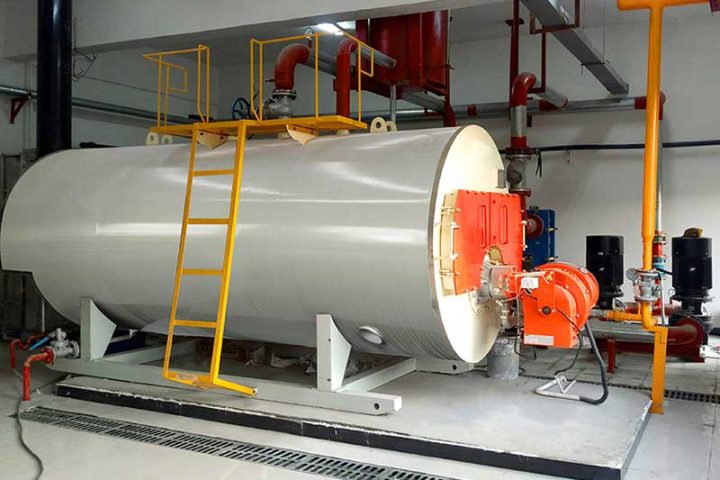
Industry solution
Matching steam pressure and thermal oil to reactor, reboiler and dryer duty, with a worked 6 t/h distillation and evaporation exam...
View details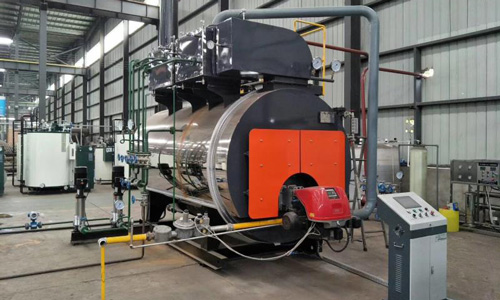
Industry solution
Domestic hot water, laundry and kitchen steam sized on occupancy and diversity, with a 300-room hotel worked example and storage s...
View details
Industry solution
Dust, SO2 and NOx retrofits compared on efficiency and footprint, the real ceiling for a chain-grate boiler, and how to phase the...
View detailsWe appoint one or two partners per country to quote, deliver and service our boilers locally. Territory protection, factory pricing and commissioning support are part of the agreement.