
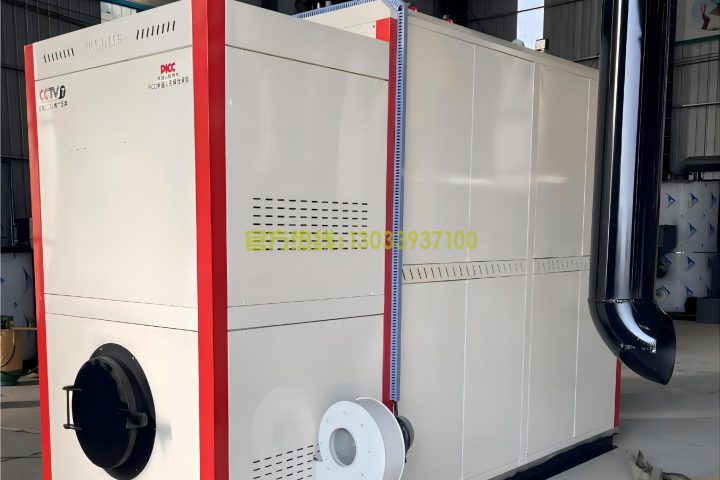
0.3-2 t/h
Integrated Steam Heat Source Unit, 0.3-2 t/h
Skid-mounted steam package combining boiler, burner, feedwater module, softener and controls in one enclosure, 0.3-2 t/h at 0.7-1....
View detailsIndirect air heater delivering clean hot air to 350-550 C, or direct-fired hot gas to 1,000 C, for drying, curing and oven retrofits.
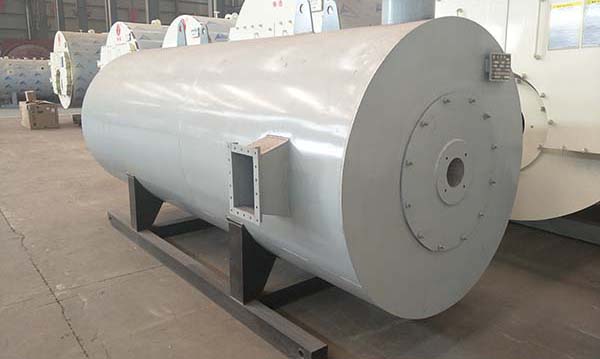
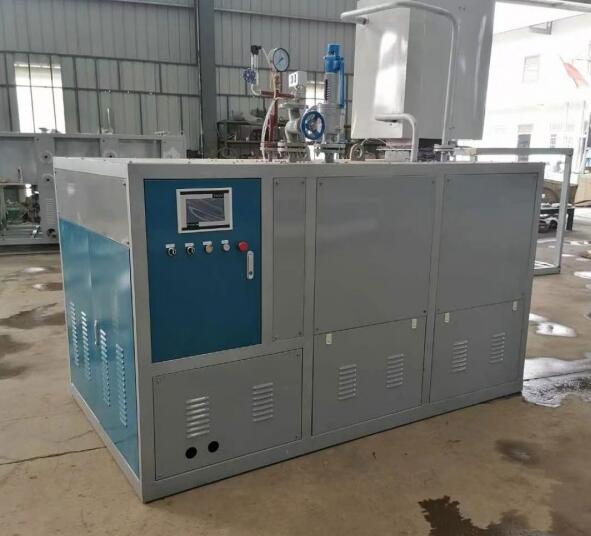
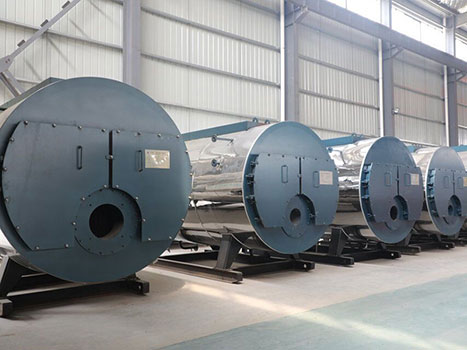
A hot air furnace is a burner, a heat exchanger and a fan. The question that decides everything is whether the air reaching the process has passed through the combustion chamber. If it has not, the unit is an indirect air heater and delivers clean hot air. If it has, the unit is a direct-fired generator and delivers a mixture of combustion products and dilution air. Both are legitimate; they are not interchangeable, and a supplier who does not ask which one you need has not understood the duty.
The range covers 10 to 600 ×10⁴ kcal/h, in shell, tube and plate exchanger forms, with air volumes from a few thousand to more than half a million cubic metres an hour and outlet temperatures from 60 °C to 350 °C in the standard indirect build.
In the indirect type the burner fires into a combustion chamber or a tube bundle, and the process air passes over the outside of that surface in a second, sealed path. The streams never mix. The air leaves at up to about 350 °C on standard shells and up to 550 °C on high-temperature construction, and it carries no carbon dioxide, no combustion water vapour and no nitrogen oxides. That is what makes the type usable where the air touches food, pharmaceutical product, printed board, textile or a clean drying tunnel.
The exchanger is the whole design. Thermal expansion between the hot inner shell and the cooler casing has to be absorbed by a sliding joint or a bellows, or the tube-to-tubesheet welds crack within a few hundred heat cycles. Material follows temperature: carbon steel to about 400 °C, heat-resistant stainless above that. Small leakage between the two paths is possible as the unit ages, so a clean-air duty should specify that the air side runs above the gas side, and a carbon monoxide monitor in the outlet duct is cheap insurance against a pinhole in a weld.
A direct-fired generator burns fuel into a refractory-lined chamber and dilutes the products with secondary air to whatever temperature the process can accept. Output can reach 1,000 °C, which no steam or thermal oil system can match, and both first cost and efficiency are better because there is one heat transfer step instead of two. The price is a dirty stream in the chemical sense: it carries water vapour and combustion products, and it is oxygen-deficient.
Direct firing suits mineral and aggregate drying, sand drying, some tunnel kilns and processes where the product is indifferent to combustion products. It does not suit food, pharmaceutical or anything with an open flame or a solvent-laden atmosphere. Solvent drying in particular belongs to the indirect type with the burner in a separate compartment, because a direct-fired chamber in a solvent oven is an explosion risk that no control system removes.
Size on air volume and temperature rise rather than on boiler tonnage. Heat required is mass flow times specific heat times the rise, and the fan has to move that volume against the duct and exchanger resistance. At nominal size 2.0 the unit passes 28,000 to 5,600 m³/h at 60 to 200 °C for 30 to 150 Nm³/h of gas; at size 10 it passes 320,000 to 572,000 m³/h. Turndown must cover the lowest drying load without short-cycling the burner, so a modulating burner with a 1:4 range or better is the normal specification.
Thermal efficiency is 95% and above on the direct type and slightly lower on the indirect type, where a few points are lost across the exchanger wall. The running cost argument is what sells these units against electric ovens: on the same duty a gas-fired air heater typically costs about a third of the electricity bill, which is why oven retrofits pay back inside a year at most industrial tariffs. The unit can sit on top of the oven, beside it or underneath, so no separate boiler house is needed. Delivery is typically 25 to 45 days after drawing approval; installation and commissioning 5 to 10 days.
Only with the indirect type, where the process air never touches combustion products. A direct-fired unit puts flue gas into the air stream and is not acceptable for food or pharmaceutical contact.
About 350 C in the standard indirect build, 550 C with high-temperature materials, and up to 1,000 C for direct-fired hot gas. The limit is set by the exchanger metal, not by the burner.
Yes, and that is the usual retrofit. The gas unit is mounted on or beside the oven, the existing duct and fan are reused where the resistance allows, and the electrical heating elements are removed.
| Nominal size | 0.5 | 1.0 | 2.0 | 4.0 | 6.0 | 10 |
|---|---|---|---|---|---|---|
| Heat output | 30 ×10⁴ kcal/h | 60 ×10⁴ kcal/h | 120 ×10⁴ kcal/h | 240 ×10⁴ kcal/h | 360 ×10⁴ kcal/h | 600 ×10⁴ kcal/h |
| Air volume | 5,600-1,480 m³/h | 25,000-4,330 m³/h | 28,000-5,600 m³/h | 83,000-12,500 m³/h | 170,000-28,000 m³/h | 320,000-572,000 m³/h |
| Outlet air temperature | 60-200 °C | 60-200 °C | 60-200 °C | 60-350 °C | 60-350 °C | 60-350 °C |
| Gas consumption | 15-40 Nm³/h | 20-75 Nm³/h | 30-150 Nm³/h | 65-275 Nm³/h | 110-425 Nm³/h | 200-700 Nm³/h |
| Thermal efficiency | 95% | 95% | 95% | 95% | 95% | 95% |
0.3-2 t/h
Skid-mounted steam package combining boiler, burner, feedwater module, softener and controls in one enclosure, 0.3-2 t/h at 0.7-1....
View details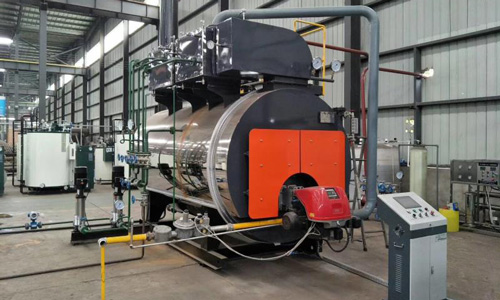
1-100 t/h
Two-pass wet-back steam boiler with economiser and condensing tail, designed for 30 mg/Nm³ NOx and a stack temperature near 55 °C.
View details
20 t/h
The WNS20-1.25-Q is a packaged three-pass wet-back fire-tube boiler delivering 20 t/h of steam at 1.25 MPa and 194 °C, firing natu...
View detailsExternal links open the publisher’s website and are provided for background reading.
Include the capacity (t/h or MW), fuel, working pressure and site country so the proposal matches your permit limits.
We appoint one or two partners per country to quote, deliver and service our boilers locally. Territory protection, factory pricing and commissioning support are part of the agreement.