

0.5–10 t/h
Steam Boiler Package for Food Processing Plants
Steam boiler package for food processing: WNS gas or electric, 0.5-10 t/h at 0.7-1.25 MPa. Handles shift-based loads and sharp CIP...
View detailsSmall packaged condensing gas steam boiler, 0.5-4 t/h, low water volume, quick cold start and 96-97 per cent efficiency on the lower calorific value.
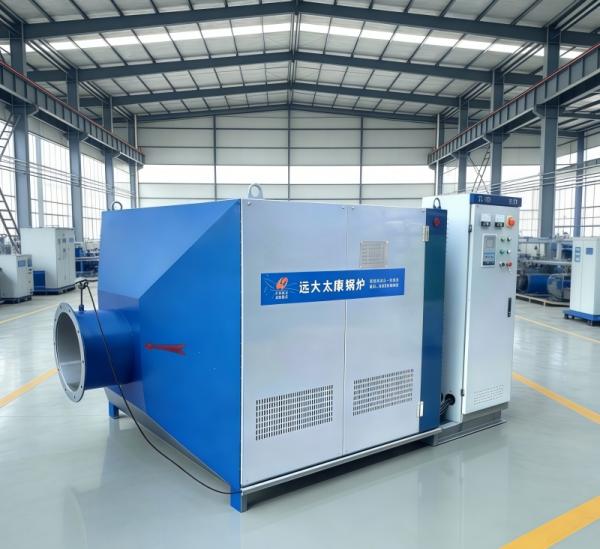
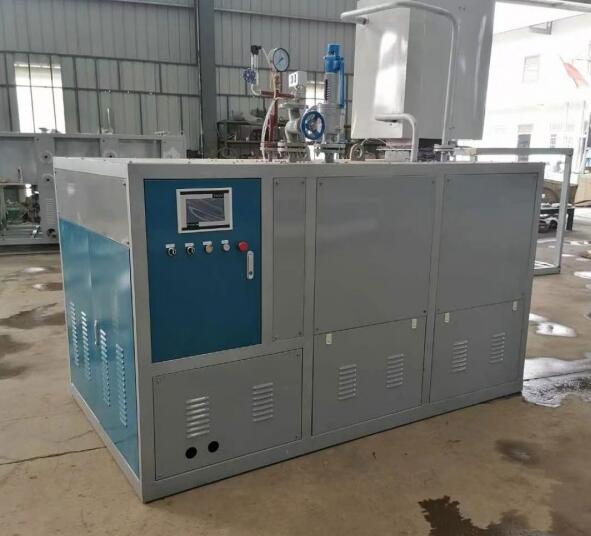
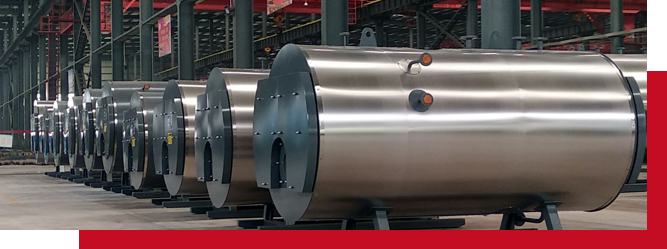
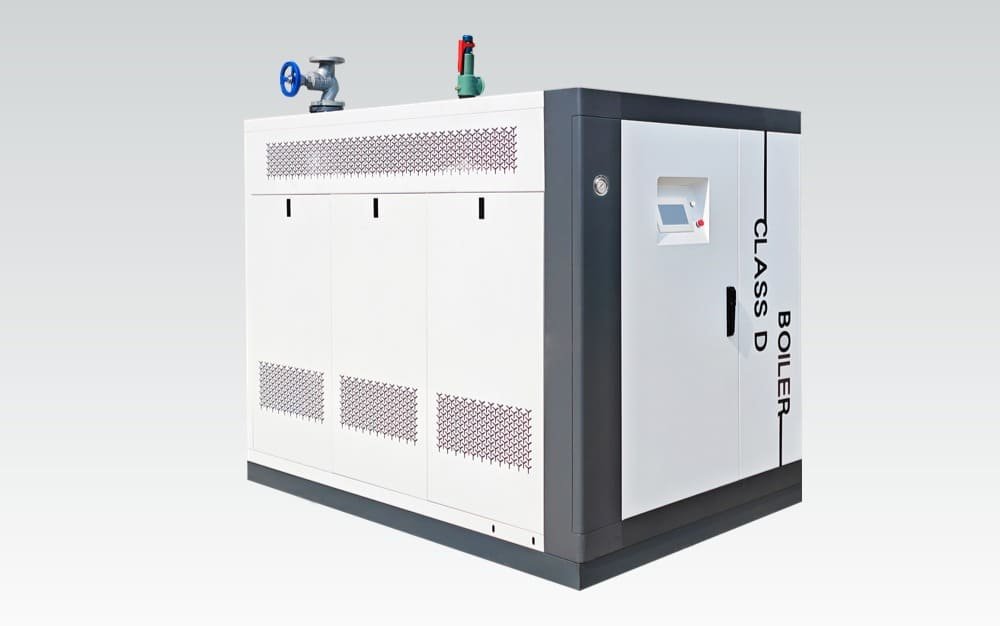
Below about 4 t/h the gas steam market divides in two. One half is the traditional fire-tube shell: cheap, robust, limited to about 92 per cent because the flue gas leaves above the acid dew point. The other half is a small packaged condensing unit, with a compact furnace, a convective section and a corrosion-resistant module after the economiser that takes the flue gas to 50-60 °C, recovers the latent heat and reaches 96 to 97 per cent on the lower calorific value.
Construction is a helical or membrane-wall furnace, a tight convective bank and a 316L condensing module. The burner is premix metal-fibre, holding nitrogen oxides at 30 mg/Nm³ or below without flue-gas recirculation, and the package passes through a standard door.
Chinese regulation sorts steam boilers into four classes, A to D, by rated working pressure and, at the bottom, by design normal water-level volume. The top of the scale covers high-pressure utility and large industrial plant; the classes step down as pressure falls; D-class is the lowest, covering units below 1.6 MPa whose design normal water-level volume sits under about 50 litres. The 30 litre floor of that band is the same threshold at which a unit stops being a boiler at all under TSG G0001: D-class is the smallest thing still regulated as a boiler.
The class is an administrative scope, not a quality grade. It sets the manufacturing licence category, the inspection regime during manufacture and the periodic inspection the user faces, and says nothing about efficiency or workmanship.
One honest limitation: with 30 to 50 litres, only the 0.5 and 1 t/h sizes sit inside D-class. The 2 and 4 t/h units share the design family but carry 120 to 250 litres and are classified higher, so the label should not be applied to them in a tender. Fix the rating first, then ask which class the quoted unit falls in.
A 1 t/h unit holds about 45 litres against roughly 4,000 in a conventional shell. From cold it reaches 1.0 MPa in 6 to 10 minutes, so it can start with the shift instead of being kept hot overnight; standing losses fall to a few hundred watts; load changes are followed quickly because there is little water to heat first.
The same property is the limit. With almost no steam storage, a 300 kg spike in two minutes, say a jacketed pan coming up or three sterilisers starting together, will drop pressure unless a small accumulator is added or the burner has margin. Size on the peak, and check how long the peak lasts: ten minutes can be covered by storage, two hours cannot.
The condensing section decides the life. Flue gas below the dew point forms condensate at pH 3 to 4 with chlorides and sulphates, and carbon steel will not survive it: the module is stainless, the condensate passes through a neutralising bed, and the flue is plastic or stainless. Long condensing periods need return water below about 55 °C, which for a steam plant means feedwater at 50-60 °C. Hot feedwater from a deaerator at 105 °C stops condensing altogether and takes 3 to 4 points of efficiency off.
Water treatment is not optional at this volume. Solids concentrate fast in 45 litres, so the softener is part of the package. Level control also has less margin: normal level to low-water trip is tens of millimetres, so probes and earth references must be kept clean.
Export is the obvious case. The label has no standing outside China, and a unit shipped elsewhere is assessed under that country’s pressure-equipment rules, with design calculations, material certificates and test reports in the local language. Nothing about the Chinese class shortens that queue.
Within its band, though, it does what a shell cannot: it starts in minutes, sits cold without penalty, and condenses enough flue gas for the efficiency claim to be real rather than nominal.
No. It is the lowest tier of the Chinese classification, defined by rated pressure below 1.6 MPa and a design normal water-level volume of 30 to 50 litres. It sets the manufacturing licence and inspection scope, and says nothing about efficiency, materials or workmanship.
Only when the feedwater is cool enough, below about 55 °C at the condensing section. With feedwater at 50 to 60 °C and a low make-up rate, most of the latent heat is recovered; with hot deaerated feedwater the unit runs as a high-efficiency non-condensing boiler at 92 to 94 per cent.
Yes, with the burner set for the gas and, for LPG, a vaporiser in cold weather. The gas quality has to be declared at the order stage because the premix burner's ports and the gas train are sized on calorific value and density, not adjusted afterwards.
| Size class | 0.5 t/h | 1 t/h | 2 t/h | 4 t/h |
|---|---|---|---|---|
| Rated evaporation | 0.5 t/h | 1 t/h | 2 t/h | 4 t/h |
| Rated pressure | 1.0 MPa | 1.0 MPa | 1.25 MPa | 1.25 MPa |
| Design water volume, normal level | 30-50 L | 45-50 L | 0.12 m³ | 0.25 m³ |
| Efficiency, gas on LCV | 96% | 96-97% | 96-97% | 96% |
| Cold start to pressure | 5-8 min | 6-10 min | 10-15 min | 15-20 min |
0.5–10 t/h
Steam boiler package for food processing: WNS gas or electric, 0.5-10 t/h at 0.7-1.25 MPa. Handles shift-based loads and sharp CIP...
View details8 t/h
The WNS8-1.25-Q is an 8 t/h packaged three-pass wet-back fire-tube steam boiler rated at 1.25 MPa and 194 °C, firing natural gas,...
View details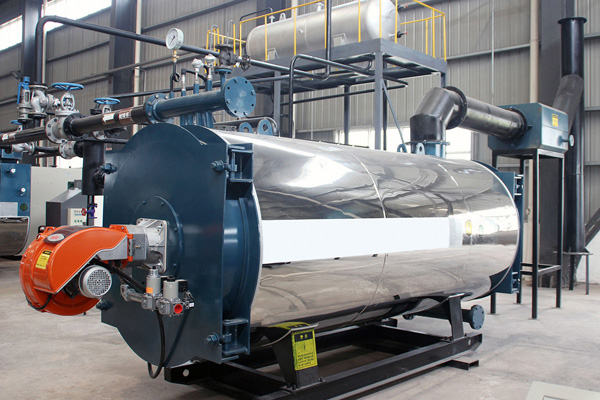
0.7-7 MW thermal oil; 1-6 t/h steam
Packaged thermal oil heaters and steam boilers for rubber and tire plants, sized for vulcanization presses, mixing and drying. The...
View detailsExternal links open the publisher’s website and are provided for background reading.
Include the capacity (t/h or MW), fuel, working pressure and site country so the proposal matches your permit limits.
We appoint one or two partners per country to quote, deliver and service our boilers locally. Territory protection, factory pricing and commissioning support are part of the agreement.