

35 t/h
35 t/h Water-Tube Gas/Oil Steam Boiler SZS35-1.6-Q
The SZS35-1.6-Q is a 35 t/h D-type double-drum water-tube boiler delivering 1.6 MPa steam at 204°C. It fires natural gas, LPG, lig...
View detailsIndirect gas or oil fired hot air furnace, 0.35-7 MW, delivering clean air at 350-800 °C through a stainless air-side heat exchanger.
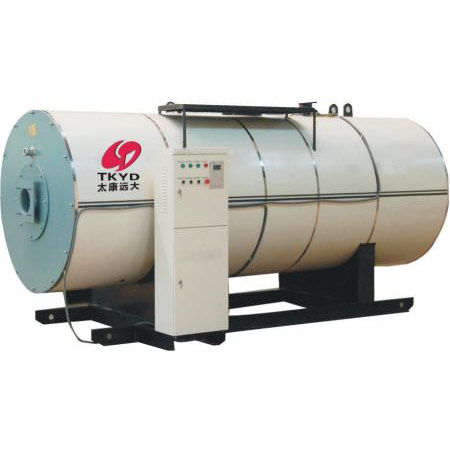
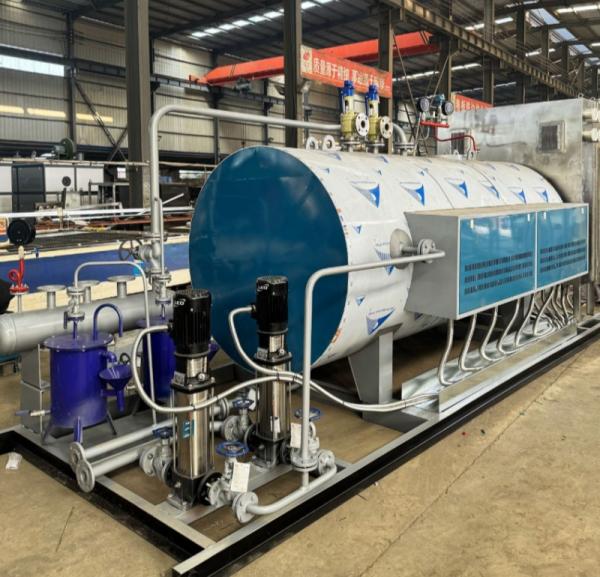
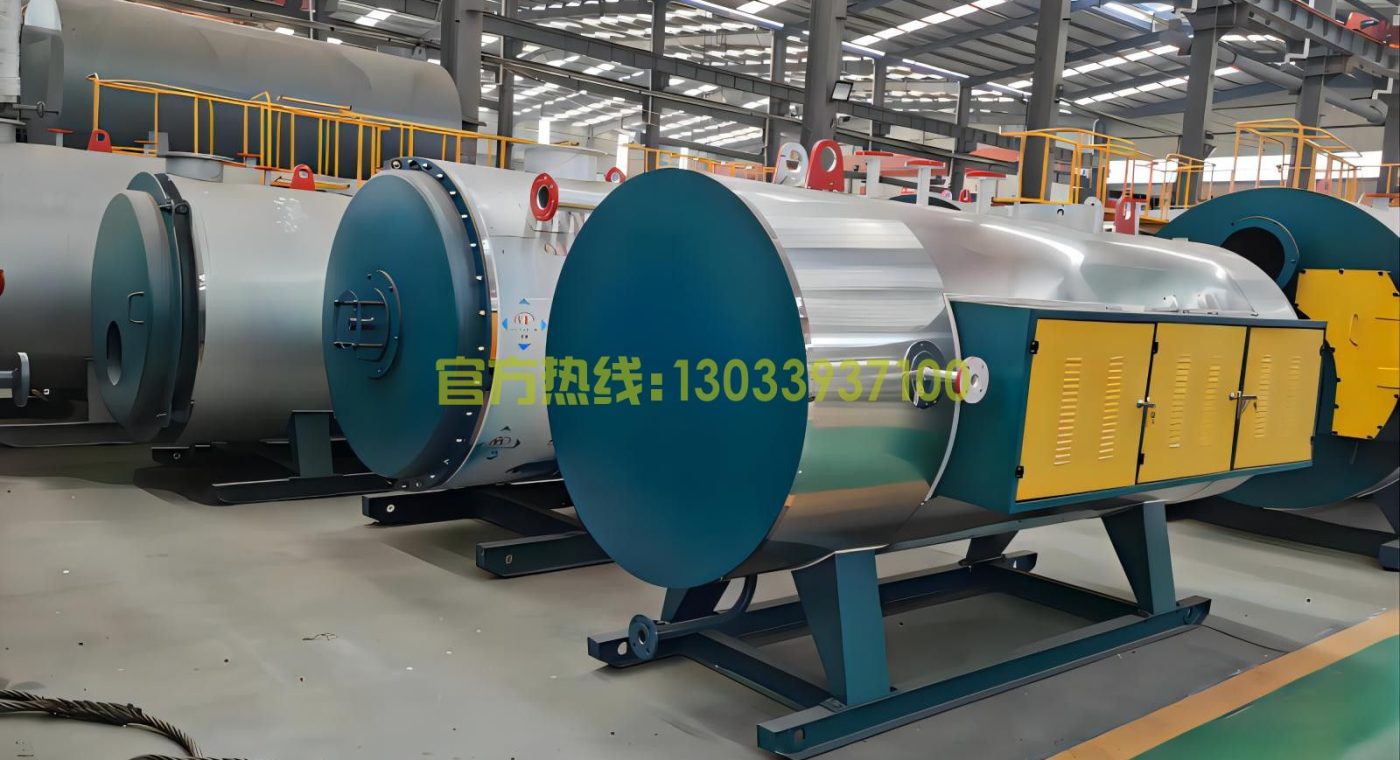
The high-temperature hot air furnace burns gas or oil in a refractory chamber and passes the flue gas over the outside of a heat exchanger while process air passes through the inside. The streams never meet, so the air leaving at 350 to 800 °C is clean: no carbon dioxide, no water vapour, no nitrogen oxides, no particulate. Capacity runs from 0.35 to 7 MW, with the air-side exchanger in stainless steel and, at the top, a high-nickel alloy.
Direct firing reaches 1000 °C more cheaply and at higher efficiency, but the gas it delivers is oxygen-deficient, wet, and carries everything the burner produced. Where the air touches a product, a catalyst or a food surface, indirect is the only defensible choice, and that separation is why the product exists.
Air-side metal temperature is the constraint, not the air temperature: the wall sits 20 to 50 K above the air it heats. Carbon steel is finished above about 400 °C because oxidation scales it away; type 304 holds to roughly 550 °C of wall, 321 and 316 to about 600 °C. Type 310S, a 25 per cent chromium, 20 per cent nickel grade, carries the 600 to 900 °C band and is the usual material for 700 to 800 °C air, though creep strength falls quickly above 850 °C, so tubes are thicker and supports closer. Above that, 253MA or a 600-series nickel alloy is specified, at a cost the duty has to justify.
Expansion is the other driver. A 6 m tube at 800 °C grows about 70 mm relative to its cold length, and that movement must be absorbed by a bellows or a sliding joint rather than by the tube-to-tubesheet welds; units that crack after a few hundred cycles were restrained rather than allowed to grow.
The burner runs 10 to 15 per cent excess air, putting the chamber at 1100 to 1300 °C. The exchanger is counterflow and the process air stream is several times the combustion air flow, so the flue gas can be cooled well below the air outlet: a unit making 800 °C air still leaves the exchanger at 350 to 400 °C. Efficiency is therefore 86 to 88 per cent at 350 °C air, 82 to 85 at 500 °C and 78 to 82 at 800 °C, the fall coming from the hot-end approach, casing radiation and, on oil firing, the acid dew point that stops further cooling.
Where the process wants 400 °C and the furnace is sized for 800 °C, the usual arrangement is to generate at the top temperature and blend it with ambient air in a mixing chamber, or bypass part of the air around the exchanger. Blending is simple and responds quickly; the bypass is more efficient but needs a damper that stays tight at temperature. Below about 2 MW the mixing chamber is normally the better choice.
A modulating burner gives 3:1 to 5:1 turndown, and outlet air is held to about ±10 °C by trimming fuel against air flow rather than outlet temperature alone, avoiding the overshoot a pure temperature loop produces on start-up. Over-temperature at 850 °C, low air flow and flame failure trip the fuel valve.
Two details matter. The air side should run above gas-side pressure, so a pinhole leaks clean air into the flue rather than flue gas into the product. And a carbon monoxide monitor in the outlet duct is cheap insurance against a tube failure the gauge will not show.
The 700 to 800 °C band covers calcining gypsum, clay and mineral fillers, catalyst activation, metal preheat ahead of forging, and the firing zone of tunnel kilns. The 350 to 500 °C band covers mineral and sand drying, asphalt filler drying where a flame would contaminate the product, chemical dryers, and curing ovens for coatings that cannot see combustion gas.
Selection turns on how clean the air must be and what the last ten points are worth. A direct-fired generator at 95 per cent is the cheaper machine; an indirect furnace costs more, burns more fuel at high temperature, and is the only one usable where the air is part of the product.
| Heat output | Air volume | Natural gas | Maximum air | Air-side pressure | Weight |
|---|---|---|---|---|---|
| 350 kW | 1900 Nm³/h | 42 Nm³/h | 600 °C | 6 kPa | 2.5 t |
| 1400 kW | 7700 Nm³/h | 169 Nm³/h | 800 °C | 8 kPa | 6.5 t |
| 4200 kW | 23200 Nm³/h | 506 Nm³/h | 800 °C | 10 kPa | 14 t |
| 7000 kW | 38700 Nm³/h | 843 Nm³/h | 800 °C | 12 kPa | 18 t |
In an indirect furnace the flue gas and the process air travel in separate paths, so the air stays clean. A direct-fired generator mixes combustion products with dilution air and delivers them to the process, which is cheaper and hotter but not clean.
The hot-end approach temperature and casing radiation grow with the air temperature, and on oil firing the flue cannot be cooled below the acid dew point. A unit making 800 °C air gives up four to eight points against one making 350 °C.
Type 310S is the usual choice up to about 900 °C of wall temperature, with 253MA or a 600-series nickel alloy above that. The selection is confirmed against the duty cycle, because creep and thermal fatigue decide life more than oxidation does.
| Heat output | 350 kW | 700 kW | 1400 kW | 2800 kW | 4200 kW | 7000 kW |
|---|---|---|---|---|---|---|
| Air volume at 500 °C | 1900 Nm³/h | 3900 Nm³/h | 7700 Nm³/h | 15500 Nm³/h | 23200 Nm³/h | 38700 Nm³/h |
| Natural gas at 84% | 42 Nm³/h | 84 Nm³/h | 169 Nm³/h | 337 Nm³/h | 506 Nm³/h | 843 Nm³/h |
| Maximum air temperature | 600 °C | 700 °C | 800 °C | 800 °C | 800 °C | 800 °C |
| Air-side pressure | 6 kPa | 8 kPa | 8 kPa | 10 kPa | 10 kPa | 12 kPa |
| Reference weight | 2.5 t | 3.8 t | 6.5 t | 10 t | 14 t | 18 t |
35 t/h
The SZS35-1.6-Q is a 35 t/h D-type double-drum water-tube boiler delivering 1.6 MPa steam at 204°C. It fires natural gas, LPG, lig...
View details
1-10 t/h
A packaged WNS gas steam boiler with clean steam generator, sized 1-10 t/h at 1.0-1.25 MPa, for fermentation, granulation, sterili...
View details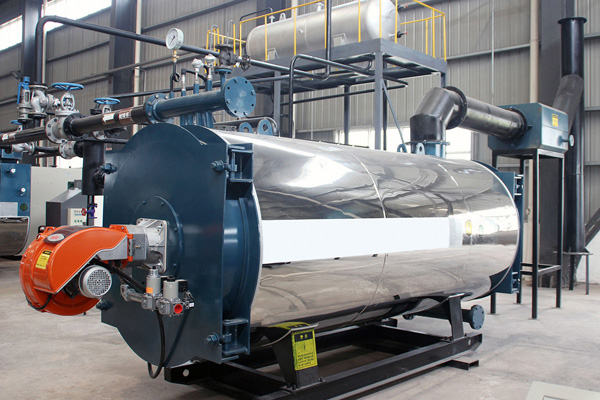
1-7 MW thermal oil
A YY(Q)W thermal oil heater package for asphalt mixing plants, sized 1-7 MW for bitumen tank heating at 150-170 °C and aggregate d...
View detailsExternal links open the publisher’s website and are provided for background reading.
Include the capacity (t/h or MW), fuel, working pressure and site country so the proposal matches your permit limits.
We appoint one or two partners per country to quote, deliver and service our boilers locally. Territory protection, factory pricing and commissioning support are part of the agreement.