

1-100 t/h (0.7-70 MW)
WNS Gas/Oil Steam Boiler, 1-100 t/h
Packaged three-pass wet-back fire-tube steam boiler for gas and oil, 1-100 t/h at 1.25 MPa, with matched modulating burner and ful...
View detailsA 2 t/h chain-grate boiler burning rice husk and wood waste supplies process steam at a food plant near Chattogram, cutting fuel cost against diesel-fired steam.
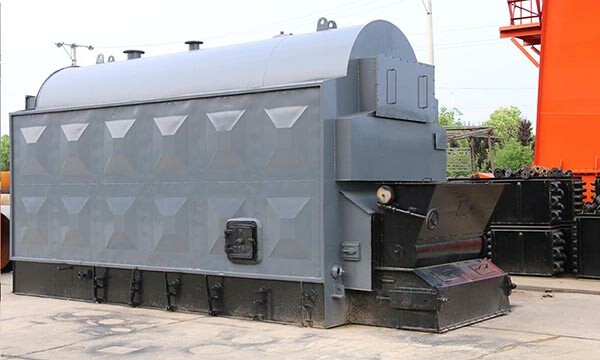
The plant packs and processes snacks and instant noodles on the edge of Chattogram, and it sits within a few kilometres of a cluster of rice mills. Husk was being dumped and burned in the open; the factory was buying diesel to raise about 1.8 t/h of steam. Replacing that diesel with a 2 t/h biomass boiler was a fuel-logistics decision before it was an equipment decision.
The boiler is a DZL chain-grate unit, 2 t/h at 1.0 MPa and 184 °C, with a furnace designed for a fuel that is 60-70% rice husk and the rest sawdust and wood offcuts. Husk has an LHV around 13-14 MJ/kg, high ash (15-20%) and a low bulk density, so the furnace and grate are sized on volume, not on heating value.
Husk burns as a thin, fast flame and leaves a light, abrasive ash that is 85-90% silica. The chain grate runs slowly, with a fuel bed of 100-150 mm, and the primary air is split into zones so the bed does not lift. The furnace has a refractory-lined front arch that radiates back onto the fresh fuel and stabilises ignition, which matters because husk volatiles release within seconds.
Ash is removed by a wet scraper and sold to a brick works; the plant produces roughly 250-300 kg of ash per tonne of husk. That sale covers part of the fuel cost and, more importantly, removes the dust problem that open dumping created.
| Item | Value |
|---|---|
| Rated evaporation | 2 t/h |
| Steam pressure | 1.0 MPa saturated |
| Fuel | rice husk with wood waste |
| Fuel LHV | 13-14 MJ/kg |
| Full-load fuel rate | about 420 kg/h |
| Ash leaving the grate | 250-300 kg per tonne of husk |
The fuel yard was the weak point. Husk arrives in bags and is tipped into a hopper; the original screw conveyor bridged whenever the husk was damp from the monsoon, so the plant replaced it with a wide-belt feeder and a small covered store with a concrete floor. Fuel moisture above 20% still costs efficiency, and the boiler now has a stack thermometer that the operators watch as a moisture indicator.
On the steam side the plant kept its existing diesel boiler as a standby, connected through a common header with a non-return valve. Changeover is manual and takes about twenty minutes, which is acceptable because the biomass unit carries the base load and the diesel unit only runs during grate maintenance.
Steam cost fell from a diesel-linked figure to a husk-linked one, and the payback was under two years at local fuel prices. The plant also stopped buying steam capacity it did not need: 2 t/h covers the process and the occasional CIP peak, and the standby boiler is now cold most of the month.
1-100 t/h (0.7-70 MW)
Packaged three-pass wet-back fire-tube steam boiler for gas and oil, 1-100 t/h at 1.25 MPa, with matched modulating burner and ful...
View details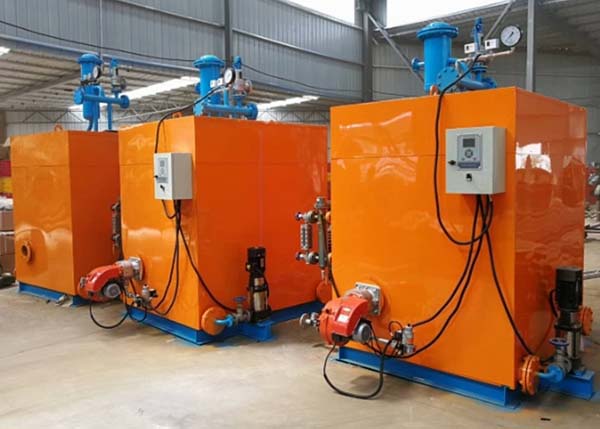
0.1-2 t/h
Multi-pass packaged steam generator, 0.1-2 t/h at 0.4-0.7 MPa, small water content and fast start for pressing, food and sterilizi...
View details
2-50 m³/h treated water
Softener and deaerator package for boiler make-up, holding hardness below 0.03 mmol/L and oxygen below 0.05 mg/L.
View details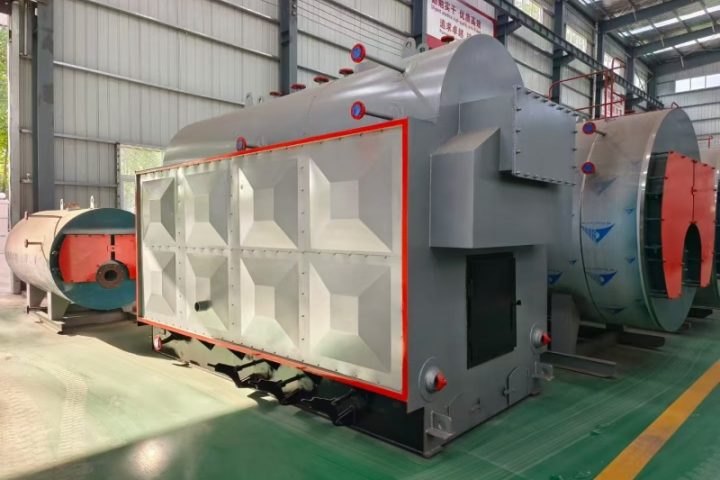
1-20 t/h boiler equivalent
Finned tube economizers and tubular air preheaters for fire-tube, water-tube and thermal oil systems, with cold-end protection aga...
View detailsExternal links open the publisher’s website and are provided for background reading.
Yes, with a furnace and grate sized for the low bulk density and high ash content. Most plants mix in some wood waste to stabilise the bed.
At 13.5 MJ/kg and 70% boiler efficiency, roughly 2.4 kg of steam per kg of husk from feedwater at 20 C. Moisture above 20% reduces this quickly.
Husk ash is mostly silica and is sold to brick and cement works. A 2 t/h boiler on husk produces roughly 0.5-0.6 t of ash in a 24-hour run.
2022
Kumasi, Ashanti Region, Ghana
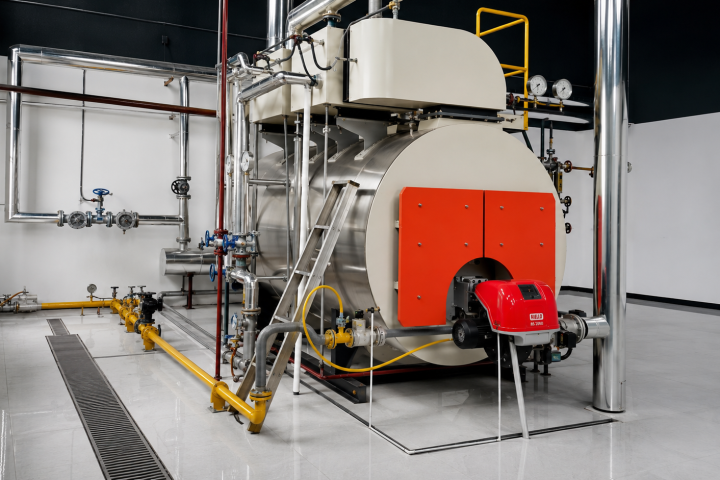
A gas-fired steam boiler was supplied to a tire retreading operation in Kumasi, Ashanti Region, Ghana, to provide reliable process...
View project
2025
Erdenet, Mongolia
A 4 t/h coal-fired steam boiler supplies heating and process steam at a mine camp near Erdenet, with a hardened feedwater system f...
View project
2025
Bishkek, Kyrgyzstan
A 2 t/h gas steam boiler supplies pasteurisation, CIP and whey drying at a dairy in Bishkek, with a stainless feedwater set and a...
View projectWe appoint one or two partners per country to quote, deliver and service our boilers locally. Territory protection, factory pricing and commissioning support are part of the agreement.