
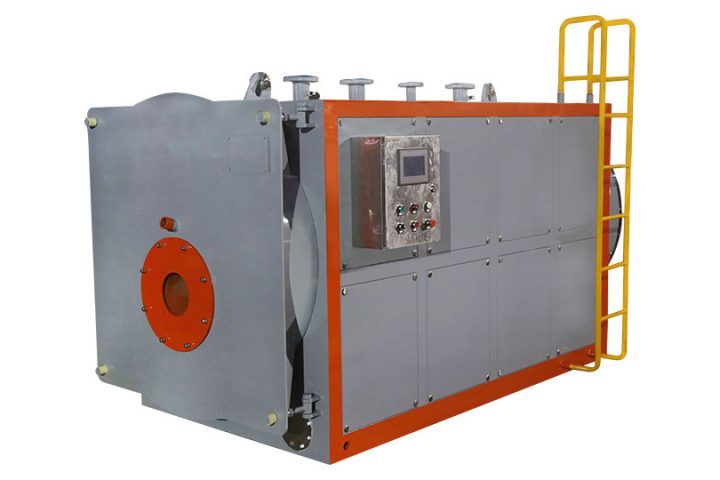
0.7-14 MW (larger on request)
Low-NOx Condensing Hot Water Boiler
Three-pass wet-back hot water boiler with a large furnace, FGR or surface premix burner and an internal condenser for 95/70 and 11...
View detailsMulti-pass packaged steam generator, 0.1-2 t/h at 0.4-0.7 MPa, small water content and fast start for pressing, food and sterilizing loads.
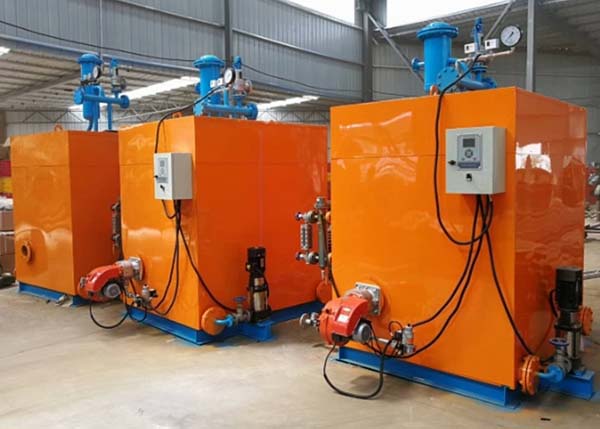
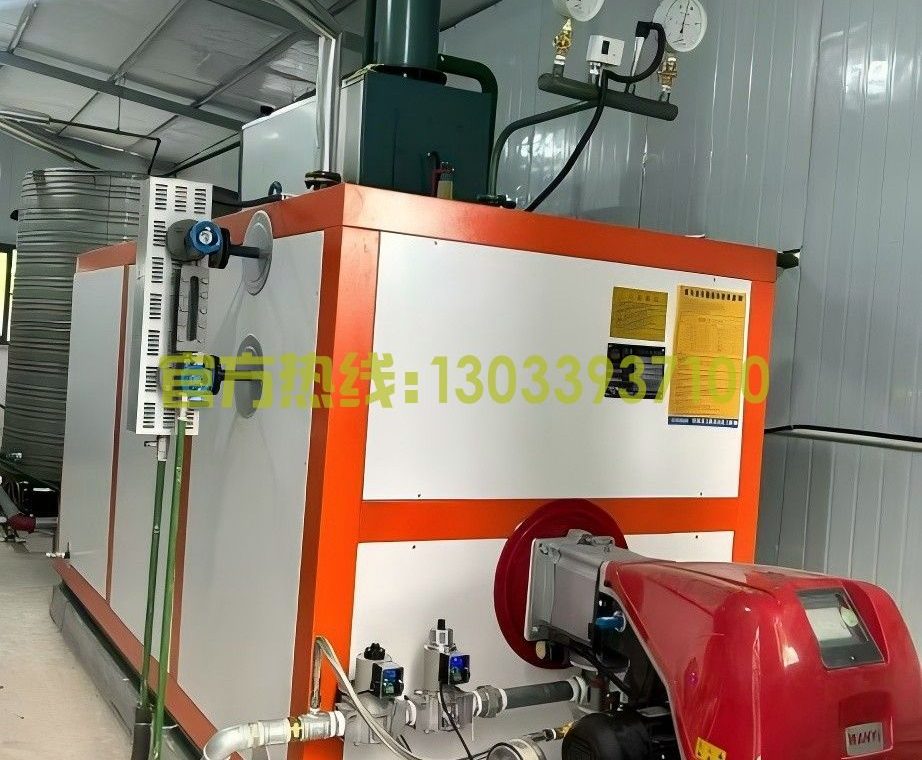
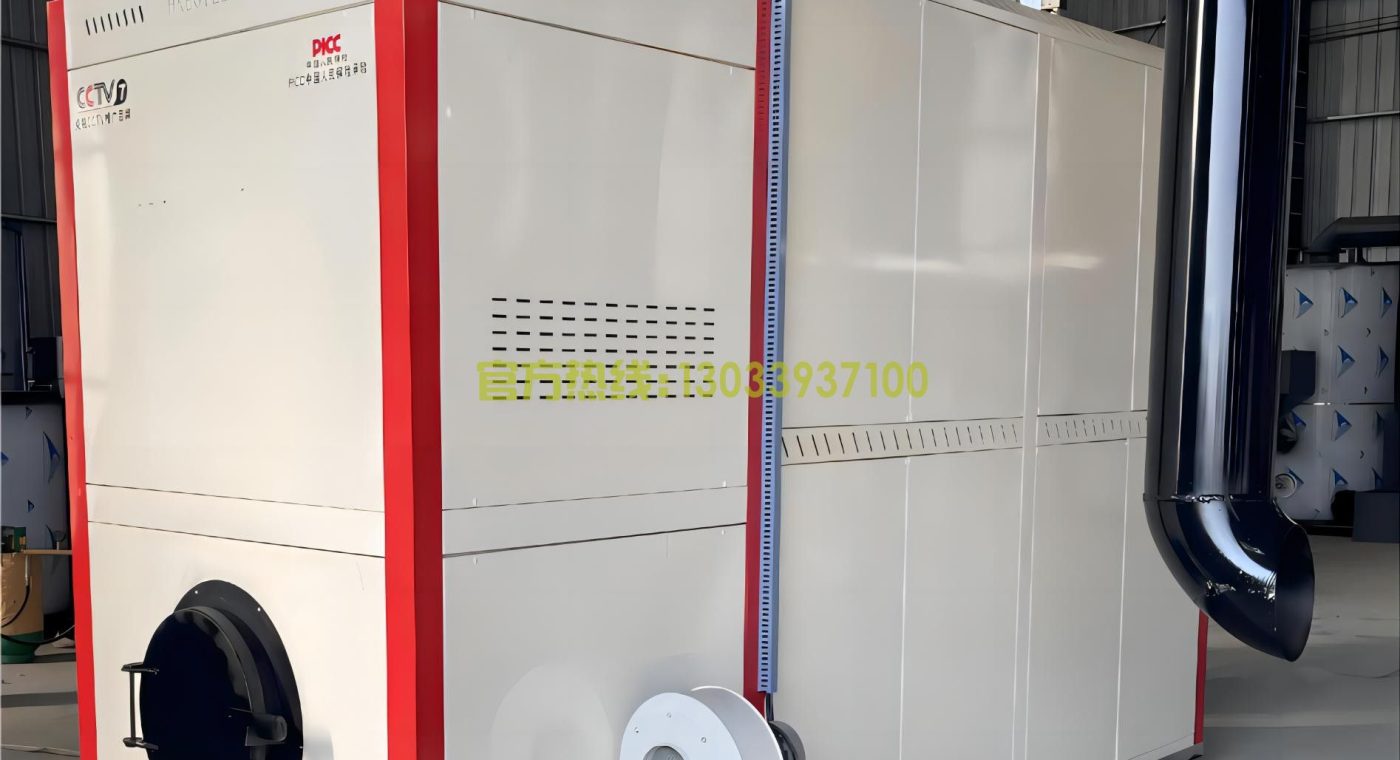
The range runs from 0.1 to 2 t/h of saturated steam at 150 to 170 °C, which corresponds to 0.4 to 0.7 MPa. Heating surface is arranged in several passes inside one insulated shell, with the burner firing into a small combustion chamber and the gas turning through the passes before it leaves. The unit arrives with the burner, feed pump, level electrodes, pressure switch and interlocks wired and tested, so site work is the steam line, the feedwater, the drain and the flue.
Because the water inventory is small, the generator reaches working pressure in a few minutes from cold and answers a step change in demand faster than a shell boiler of the same rating. The same property makes it a follower rather than a buffer: it has almost no stored heat, so the load profile has to be understood before the size is fixed.
The design normal water level volume of these units is kept below 30 litres. That number matters because the Chinese boiler safety technical supervision regulation, TSG G0001-2012, excludes from its scope a unit whose design normal water level volume is under 30 L. The exclusion is a definitional threshold, not a performance rating: a unit below it is treated as a steam generator rather than as a boiler, and the mandatory manufacturing supervision inspection that applies to boilers does not apply in the same way.
Three cautions follow. First, the volume has to be demonstrated at the design normal water level, not at the lowest visible level, and it is fixed by the drawings; a later change of internal fittings can invalidate the basis. Second, exemption from manufacturing inspection is not exemption from every local rule: registration, emission permitting, operator competence and periodic external inspection are decided by the authority where the unit is installed, and importing countries apply their own regimes. Third, the low water volume that makes the exclusion possible also removes thermal buffer, so feedwater quality and level control carry more weight than they would on a 5 t/h shell boiler.
We present this as a design and regulatory note, not as a promise. If a project needs the exemption confirmed, it has to be confirmed against the drawings and the rules of the destination country.
Small volume means small tolerance for poor feedwater. Hardness, oxygen and suspended solids that a large shell boiler would tolerate for years will scale or pit a generator in months, because the same mass of deposit sits on a much smaller surface and the tubes are thinner. Fit a softener, and where make-up is high, dose for oxygen scavenging and alkalinity. Blowdown is small but not optional: a bottom blowdown at the lowest point with a schedule set by chloride concentration.
Level control is the other half. The visible level moves quickly at 1.5 t/h, so electrode probes with a modulated feed pump, a low-water cut-out and a high-level alarm are standard rather than optional. A unit run near its maximum continuous rating on a cycling load will trip on low water sooner or later unless the steam header has a small accumulator or a receiver to absorb the peaks.
Garment pressing and dry cleaning, laundry and ironing lines, food processing and packaging, hospital and laboratory sterilizers, saunas and hot spring facilities, concrete and precast curing, chemical reactors and jacketed vessels, tyre retreading. In each case the demand is under 2 t/h, the plant room is small, and nobody wants a boiler house with a dedicated attendant. Electric heating is an option up to about 0.5 t/h where no flue is possible, at a higher running cost per tonne of steam.
To quote, send the steam load profile, the pressure, the fuel and a water analysis. Delivery is typically 25 to 45 days after drawing approval, and commissioning takes 5 to 10 days including water treatment and burner set-up.
Only where the design normal water level volume is genuinely below 30 L and the local rules adopt that threshold. It is a classification consequence of the design, not a guarantee, and the destination authority decides.
Yes, with a biomass burner and an ash-clearing base. Gas consumption figures in the table assume natural gas at 8,400 kcal/Nm³; biomass is rated separately on pellet calorific value.
Saturated steam at 150-170 C with a small superheat margin at the outlet. Where dry steam is needed for a sterilizer or a turbine, a separator and a trap set at the outlet header is specified.
| Model | FTSG0.2-0.4-Y.Q | FTSG0.3-0.7-Y.Q | FTSG0.5-0.7-Y.Q | FTSG0.7-0.7-Y.Q | FTSG1.0-0.7-Y.Q | FTSG1.5-0.7-Y.Q |
|---|---|---|---|---|---|---|
| Rated evaporation | 0.2 t/h | 0.3 t/h | 0.5 t/h | 0.7 t/h | 1.0 t/h | 1.5 t/h |
| Steam temperature | 150 °C | 170 °C | 170 °C | 170 °C | 170 °C | 170 °C |
| Thermal efficiency | 90% | 91% | 91% | 91.6% | 92% | 92% |
| Gas consumption | 20 Nm³/h | 28 Nm³/h | 35 Nm³/h | 58 Nm³/h | 72 Nm³/h | 105 Nm³/h |
| Electrical power | 1.0 kW | 1.0 kW | 1.25 kW | 3.5 kW | 4.2 kW | 4.5 kW |
| Shipping dimensions L x W x H | 1,500 x 1,250 x 2,100 mm | 1,750 x 1,850 x 2,200 mm | 2,200 x 2,000 x 2,800 mm | 2,500 x 2,300 x 3,150 mm | 2,650 x 2,500 x 3,200 mm | 3,470 x 2,500 x 3,200 mm |
0.7-14 MW (larger on request)
Three-pass wet-back hot water boiler with a large furnace, FGR or surface premix burner and an internal condenser for 95/70 and 11...
View details
6-100 t/h
Membrane-wall water-tube steam boiler with staged combustion and FGR, 6-100 t/h at up to 2.5 MPa and 98% efficiency with heat reco...
View details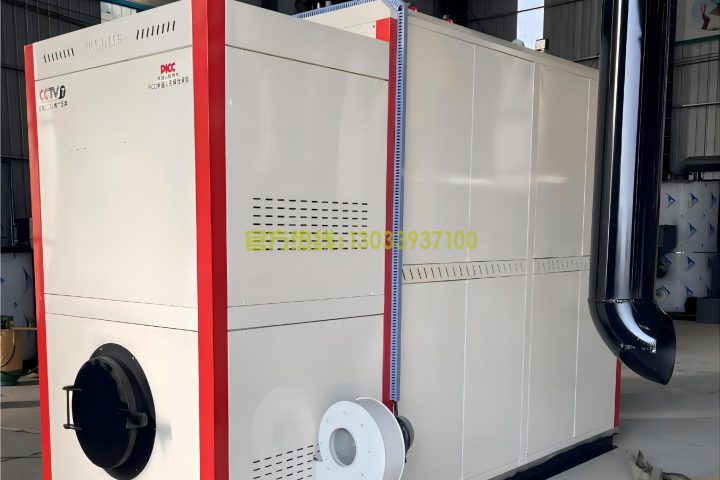
0.3-2 t/h
Skid-mounted steam package combining boiler, burner, feedwater module, softener and controls in one enclosure, 0.3-2 t/h at 0.7-1....
View detailsExternal links open the publisher’s website and are provided for background reading.
Include the capacity (t/h or MW), fuel, working pressure and site country so the proposal matches your permit limits.
We appoint one or two partners per country to quote, deliver and service our boilers locally. Territory protection, factory pricing and commissioning support are part of the agreement.