

1-100 t/h (0.7-70 MW)
WNS Gas/Oil Steam Boiler, 1-100 t/h
Packaged three-pass wet-back fire-tube steam boiler for gas and oil, 1-100 t/h at 1.25 MPa, with matched modulating burner and ful...
View detailsA 4 t/h dual-fuel gas/oil steam boiler supplies bottle washing, syrup heating and CIP at a beverage plant in Dar es Salaam, where gas supply is intermittent.
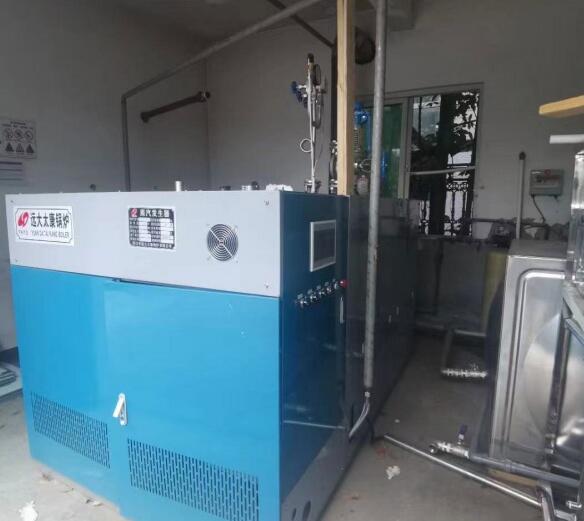
The bottling plant in Dar es Salaam runs two lines and a syrup room, and its steam demand is dominated by bottle washing and CIP, with syrup heating and a pasteuriser taking the rest. Natural gas reaches the site through a distribution network that is reliable most of the year but interrupted during maintenance, so the boiler had to be dual-fuel.
The unit is a 4 t/h WNS fire-tube boiler at 1.0 MPa with a combination burner that runs on gas or light fuel oil. Changeover is manual at the burner, about 30 minutes including the purge, and the plant keeps 20,000 litres of oil in a bunded tank.
Steam demand is 2.5-3 t/h through two shifts, with a 3.6 t/h peak when both lines wash bottles and the CIP set runs. At 4 t/h and 1.0 MPa the boiler absorbs about 2.8 MW; full-load gas consumption is about 310 Nm3/h, and oil consumption at the same rating is about 285 kg/h.
| Item | Value |
|---|---|
| Rated evaporation | 4 t/h |
| Pressure | 1.0 MPa |
| Fuels | natural gas / light fuel oil |
| Full-load gas rate | about 310 Nm3/h |
| Full-load oil rate | about 285 kg/h |
| Oil storage | 20,000 L, bunded |
A combination burner is not simply two burners in one housing: the gas train and the oil train have separate safety shut-off valves, and the changeover sequence must prove the fuel that is not in use is isolated. The plant’s operators follow a written procedure, and the burner management system enforces a 5-minute purge before ignition on either fuel.
The oil side needs preheating to about 40 °C for atomisation, and the plant installed a small electric heater on the oil line. The gas side runs on the local analysis, which is richer than the methane basis used for the quotation, so the combustion curve was trimmed at commissioning.
The plant’s water is hard, and the softener is sized for 6 m3/h with a duplicate vessel so regeneration does not interrupt make-up. Boiler water is held at 2,500 ppm, and the steam header has a separator because the bottle washer’s control valves are sensitive to wet steam.
The plant has run through two gas interruptions without stopping production, switching to oil within an hour each time. Specific steam cost is lowest on gas; the oil case costs about 2.3 times more per tonne of steam, which is why the plant treats the oil tank as insurance rather than a routine fuel.
1-100 t/h (0.7-70 MW)
Packaged three-pass wet-back fire-tube steam boiler for gas and oil, 1-100 t/h at 1.25 MPa, with matched modulating burner and ful...
View details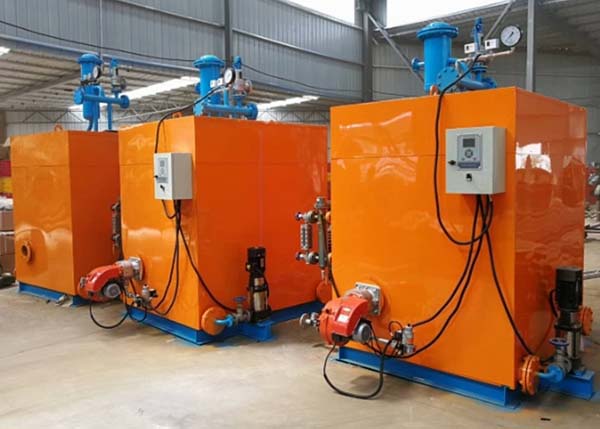
0.1-2 t/h
Multi-pass packaged steam generator, 0.1-2 t/h at 0.4-0.7 MPa, small water content and fast start for pressing, food and sterilizi...
View details
2-50 m³/h treated water
Softener and deaerator package for boiler make-up, holding hardness below 0.03 mmol/L and oxygen below 0.05 mg/L.
View details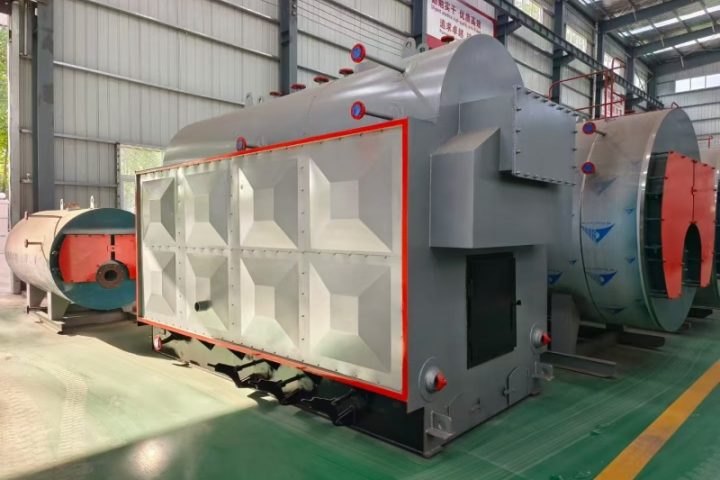
1-20 t/h boiler equivalent
Finned tube economizers and tubular air preheaters for fire-tube, water-tube and thermal oil systems, with cold-end protection aga...
View detailsExternal links open the publisher’s website and are provided for background reading.
About 30 minutes including purge and burner re-ignition. The boiler stays hot, so steam is available shortly after the burner is lit.
Slightly. Oil needs atomisation and preheating, and the flame shape differs, but a well-set combination burner stays within two points of the gas efficiency.
It covers roughly 70 hours at the plant's average load - enough to ride out a typical gas maintenance window.
2016
Beining City, Beining Province, Vietnam
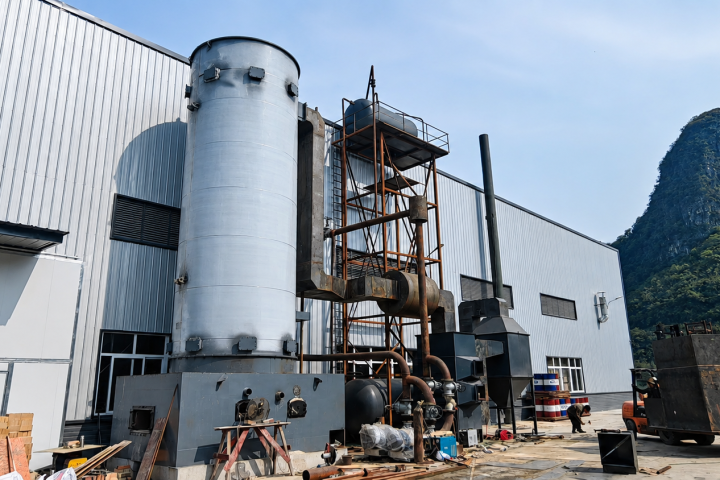
A gas-fired heat conduction oil furnace was supplied for a coating production line in Beining, Vietnam, providing indirect high-te...
View project
2023
Doha, Qatar
2 t/h gas steam boiler at 0.8 MPa on natural gas, commissioned in 2023 in Doha, Qatar: two tunnel washers and four ironers start w...
View project
2025
Casablanca, Casablanca-Settat, Morocco
A gas-fired steam boiler was supplied for pasteurization duty at a brewery in Casablanca, Morocco, with installation and commissio...
View projectWe appoint one or two partners per country to quote, deliver and service our boilers locally. Territory protection, factory pricing and commissioning support are part of the agreement.