

1-100 t/h (0.7-70 MW)
WNS Gas/Oil Steam Boiler, 1-100 t/h
Packaged three-pass wet-back fire-tube steam boiler for gas and oil, 1-100 t/h at 1.25 MPa, with matched modulating burner and ful...
View detailsA 4 t/h gas steam boiler at 2,300 m altitude supplies heating and process steam at a Peruvian mine, with the burner derated for thin air and a containerised boiler house.
The mine sits at 2,300 m in the Andes outside Arequipa, where the atmospheric pressure is about 76 kPa – roughly three-quarters of sea level. A burner selected on standard air would be short of mass flow at full fire, so the burner fan and the combustion air path were sized for the site pressure, and the boiler’s rating is stated at 2,300 m rather than at sea level.
The unit is a 4 t/h WNS gas steam boiler at 1.0 MPa, supplying process steam to the ore-processing building and heating to the camp through a calorifier. The whole boiler house is containerised: boiler, feedwater set, deaerator, control room and gas train in two 40-foot containers, which is how it reached the site.
At 76 kPa the air density is about 0.78 of its sea-level value. The burner’s fan delivers the same volume but less mass, so the maximum firing rate is about 85% of the sea-level rating unless the fan is upsized. This unit’s fan was upsized, and the boiler still reaches 4 t/h, but the excess-air margin is smaller and the combustion curve was trimmed on site.
At 4 t/h the boiler absorbs about 2.8 MW. The gas is delivered by truck as LNG, vaporised on site, so the gas analysis and the storage pressure were part of the burner selection.
| Item | Value |
|---|---|
| Rated evaporation | 4 t/h at 2,300 m |
| Pressure | 1.0 MPa |
| Site pressure | about 76 kPa |
| Air density | about 0.78 of sea level |
| Fuel | LNG delivered by truck |
| Boiler house | two 40-ft containers |
The containers were assembled and tested at the works before shipping, then transported to site and set on a concrete pad. Piping between containers is in insulated pre-fabricated spools, and the stack is a bolted sectional design because a single-piece stack could not reach the site on the mountain road.
The plant runs with two operators. The control system is a PLC with remote monitoring over the mine’s network, so the supplier’s engineers can see trends without travelling to site. That mattered during commissioning, when the burner needed three combustion-curve adjustments that were made remotely.
The boiler has run through one full year, including the cold, dry season when the camp’s heating load peaks. Steam pressure holds within 0.05 MPa, and the plant’s specific gas consumption is about 4% higher than a sea-level installation – the expected penalty for the thinner air.
1-100 t/h (0.7-70 MW)
Packaged three-pass wet-back fire-tube steam boiler for gas and oil, 1-100 t/h at 1.25 MPa, with matched modulating burner and ful...
View details
6-100 t/h
Membrane-wall water-tube steam boiler with staged combustion and FGR, 6-100 t/h at up to 2.5 MPa and 98% efficiency with heat reco...
View details
2-50 m³/h treated water
Softener and deaerator package for boiler make-up, holding hardness below 0.03 mmol/L and oxygen below 0.05 mg/L.
View detailsExternal links open the publisher’s website and are provided for background reading.
At 2,300 m the air density is about 78% of sea level, and a standard burner loses 10-15% of firing rate. Upsizing the fan restores most of it.
The site is remote and the road is difficult. Factory-assembled containers reduce site work and protect the equipment during transport.
Yes, with a PLC and a network link. Combustion trimming and fault diagnosis can be done from the supplier's office.
2025
Bangkok, Thailand
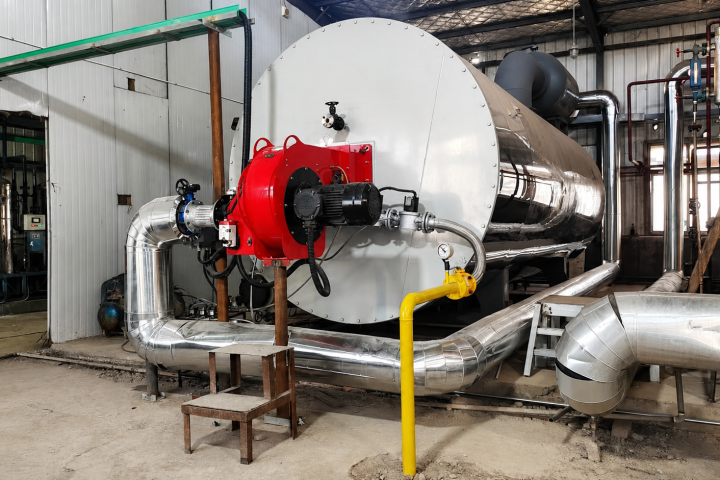
A gas-fired heat transfer oil furnace supplies process heat to a fried food production line in Bangkok, Thailand. The closed-loop...
View project
2024
Johannesburg, South Africa
A 5 t/h gas steam boiler supplies cooking, pasteurisation and CIP steam at a food plant in Johannesburg, with load-shedding resili...
View project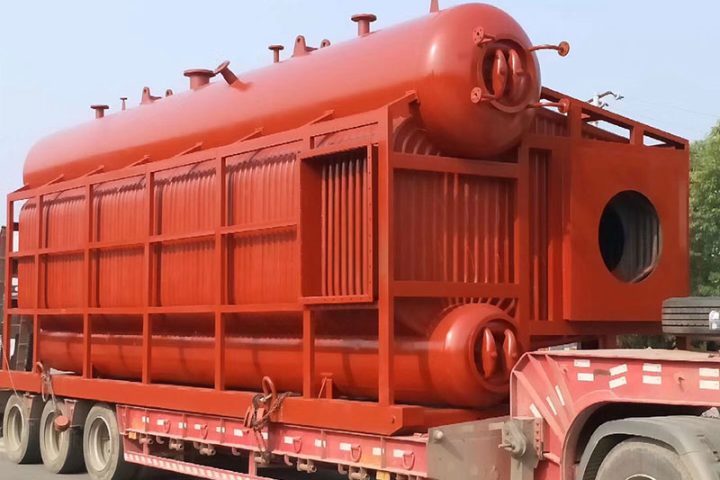
2023
Casablanca, Morocco
5 t/h gas steam boiler at 1.25 MPa on natural gas, commissioned in 2023 in Casablanca, Morocco: the finishing line needs 1.25 MPa...
View projectWe appoint one or two partners per country to quote, deliver and service our boilers locally. Territory protection, factory pricing and commissioning support are part of the agreement.