
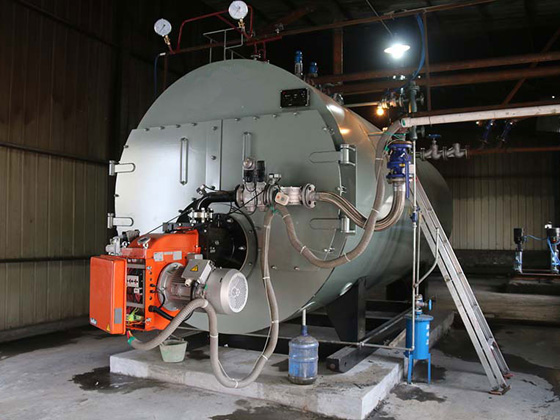
0.35-14 MW
WNS Pressurized Hot Water Boiler, 0.35-14 MW
Closed-loop pressurized hot water boiler for 95/70 and 115/70 systems, 0.35-14 MW, three-pass wet-back shell with modulating burne...
View detailsTwo 14 MW gas hot water boilers at 110/70 C supply a district heating network in Almaty, sized for -25 C design outdoor temperature and a 25 K network drop.
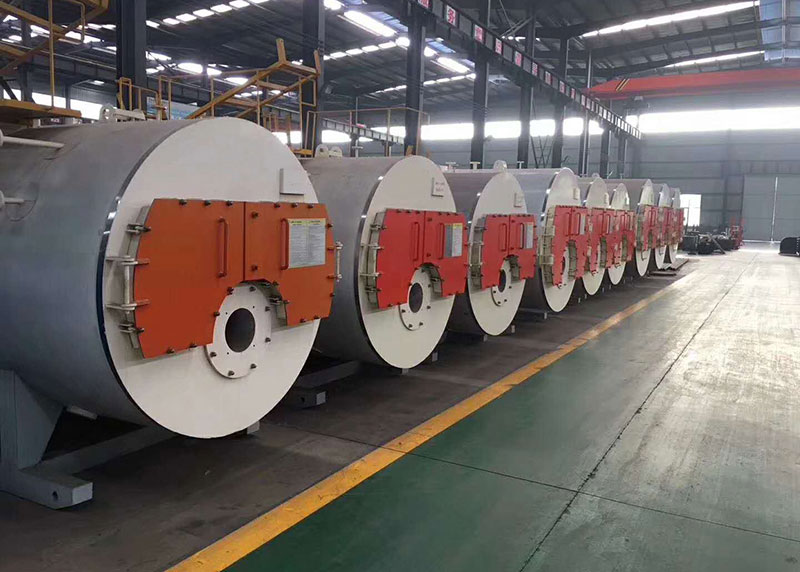
Almaty’s design outdoor temperature is around -25 °C, and the network runs on a 110/70 °C schedule with a 95/70 °C secondary side behind plate heat exchangers. The plant needed 28 MW of firm capacity with one boiler able to carry the critical load if the other is out, so the order went for two 14 MW gas hot water boilers rather than a single 28 MW shell.
Each boiler is a WNS horizontal fire-tube unit, three-pass, with a fully wet-back reversal chamber. At 14 MW the water flow is about 480 m3/h for a 25 K drop, which sets the nozzle and the circulating pump size.
Above about 20 MW water-tube designs take over, but at 14 MW a fire-tube boiler is still the lower-cost, lower-headroom option, and it tolerates the return-water temperature swings of a district network better than a small water-tube unit. The large water volume also rides through burner trips without a pressure collapse, which matters on a network that cannot afford to lose flow.
The furnaces are sized for a low-NOx burner and the boilers carry an economizer that takes flue gas down to about 110 °C, close to the dew point limit for the non-condensing design. Efficiency at rating is around 94% on LHV.
| Item | Value |
|---|---|
| Installed capacity | 2 x 14 MW |
| Network supply / return | 110 / 70 °C |
| Design outdoor temperature | -25 °C |
| Water flow per boiler | about 480 m3/h |
| Efficiency | about 94% on LHV |
| Fuel | natural gas |
The two boilers are parallel on a common header with motorised isolation, and each has its own primary pump with a standby. The network pumps are variable speed, controlled on differential pressure at the furthest substation. The control philosophy is to run one boiler through most of the heating season and bring the second on above about 60% load, rather than run both at low fire.
That decision matters because a 14 MW fire-tube boiler at 20% load has a poor turn-down on the gas side and a low flue-gas velocity that lets the economizer foul. The plant’s minimum stable load is set at 25%, and below that the second boiler stays off and the network uses its thermal storage.
The units were commissioned in October, before the first cold snap, which was deliberate: a district heating plant cannot test its control loops in July. Hydraulic testing, alkali boil-out, safety valve setting and a 72-hour run at 70% load were completed in three weeks. The first cold week exposed a controls issue, not a boiler issue: the outdoor reset curve was too aggressive and the supply temperature overshot, tripping the high-limit on one unit. Re-tuning the curve and adding a rate limit fixed it.
The plant now holds 110 °C supply through the design week with one boiler at 90% and the second at 40%, and the network’s return temperature stays near 65 °C, which keeps the economizers working. Gas consumption in the first full season was within 4% of the design estimate.
0.35-14 MW
Closed-loop pressurized hot water boiler for 95/70 and 115/70 systems, 0.35-14 MW, three-pass wet-back shell with modulating burne...
View details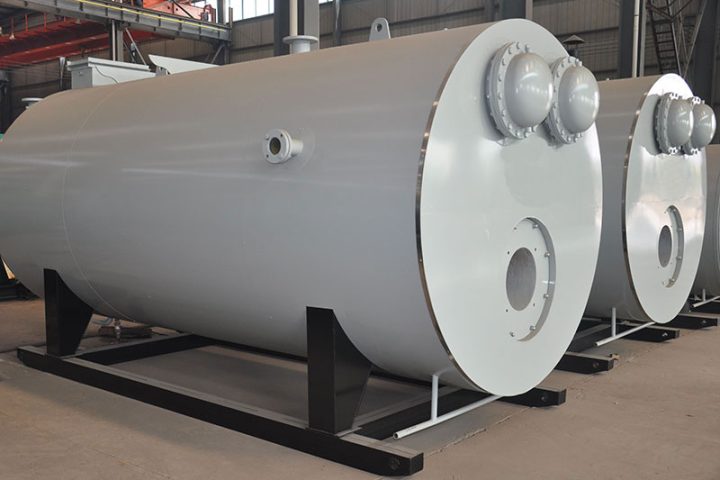
0.7-14 MW
Sealed vacuum hot water boiler, 0.7-14 MW, 85/60 C, heat medium water boiling under negative pressure and condensing on a stainles...
View details
6-100 t/h
Membrane-wall water-tube steam boiler with staged combustion and FGR, 6-100 t/h at up to 2.5 MPa and 98% efficiency with heat reco...
View detailsExternal links open the publisher’s website and are provided for background reading.
The network was built for a 110/70 schedule and the substations are sized for it. Lowering the supply temperature would need more flow or bigger heat exchangers at every substation.
About 25% of rating, or 3.5 MW, for stable combustion and adequate flue-gas velocity. Below that the plant should use thermal storage or a smaller unit.
A three-way mixing valve on the return holds the inlet above the acid dew point, and the economizer is bypassed at low load to keep the stack above 100 C.
2024
Ho Chi Minh City, Vietnam
A 4 t/h biomass boiler on rubber wood waste and rice husk supplies vulcanising and moulding steam at a footwear plant in Ho Chi Mi...
View project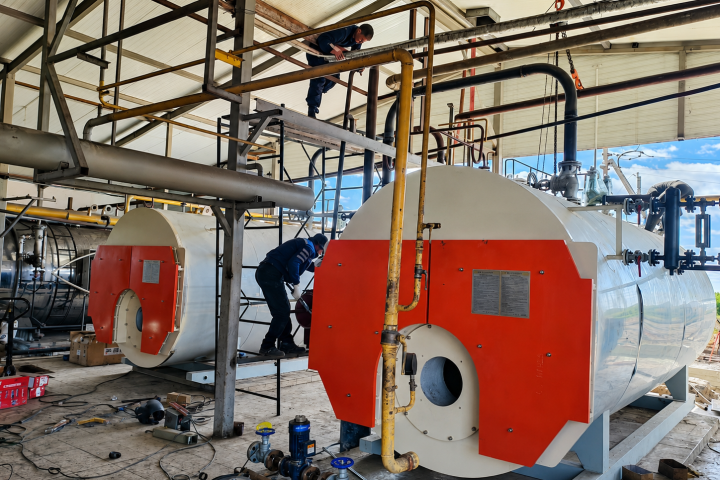
2022
Cairo, Cairo Province, Egypt
A gas-fired steam boiler was supplied for emulsification heating at a cosmetics production facility in Cairo, Egypt. The project c...
View project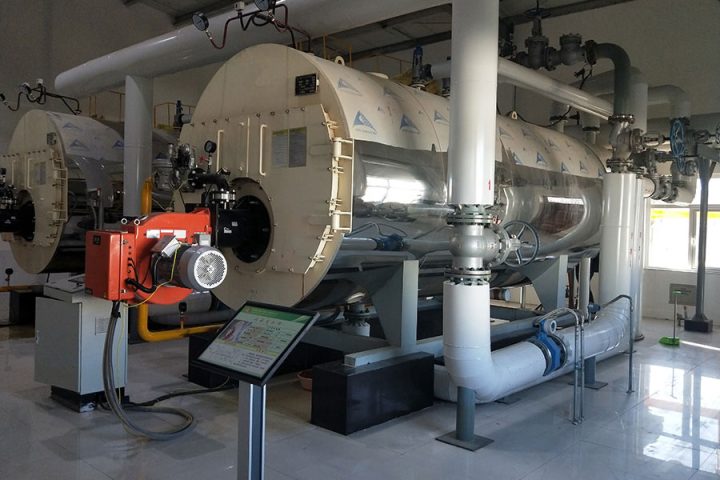
2024
Samarkand, Uzbekistan
Two 2.8 MW gas hot water boilers at 95/70 C serve a 320-room hotel complex in Samarkand, with domestic hot water priority and a we...
View projectWe appoint one or two partners per country to quote, deliver and service our boilers locally. Territory protection, factory pricing and commissioning support are part of the agreement.