
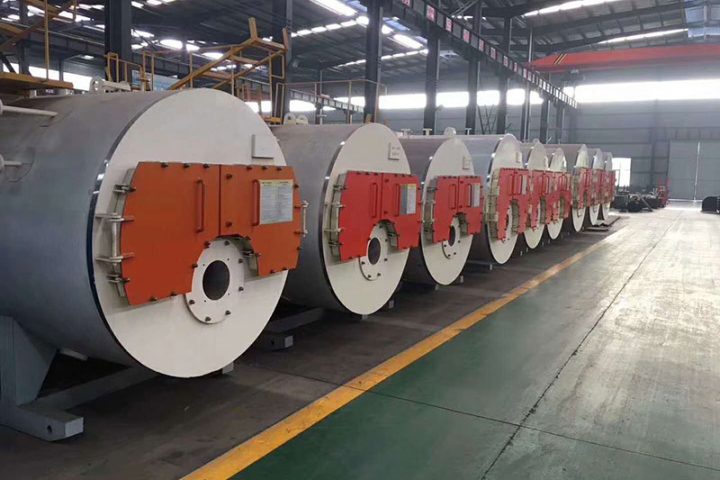
0.35-70 MW (30-6000 ×10⁴ kcal/h)
WNS/CWNS Gas/Oil Hot Water Boiler, 0.35-70 MW
Horizontal three-pass hot water boiler for gas and oil, 0.35-70 MW at 85/65 °C, atmospheric shell with large water volume for stab...
View detailsTwo 2.8 MW gas hot water boilers at 95/70 C serve a 320-room hotel complex in Samarkand, with domestic hot water priority and a weather-compensated curve.
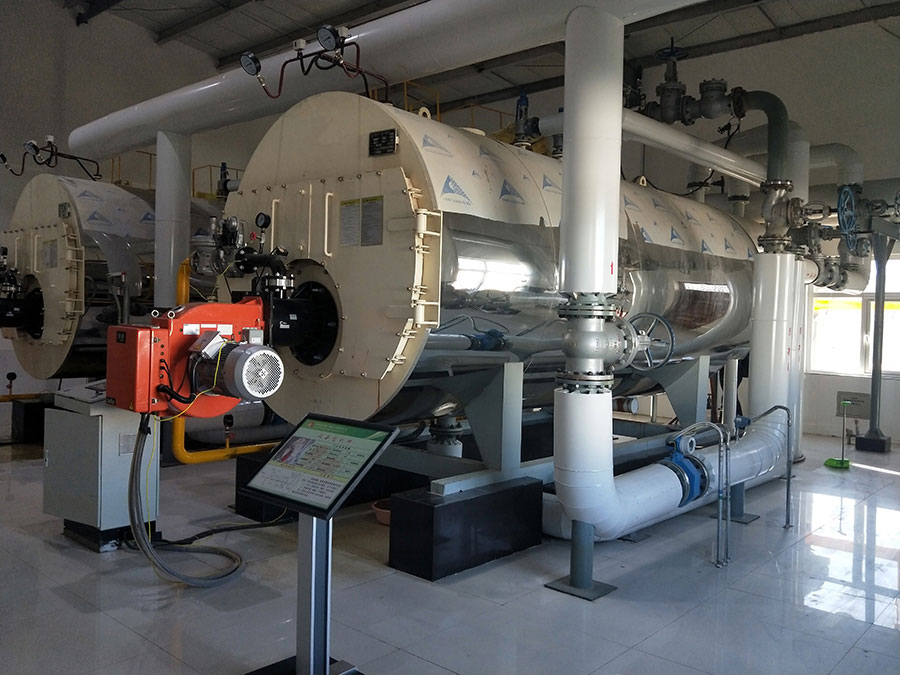
The hotel complex in Samarkand has 320 rooms, a spa, two restaurants and a conference wing. Heating runs on a 95/70 °C circuit through fan-coil units and radiators, and domestic hot water is produced in two plate heat exchangers fed from a 60 m3 storage tank. The two loads peak at different times: heating in the early morning, hot water in the evening.
Two 2.8 MW gas hot water boilers cover both. Each is a WNS fire-tube hot water boiler with a three-pass wet-back design, and the pair is sized so one unit carries the summer hot-water load alone while both run in winter.
A single 5.6 MW boiler would have been marginally cheaper, but a hotel cannot lose heat for a week while a boiler is repaired. The two-unit arrangement gives N+1 redundancy at part load: in summer one boiler runs at 30-40% on hot water, and in winter both run at 60-70%. The plant also keeps the old diesel boiler as a third standby for the coldest week.
The boilers are on a common header with primary pumps and a hydraulic separator, so the secondary circuits see a stable differential pressure regardless of which boiler is running.
| Item | Value |
|---|---|
| Installed capacity | 2 x 2.8 MW |
| Heating circuit | 95 / 70 °C |
| Domestic hot water | 60 °C from storage |
| Rooms served | 320 plus spa and restaurants |
| Efficiency | about 93% |
| Fuel | natural gas |
The plant runs a weather-compensated heating curve with night setback, and the hot-water loop has priority: if the storage tank falls below 45 °C, the heating circuit is temporarily reduced. That logic matters in spring and autumn, when heating demand is low but hot-water demand is normal.
Samarkand’s water is moderately hard, so the hot-water side is filled with softened water and the make-up is metered. The boilers themselves see treated water with a conductivity limit, and the plant logs gas and make-up weekly.
Guest complaints about hot water dropped to nil in the first season, and the heating holds 22 °C in rooms through a -8 °C night. Gas use in the first year was 6% below the old plant’s, mostly from running one boiler in summer instead of a large unit at low fire.
0.35-70 MW (30-6000 ×10⁴ kcal/h)
Horizontal three-pass hot water boiler for gas and oil, 0.35-70 MW at 85/65 °C, atmospheric shell with large water volume for stab...
View details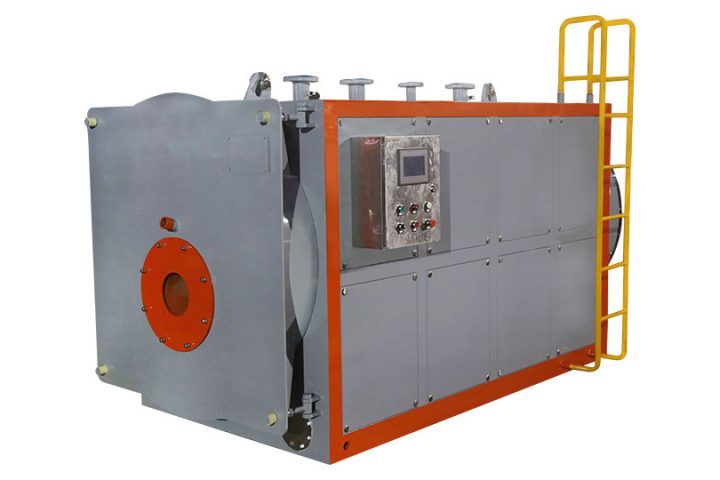
0.7-14 MW (larger on request)
Three-pass wet-back hot water boiler with a large furnace, FGR or surface premix burner and an internal condenser for 95/70 and 11...
View details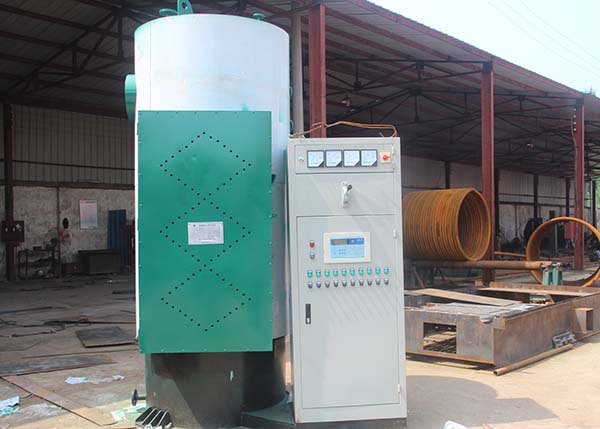
0.1-1 t/h
Vertical electric steam boiler, 0.1-1 t/h at 0.4-0.7 MPa, for laundries, sterilisers and small process loads where floor space is...
View detailsExternal links open the publisher’s website and are provided for background reading.
Redundancy and part-load efficiency. One boiler carries the summer hot-water load at a reasonable firing rate, and the hotel is never without heat during maintenance.
A storage tank with a temperature sensor gives the DHW loop priority; if tank temperature falls below 45 C the heating circuit is temporarily reduced.
Softened make-up for the hot-water circuit and conductivity-controlled boiler water. Hard make-up will scale the heat exchangers before it affects the boiler.
2023
Doha, Qatar
2 t/h gas steam boiler at 0.8 MPa on natural gas, commissioned in 2023 in Doha, Qatar: two tunnel washers and four ironers start w...
View project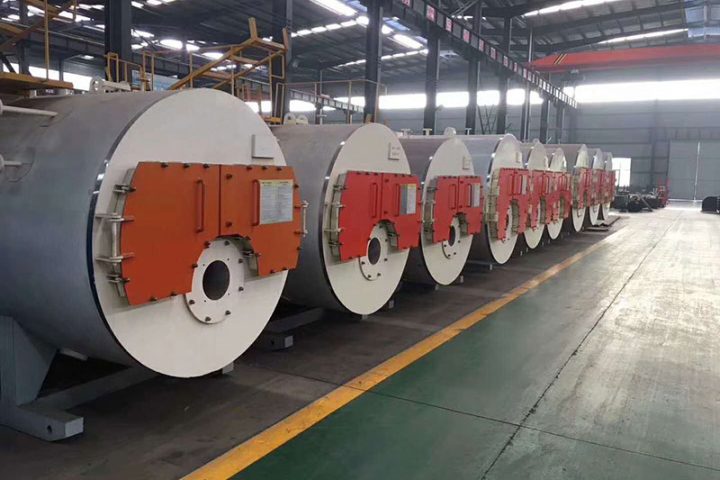
2025
Almaty, Kazakhstan
Two 14 MW gas hot water boilers at 110/70 C supply a district heating network in Almaty, sized for -25 C design outdoor temperatur...
View project
2023
Lagos, Lagos State, Nigeria
A heat transfer oil heating system was supplied for a soap production facility in Lagos, Nigeria. The system provides indirect hea...
View projectWe appoint one or two partners per country to quote, deliver and service our boilers locally. Territory protection, factory pricing and commissioning support are part of the agreement.