

6-100 t/h
SZS Water-Tube Gas/Oil Steam Boiler, 6-100 t/h
Membrane-wall water-tube steam boiler with staged combustion and FGR, 6-100 t/h at up to 2.5 MPa and 98% efficiency with heat reco...
View detailsA 4 t/h chain-grate boiler burning coal and biomass briquettes supplies dyeing steam in Dushanbe, where winter gas supply is interrupted and fuel flexibility decides the design.
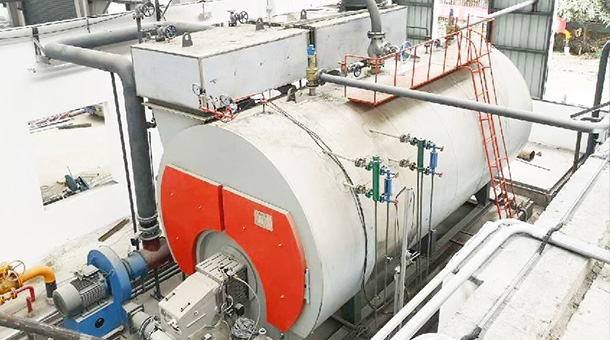
The mill dyes and finishes cotton jersey in Dushanbe, and its steam supply has to survive a winter in which the gas network is curtailed for weeks at a time. The plant’s answer is a 4 t/h chain-grate boiler at 1.25 MPa that burns local coal in winter and biomass briquettes or wood waste when the coal yard is empty or the price spikes.
The furnace is a DZL design with a 2.4 m wide grate and a refractory arch. The arch is the key to burning both fuels: coal needs a hot, deep bed, while briquettes need a shorter flame and more secondary air. The plant changes the arch angle and the primary/secondary air split when it switches fuel, a two-hour job that the operators do twice a year.
At 4 t/h the boiler absorbs about 2.8 MW. On coal at 18 MJ/kg the fuel rate is about 700 kg/h at 78% efficiency; on briquettes at 15 MJ/kg it is about 850 kg/h at 76%. The plant keeps a 30-day coal stock and a 10-day briquette stock, and the fuel store is sized for both.
| Item | Value |
|---|---|
| Rated evaporation | 4 t/h |
| Pressure | 1.25 MPa |
| Fuels | coal / biomass briquettes |
| Fuel rate at rating | 700 kg/h coal, 850 kg/h briquette |
| Efficiency | 76-78% |
| Dust control | multi-cyclone |
Dushanbe’s water is moderately hard, and the mill softened it years ago for the dye house, so the boiler shares that plant. Feedwater is deaerated at 105 °C, and the boiler runs at 2,500 ppm with automatic blowdown. The boiler house is inside the mill building, which keeps the ambient above 5 °C even in January.
The chimney is 15 m and the mill’s permit is based on a multi-cyclone, which is adequate for the local coal at this size. The plant measures dust twice a year and keeps the cyclone’s ash hopper sealed, because a leaking hopper is the usual reason a cyclone stops working.
The boiler was installed in six weeks and commissioned in eight days. The first fuel switch, from coal to briquettes, produced a dark plume for two days until the arch and air settings were trimmed. The plant now records the settings for each fuel on a laminated card in the boiler house, which has made the switch routine.
The mill runs the boiler at 2.5-3.5 t/h and holds 1.2 MPa at the dye-house header. The boiler has become the plant’s argument for keeping the old coal yard rather than converting to gas.
6-100 t/h
Membrane-wall water-tube steam boiler with staged combustion and FGR, 6-100 t/h at up to 2.5 MPa and 98% efficiency with heat reco...
View details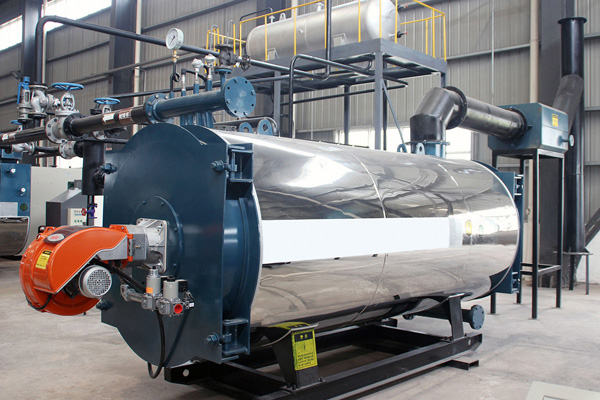
120-5,800 kW
Horizontal liquid-phase thermal oil heater, 120-5,800 kW, disc coil heating surface, 300-340 C at 0.8-1.0 MPa working pressure.
View details
10-50 t/h feedwater
Tray-type thermal deaerator, 10-50 t/h, removing oxygen to below 15 ppb and heating feedwater to 104-105 °C before it reaches the...
View detailsExternal links open the publisher’s website and are provided for background reading.
Yes, with an adjustable arch and a split primary/secondary air system. The fuel bed depth and grate speed also change with the fuel.
76-80% on LHV for a 4 t/h chain-grate unit with a cyclone and no air preheater. Biomass briquettes run slightly lower because of moisture.
Winter gas curtailment. The mill needs steam every day, and a dual-fuel grate is cheaper than a gas boiler plus a backup.
2022
Yangon, Myanmar
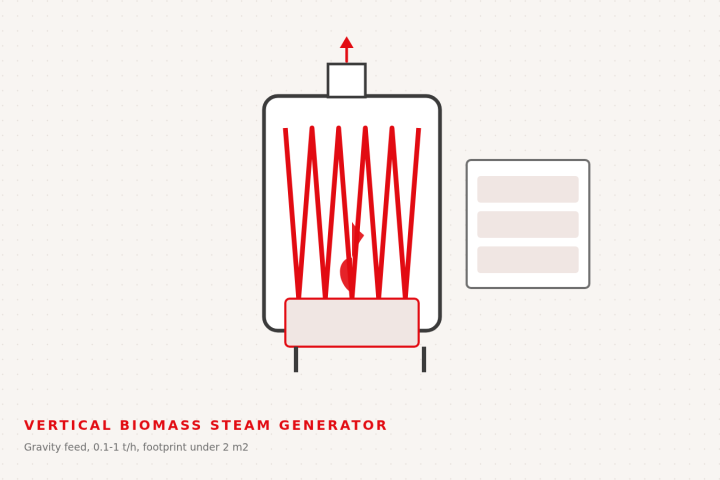
2 t/h biomass steam boiler at 0.8 MPa on rice husk, commissioned in 2022 in Yangon, Myanmar: husk is delivered wet in the monsoon...
View project
2024
Querétaro, Mexico
3 t/h gas steam boiler at 1.0 MPa on natural gas, commissioned in 2024 in Querétaro, Mexico: the paint shop needs steam at 07:00 s...
View project
2025
Tashkent, Uzbekistan
A 4 t/h gas steam boiler supplies baking, cooking and CIP steam at a confectionery plant in Tashkent, with a stainless feedwater s...
View projectWe appoint one or two partners per country to quote, deliver and service our boilers locally. Territory protection, factory pricing and commissioning support are part of the agreement.