
Three variables and one result
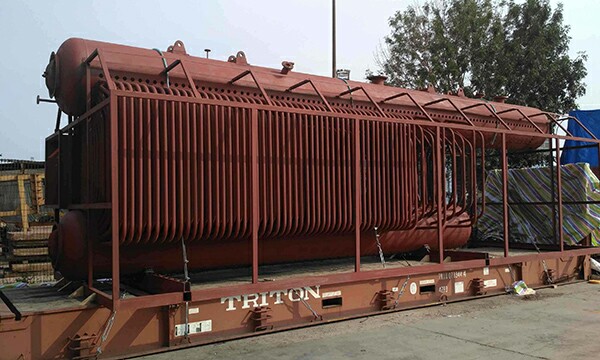
A chain-grate boiler burns fuel in a moving bed. Fuel falls from the hopper onto the grate, ignites under the front arch, burns as the grate carries it rearward, and leaves as ash at the dump. The operator controls three things: how deep the bed is, how fast the grate travels, and how the air is split between the under-grate compartments and the over-fire nozzles. Everything else, including steam output, excess air and unburnt carbon, follows from those three.
Most grate problems are set-up problems rather than fuel problems. A bed that is too thin burns through in patches; too thick and the fire is lazy and the rear of the grate carries unburnt fuel into the ash pit. The correct setting depends on the fuel’s density, moisture and volatile content, which is why a boiler tuned on pellets misbehaves on chips.
Bed depth and grate speed
For biomass pellets at 8-10% moisture, a bed of 150-200 mm at the front, tapering to 80-100 mm at the dump, with a grate speed of 5-8 m/h, gives a bright, short flame and complete burn-out by the rear arch. For wood chips at 30-35% moisture, the bed runs 250-350 mm and the grate slows to 3-5 m/h, because the fuel needs longer on the grate to dry and ignite.
The two settings are linked. Grate speed sets the residence time; bed depth sets the fuel inventory and the resistance to primary air. Increasing depth without slowing the grate pushes unburnt fuel off the end; increasing speed without deepening the bed thins the fire and lets primary air channel through. Set the depth first, then adjust speed until the burn-out point sits 300-500 mm before the dump.
Fuel size matters as much as the setting. Chips over 30 mm bridge at the fuel gate and leave a cold patch that never catches; fines under 3 mm lift off the bed and burn in the convective pass, raising stack temperature and carbon loss. A screen at the fuel receiving point is cheaper than any amount of grate tuning.
The air split
Primary air enters under the grate through six or more compartments, each with its own damper. The front compartments need more air than the rear, because that is where drying and ignition happen and where the fuel is freshest. A typical split is 40% to the first two compartments, 35% to the middle, 25% to the rear, but it follows the burn-out point: if the fire is still bright at the last compartment, shift air forward and slow the grate.
Secondary air enters above the bed at the front wall, usually 10-15% of the total, and its job is to burn the volatiles released in the first metre of travel. Biomass releases 70-80% of its energy as volatiles, and those volatiles will not burn without oxygen and turbulence above the bed. A boiler with no secondary air and a thick biomass bed produces black smoke at the stack and high CO, no matter how much primary air is added.
Total air is set by the oxygen reading, not by the damper position. Biomass on a chain grate normally runs at 6-8% O2, or 1.4-1.6 excess air, which is higher than a gas boiler because the fuel bed is not uniformly mixed. Below 5% O2 the CO rises sharply and the fire becomes smoky; above 9% the stack loss grows and the boiler loses efficiency for no benefit.
| Fuel | Bed depth | Grate speed | O2 at stack | Unburnt carbon |
|---|---|---|---|---|
| Wood pellets, 8% moisture | 150-200 mm | 5-8 m/h | 5-6% | 3-5% |
| Wood chips, 30-35% moisture | 250-350 mm | 3-5 m/h | 7-9% | 6-10% |
| Rice husk | 300-400 mm | 2-4 m/h | 7-8% | 8-12% |
| Bituminous coal | 150-250 mm | 4-7 m/h | 5-7% | 8-12% |
Reading the fire
The furnace is the primary instrument. A good fire is bright orange at the front, yellow-white in the middle and dull red at the burn-out point, with no black patches and no holes. Black smoke at the stack means insufficient secondary air or a bed that is too thick for the volatiles to burn; a white or hazy stack on biomass usually means fine dust carryover, not incomplete combustion.
Furnace draft belongs at minus 20 to minus 50 Pa at the rear of the furnace. Positive draft pushes flame and hot gas out through every opening, damages the casing and endangers the operator. Excessive negative draft pulls cold air in through the ash pit, cools the fire and raises the excess air.
Stack temperature is the slow indicator. A rise of 20-30 K at constant load means the convective pass is fouling, the bed is too thin, or the fuel is wetter than usual. On a biomass boiler with an economiser, a rising stack temperature is the first sign that soot blowing is overdue.
Common faults and their causes
Clinker, a fused glassy mass on the grate, comes from ash whose fusion temperature is below the bed temperature. It is worse with high-sodium fuels such as straw and some husks, and with poor air distribution that creates hot spots. The fixes are to lower the bed temperature by increasing excess air slightly, keep the grate moving, and blend the fuel; a boiler that clinkers on one fuel may run cleanly on a 70/30 blend.
Holes in the fire, where primary air jets through the bed, come from size segregation in the hopper or from a warped grate bar. They raise local heat release and can warp more bars, so they need attention at the next shutdown rather than at the end of the season.
High unburnt carbon in the ash, above 12%, means the fuel is spending too long in the drying zone or leaving the grate before burn-out. Slow the grate, deepen the bed slightly, and check the rear arch for damage; a fallen arch piece changes the gas flow over the bed and can double the carbon loss overnight.
The shift log that makes it manageable
Record steam flow, fuel feed rate, bed depth, grate speed, O2, CO, furnace draft, stack temperature and ash appearance every two hours. The ratio of steam to fuel is the single best indicator of day-to-day performance; a fall of 5% at constant load is a real change and worth investigating before it becomes a maintenance job.
Once a week, calculate the unburnt carbon from an ash sample. Once a month, walk the grate and the arches at shutdown. A chain-grate boiler rewards attention to a small number of variables, and it punishes neglect of the same ones, predictably and expensively.


