
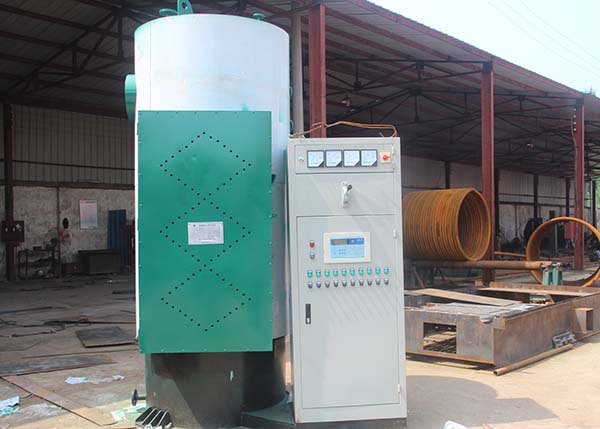
0.1-1 t/h
LDR Vertical Electric Steam Boiler
Vertical electric steam boiler, 0.1-1 t/h at 0.4-0.7 MPa, for laundries, sterilisers and small process loads where floor space is...
View detailsInduction-heated hot air furnace, 100-1200 kW, clean air to 300 °C, with the heating surface energised by eddy currents and no element in the air stream.
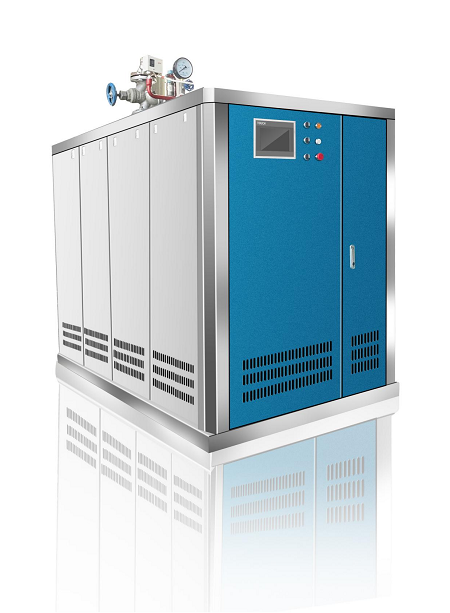
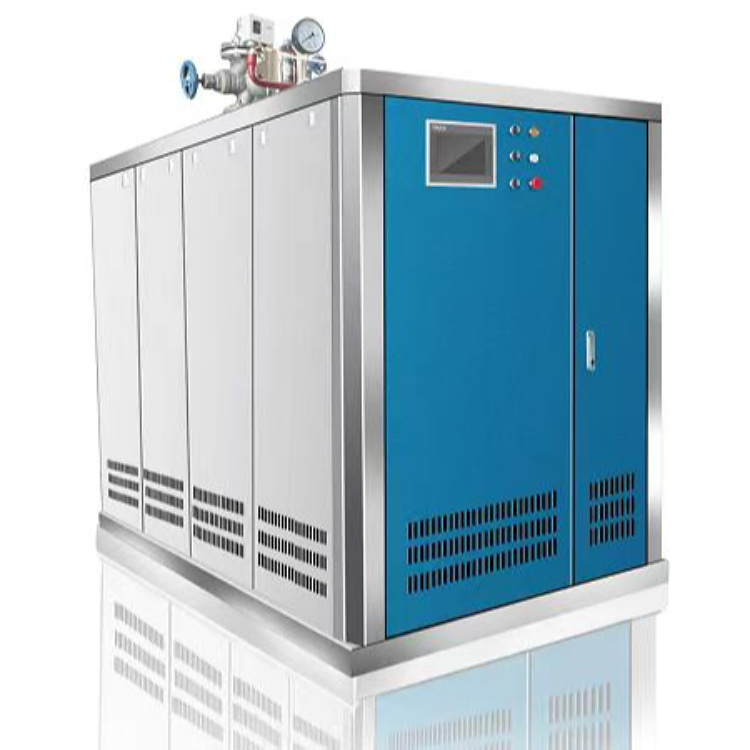
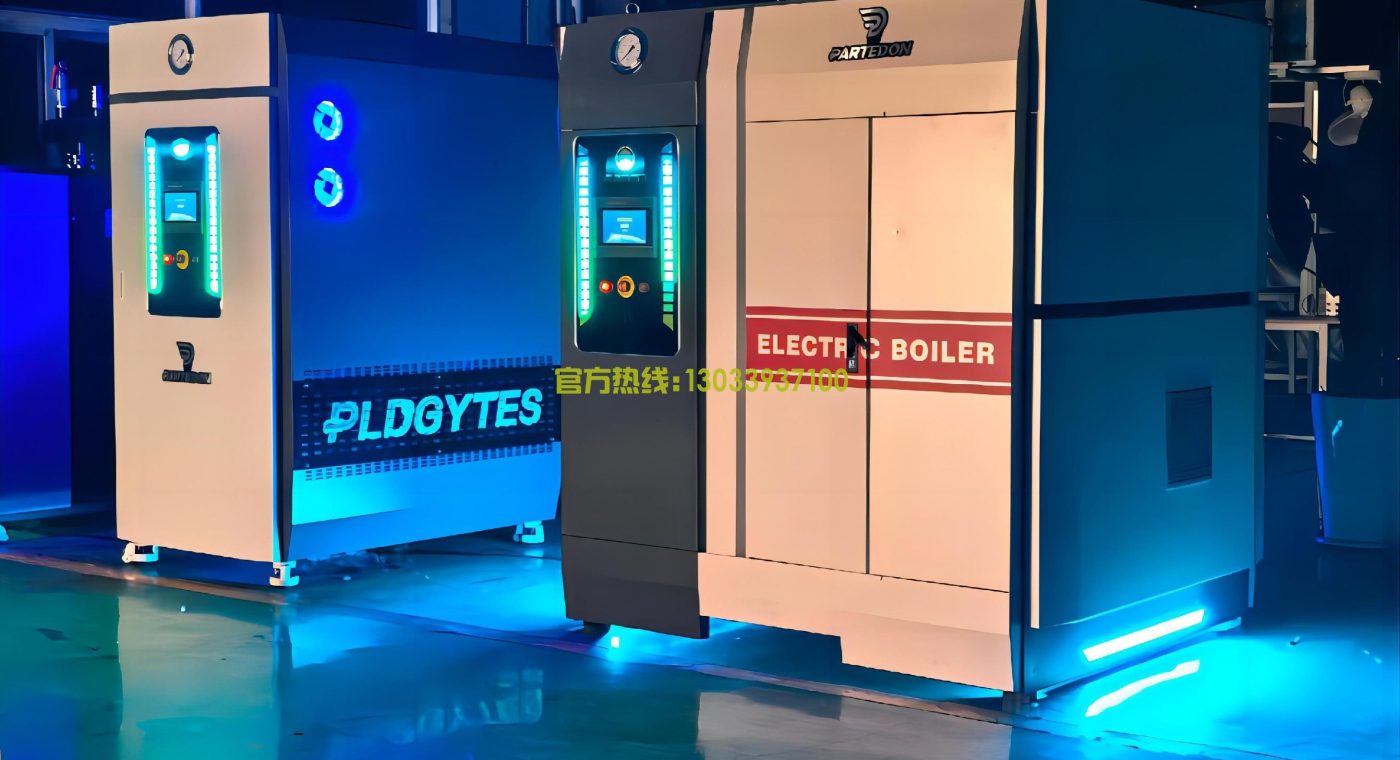
The electromagnetic hot air furnace heats air without putting a heating element in the air stream. A coil wound around a stainless steel tube bundle is fed with high-frequency current, the alternating field induces eddy currents in the tube wall, and the wall itself becomes the hot surface. Process air passes through the tubes and leaves at 60 to 300 °C; the wall that heats it runs at 350 to 420 °C, a temperature the metal can hold indefinitely without glowing.
Output runs from 100 kW to 1200 kW in single units, with larger duties met by parallel casings on a common duct. Because there is no combustion, the unit has no flue, no fuel train and no burner, and the air it delivers is the same air that entered it — no carbon dioxide, water vapour, nitrogen oxides or particulate.
A resistance air heater runs a sheathed wire at 700 to 800 °C to give up heat to air at 300 °C, because air is a poor conductor and the difference has to be large. That wire oxidises, sags and eventually breaks, usually after a hot spot where air distribution was poor, and replacing it means opening the duct.
Induction inverts the arrangement. Heat is generated in the tube wall, so the wall runs at a uniform temperature along its length rather than hottest at the wire, and there is no component inside the duct that can burn out. The trade is electrical: the coil, its cooling circuit and the frequency converter sit outside the air path and need maintenance of their own, and conversion efficiency is 96 to 98 per cent rather than the 99 per cent a clean resistance element achieves. In practice the difference is smaller than the downtime it avoids.
Air carries about 1.32 kJ per normal cubic metre per kelvin in this temperature band, which makes the flow easy to check. A 600 kW unit raising air from 20 °C to 270 °C, a 250 K rise, needs 600 divided by 1.32 times 250, or roughly 6,500 Nm³/h. At a duct pressure drop of 1.5 kPa and a fan efficiency of 65 per cent, moving that air takes about 4.2 kW, which is 0.7 per cent of the heat output and part of the reason the overall figure stays above 96 per cent.
The duct should be sized for 8 to 12 m/s at the connection, and the fan should be on the suction side of the heater where the air is cool, so that the motor and bearings are not cooked. A flow switch on the air side is a mandatory interlock: with no air movement the tube wall reaches its limit in under a minute, and the over-temperature trip is the back-up rather than the primary protection.
Tubes are 304 or 316 stainless, with 321 where the wall runs above 500 °C for long periods. The casing is insulated and clad, and surface temperature stays below the usual 60 °C touch limit. Control is by thyristor with stepless adjustment, holding outlet air to about ±2 °C — tighter than a burner with a bypass damper manages, and worth having where coating cure or food colour is the measure.
The limits are honest ones. Air above 300 °C is better served by a combustion-fired unit, because the tube wall temperature and the alloy cost rise faster than the duty justifies. And the economics depend on the tariff: at 98 per cent conversion a megawatt-hour of air heat takes about 1020 kWh at the meter, while a gas-fired air heater at 90 per cent burns about 112 Nm³ for the same heat.
Typical duties are drying tunnels for food, timber and board at 80 to 160 °C, powder coating cure ovens at 180 to 200 °C, paint booth supply air where cleanliness is the point, preheat ovens ahead of pressing, and drying rooms where a flame or a combustion product would be unacceptable. In each case the unit is chosen because the air touches the product, because the site has no gas, or because the plant runs on a shift pattern where a five-minute start without a purge cycle is worth more than the tariff difference.
| Heat output | Air volume | Maximum outlet | Current at 380 V | Duct size | Efficiency |
|---|---|---|---|---|---|
| 100 kW | 1100 Nm³/h | 300 °C | 152 A | 400×300 mm | 96% |
| 400 kW | 4400 Nm³/h | 300 °C | 608 A | 700×500 mm | 97% |
| 900 kW | 9800 Nm³/h | 300 °C | 1368 A | 1000×700 mm | 98% |
| 1200 kW | 13100 Nm³/h | 300 °C | 1824 A | 1000×800 mm | 98% |
A resistance heater runs a sheathed wire far hotter than the air and relies on that difference to transfer heat; the wire eventually oxidises and breaks. Induction heats the tube wall itself, uniformly, with no element inside the duct.
Not in this range. Above 300 °C the tube wall and the alloy cost rise sharply, and a gas or oil-fired indirect furnace is the better answer up to 800 °C.
The air path is separate from the electrical side and there is no combustion, so the air carries no combustion products. The duct and tube materials still have to be specified for the duty, and filtration is normally fitted upstream.
| Heat output | 100 kW | 200 kW | 400 kW | 600 kW | 900 kW | 1200 kW |
|---|---|---|---|---|---|---|
| Air volume at 250 K rise | 1100 Nm³/h | 2200 Nm³/h | 4400 Nm³/h | 6500 Nm³/h | 9800 Nm³/h | 13100 Nm³/h |
| Maximum outlet air | 300 °C | 300 °C | 300 °C | 300 °C | 300 °C | 300 °C |
| Rated current at 380 V | 152 A | 304 A | 608 A | 912 A | 1368 A | 1824 A |
| Duct connection | 400×300 mm | 500×400 mm | 700×500 mm | 800×600 mm | 1000×700 mm | 1000×800 mm |
| Conversion efficiency | 96% | 97% | 97% | 98% | 98% | 98% |
0.1-1 t/h
Vertical electric steam boiler, 0.1-1 t/h at 0.4-0.7 MPa, for laundries, sterilisers and small process loads where floor space is...
View details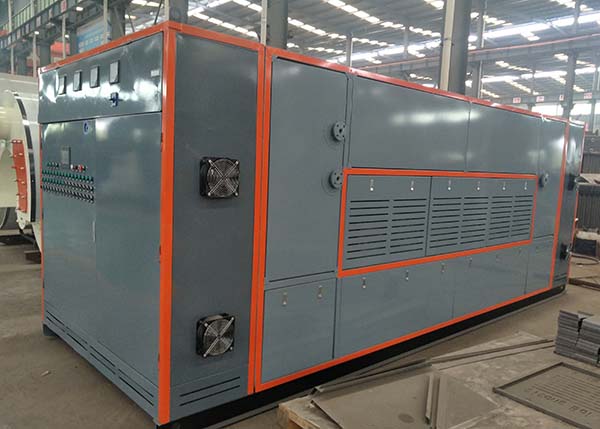
0.35-2.8 MW
Horizontal electric hot water boiler, 0.35-2.8 MW at 85/60 °C, for district heating, hospitals and process hot water without a flu...
View details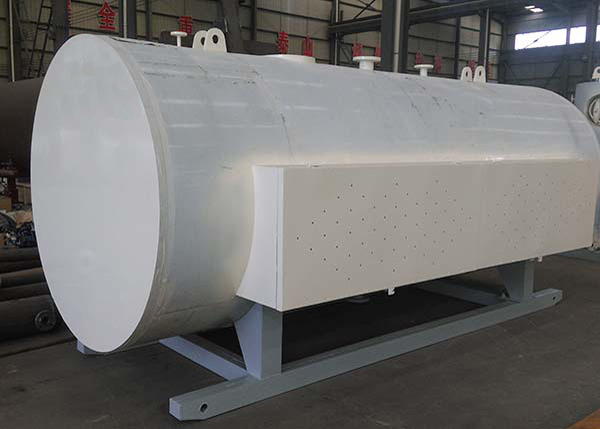
0.5 t/h
The WDR0.5-0.7 is a 0.5 t/h electric steam boiler producing 0.7 MPa steam at 170 °C. Heating elements sit in a horizontal shell wi...
View detailsExternal links open the publisher’s website and are provided for background reading.
Include the capacity (t/h or MW), fuel, working pressure and site country so the proposal matches your permit limits.
We appoint one or two partners per country to quote, deliver and service our boilers locally. Territory protection, factory pricing and commissioning support are part of the agreement.