
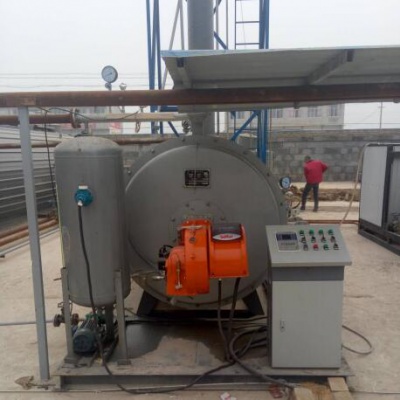
Stack temperature rise is the difference between the flue gas temperature leaving the boiler (or economiser) and the reference air temperature entering the combustion system. It is one of the cheapest and most repeatable diagnostics available to a boiler operator: two temperature readings and a firing-rate record. Read correctly, it separates a clean boiler running with sensible excess air from one that is fouled, scaled, or losing economiser performance. Read carelessly, it misleads, because stack temperature alone moves with load, ambient air, fuel and excess air. This article sets out what the rise tells you, the numbers to expect, and the data we need to size a fix.
What stack temperature rise actually measures
For a given boiler, fuel and excess-air level, the stack temperature rise is roughly proportional to the heat that was not transferred to the water or steam. Heat transfer surfaces that are clean and wetted pass heat efficiently, so the gas leaves cooler. Surfaces coated with soot, scale or corrosion products resist heat flow, so the gas leaves hotter. The rise therefore behaves like a thermal resistance indicator, provided you compare like with like.
Two cautions. First, always record the firing rate and the inlet air temperature at the same time; a boiler at 60% load will show a lower rise than the same boiler at 100% load. Second, use the gas temperature at the same point every time — upstream or downstream of the economiser, not a mix. A flue probe left in a different port is a common source of false trends.
Fouling and scale: reading the trend, not the number
Absolute stack temperatures vary widely between designs, so the useful signal is the change from a clean baseline at matched load. As a working guide for fire-tube and water-tube boilers burning natural gas:
- A rise of 10–15 °C above the clean baseline at the same load and excess air is worth investigating at the next opportunity.
- A rise of 20–30 °C usually justifies a flue-gas-side inspection and cleaning.
- Persistent rises beyond 30 °C, or a rise that climbs quickly after cleaning, point to a root cause: burner tuning, poor water treatment, or air ingress.
Gas-side fouling (soot, dust) tends to develop gradually and responds to cleaning. Water-side scale often shows a sharper rise and is accompanied by higher metal temperatures; it is a water-treatment problem first and a maintenance problem second. Neither can be diagnosed from temperature alone — confirm with a water test, a gas analysis and a visual inspection.
Excess air: the confounder you must measure
Excess air raises stack temperature because more nitrogen is heated and carried away. A boiler that moves from 3% O₂ to 6% O₂ at the same load will show a higher stack temperature rise without any fouling at all. Before you blame the heat transfer surfaces, take a flue gas analysis and compare O₂ or CO₂ at the same firing rate.
| Condition | Flue O₂ (dry, %) | Indicative stack rise above inlet air (°C) | What it usually means |
|---|---|---|---|
| Clean, well tuned, no economiser | 3 | 180–220 | Baseline |
| Clean, well tuned, no economiser | 6 | 200–240 | Excess air penalty, not fouling |
| Moderate gas-side fouling | 3 | +15 to +25 vs baseline | Inspect and clean gas side |
| Water-side scale | 3 | +20 to +40 vs baseline | Water treatment and inspection |
| With economiser, clean | 3 | 60–90 at economiser outlet | Economiser recovering heat |
| With economiser, bypass or fouled | 3 | +25 to +50 vs economiser baseline | Check bypass, flow and fouling |
Assumptions: dry gas analysis, steady state, matched firing rate, same measurement port. Do not use these ranges as acceptance criteria; they are diagnostic ballparks.
Economiser performance: the second temperature rise
An economiser adds a second rise to track: gas temperature drop across the economiser versus water temperature rise. If the gas-side drop falls while the water-side rise also falls, suspect bypass, low water flow or internal fouling. If the gas-side drop falls but the water-side rise holds, suspect gas-side fouling or a changed gas flow. Record both, plus water flow if a meter exists, and the economiser becomes a measurable asset rather than a black box. If you are evaluating whether an economiser or a larger boiler is the better route, our capacity and cost guide sets out the trade-offs, and the product range shows the configurations available.
Checklist: taking a trustworthy reading
- Use calibrated probes; note the calibration date.
- Measure at the same port and depth every time; mark it.
- Record firing rate, steam or water flow, and stack O₂ together.
- Record combustion air temperature at the burner inlet, not the boiler house wall.
- Take readings at steady state, at least 15–20 minutes after a load change.
- Log the reading against a clean baseline at matched load.
- Trend weekly; investigate any step change, not just slow drift.
- Cross-check with water chemistry and a visual inspection before ordering work.
What to send us for a proposal
We do not quote from a single temperature reading. To propose cleaning, retubing, an economiser retrofit or a replacement, send: boiler make, model, year and rated capacity; fuel and burner type; the last 6–12 months of stack temperature, O₂ or CO₂, load and feedwater temperature; the clean baseline if known; water treatment logs; any inspection reports or photographs of tubes and gas passages; available space and flue routing for an economiser; and your operating hours and load profile. Cost is driven by surface area required, materials, access, downtime and whether the work is cleaning, repair or replacement — not by the temperature number itself. With that data we can size the fix and explain what drives the cost.


