
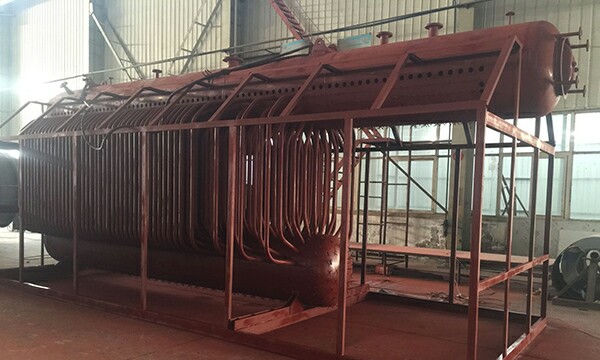
Pasteurization is a heat-transfer problem with a legal deadline attached. A typical HTST line must hold product at 72 °C for 15 s (or an equivalent time–temperature combination), and the steam plant behind it has to deliver that heat on demand, shift after shift, without upsetting the hot water set or starving the CIP circuit. This article looks at where steam actually goes in a dairy, what the loads look like in engineering terms, and what to specify so the boiler room does not become the bottleneck. For equipment options see our product range; for sizing logic and what drives cost, see the capacity and cost guide.
Where the steam goes
In a pasteurizing dairy, steam is rarely injected into product. It heats water, and the water heats product through a plate heat exchanger (PHE). The main steam users are:
- Hot water set — a steam-to-water shell-and-tube or PHE that maintains a buffer of hot water at roughly 75–85 °C for the pasteurizer’s heating section.
- Instantaneous heaters — steam-to-water units that raise water quickly for wash-down, pre-heat or small batch duties, typically sized for a 10–20 °C rise at high flow.
- CIP — caustic and acid wash circuits at 70–80 °C, plus rinse water. CIP is intermittent but can be the largest single steam draw in a small plant.
- Ancillary — yoghurt incubation rooms, cheese vats, evaporators and dryers in larger sites.
Sizing the hot water set
Start from product flow and the temperature lift. For milk, take specific heat as 3.93 kJ/(kg·K) and density as 1.03 kg/L. A 10,000 L/h line heated from 5 °C to 72 °C needs:
Q = 10,000 L/h × 1.03 kg/L × 3.93 kJ/(kg·K) × 67 K ÷ 3600 s/h ≈ 753 kW.
That is the process duty. The steam side must cover it plus PHE losses and the hot water set’s own approach temperature. With saturated steam at 8 bar(g) (about 2,048 kJ/kg latent heat) and condensate leaving at saturation, the steam flow is roughly 753 kW ÷ 2,048 kJ/kg ≈ 0.37 kg/s, or about 1.3 t/h — before any allowance for regeneration, standby or CIP. Regenerative PHEs recover 80–90 % of the heat, which cuts the live steam demand substantially, but the hot water set is still sized on the un-regenerated start-up and upset case.
| Duty | Process load (kW) | Steam (kg/h) | Notes |
|---|---|---|---|
| Pasteurizer heat, no regeneration | 753 | ~1,320 | Worst case, cold start |
| Pasteurizer heat, 90 % regen | ~75 | ~130 | Steady state only |
| Hot water set buffer, 2,000 L at 80 °C, 20 min recovery | ~110 | ~195 | ΔT 60 K, cp water 4.18 kJ/(kg·K) |
| CIP caustic, 3,000 L to 75 °C in 30 min | ~175 | ~310 | From 15 °C, no recovery credit |
| Instantaneous heater, 2,000 L/h, ΔT 15 K | ~35 | ~62 | Wash-down / pre-heat |
Add the coincident loads rather than the sum of all peaks: CIP usually runs when the pasteurizer is down, but a plant with two lines and one CIP set can see overlap. A 15–20 % margin on the coincident peak is a common starting point.
Instantaneous heaters: fast response, tight control
Instantaneous steam-to-water heaters suit dairies because they avoid a large stored volume and respond in seconds. The engineering constraints are turndown and condensate removal. A unit sized at 300 kW may run at 30 kW during low draw; if the steam control valve turndown is only 10:1, control becomes unstable. Specify a valve with at least 20:1 rangeability, and trap condensate with a properly sized steam trap plus a bypass for start-up. Keep steam velocity in the supply line below about 25 m/s to limit noise and erosion, and insulate the hot water side to hold standing losses under 1–2 % of rated output.
CIP: the intermittent load that sizes the boiler
CIP is often the reason a boiler looks oversized. Heating 3,000 L of caustic from 15 °C to 75 °C in 30 min is about 175 kW — small against the pasteurizer, but it arrives as a step change. If the boiler is already near its rated output, the steam pressure sags, the CIP temperature ramp slows, and wash cycles stretch. Two practical fixes: sequence CIP against pasteurization so the two do not overlap, or add a hot water storage tank (2,000–5,000 L) to decouple the peak. Storage is usually cheaper than extra boiler capacity, but it costs floor space and needs insulation and a recirculation line to stay above 70 °C.
Reliability: what actually stops a dairy
Dairy lines run long campaigns, often 16–20 h/day. The failure modes that hurt are not dramatic: a failed steam trap passing live steam, a fouled hot water set that cannot hold 72 °C, or a boiler that trips on low water and takes 40 min to restart. Design for redundancy where it matters:
- Two feedwater pumps, duty/standby, with automatic changeover.
- Steam header sized for 15–20 % future load, with isolation valves per branch.
- Hot water set with 10–15 % excess surface area to cover fouling.
- Condensate return monitored — a 10 % loss of return raises make-up and chemical cost noticeably.
- Boiler house ventilation sized for the burner’s combustion air plus 10 % — dairies often enclose the plant tightly.
Checklist before you specify
- ☐ Product flow rates and temperature lifts for every line, including cold start.
- ☐ Regeneration percentage and whether the hot water set must cover a no-regen upset.
- ☐ CIP tank volumes, target temperatures and ramp times.
- ☐ Coincident peak load, not the sum of all peaks.
- ☐ Steam pressure required at the furthest user (often 6–8 bar(g)).
- ☐ Condensate return percentage and quality.
- ☐ Available boiler house footprint and flue route.
- ☐ Fuel and water analysis, including hardness.
What to send us for a proposal
To size a boiler and steam system for a pasteurizing dairy, send: a process flow diagram with steam users marked; product flow and temperature data per line; CIP tank volumes and cycle times; required steam pressure and quality (dryness); condensate return expectations; fuel type and supply pressure; water analysis; and the boiler house dimensions plus flue exit height. If you have an existing steam balance, include it — it shortens the review. With those inputs we can propose a boiler and hot water set combination and explain what drives the cost, from burner selection to feedwater treatment and controls. Browse the product range or read the capacity and cost guide for the sizing framework.


