
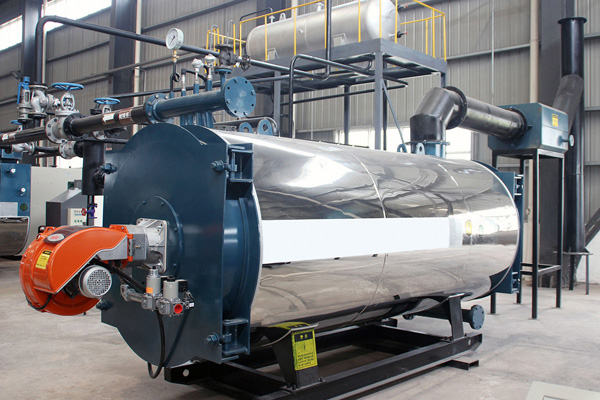
2-35 t/h steam; 1-10 MW thermal oil
Boiler Packages for Chemical Processing Plants
Boiler packages for chemical processing: SZS gas-fired steam boilers from 2 to 35 t/h and YY(Q)W thermal oil heaters from 1 to 10...
View detailsGas-fired thermal oil mould temperature controller, 120-1,200 kW, closed circuit, PID control holding the tool within about 1 C.
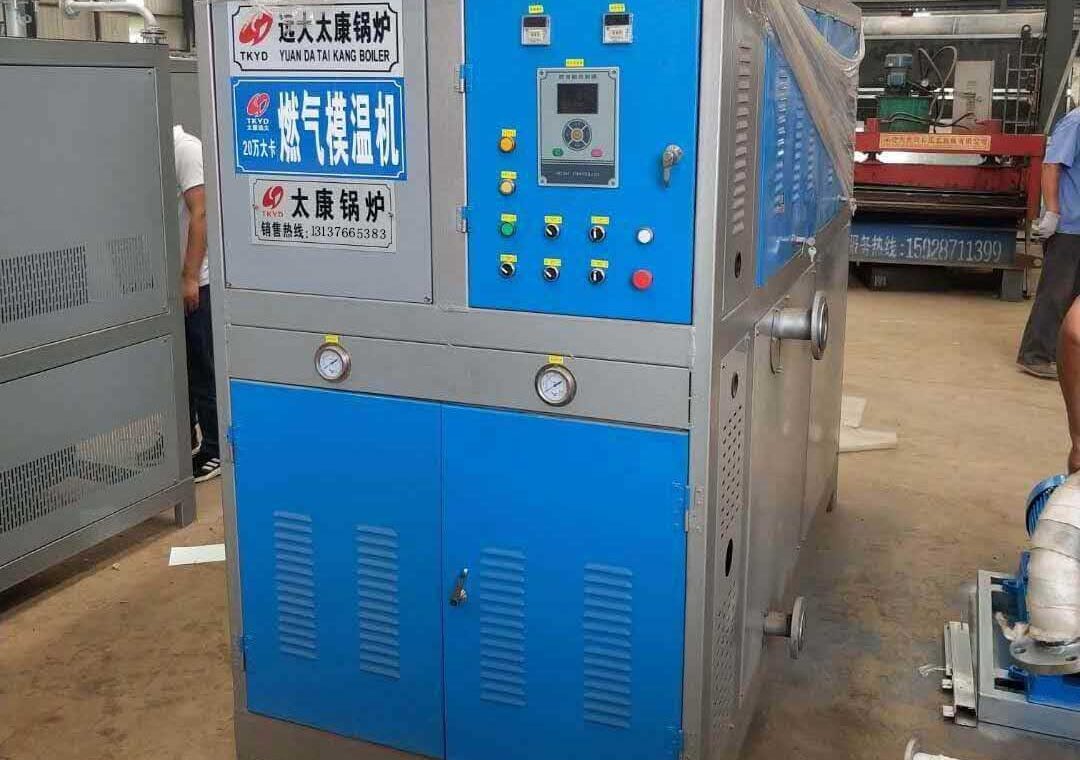
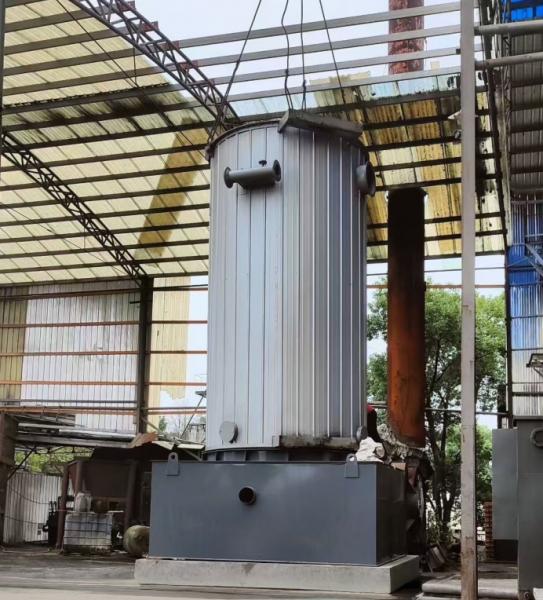
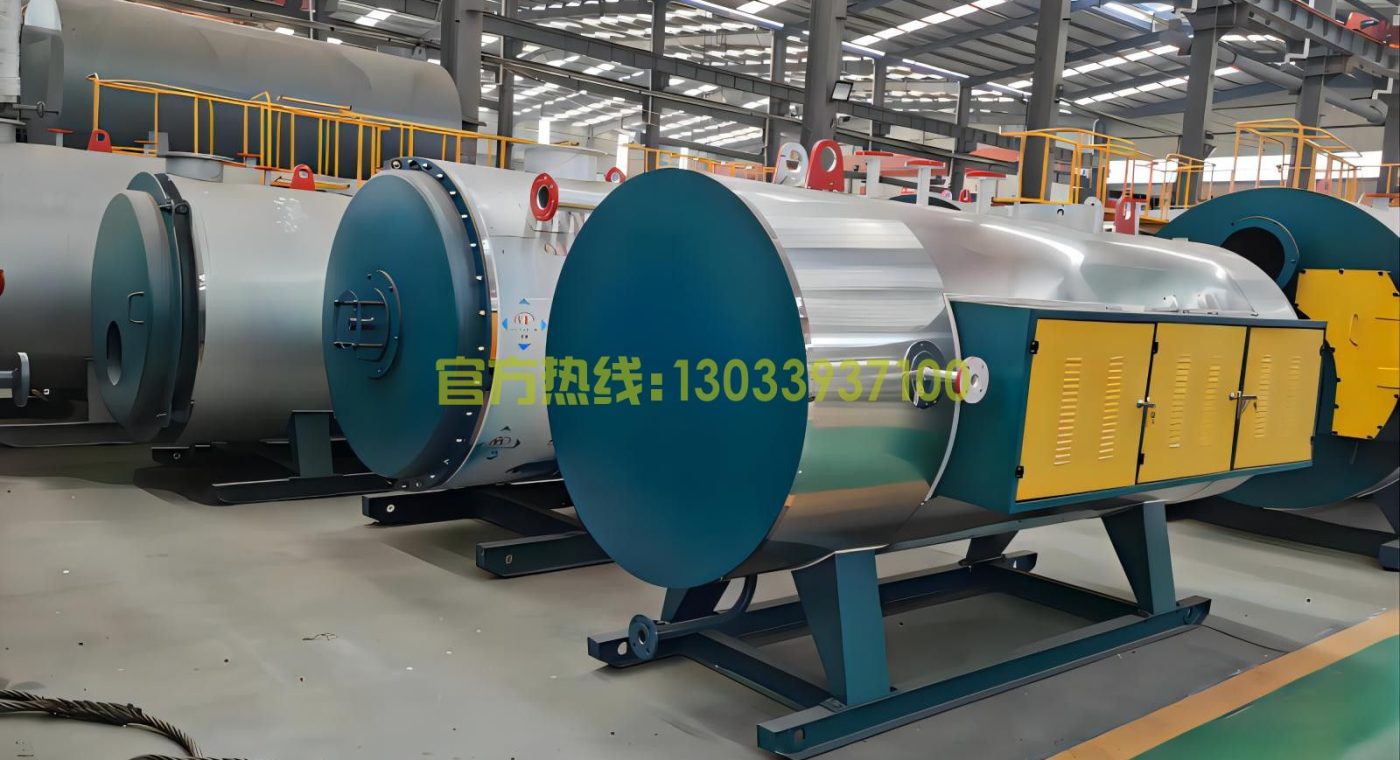
A mould temperature controller holds a tool at a set temperature by circulating thermal oil through the channels drilled in the mould. On this unit the heat comes from a burner firing into a combustion chamber that is immersed in, or wrapped by, the oil circuit, and a pump moves the oil out to the tool and back. The machine heats the mould before the first shot, holds it while the press runs, and can be valved to a cooling circuit when the cycle needs the tool colder.
It is not a boiler and it makes no steam. The oil stays liquid at 1.0 to 1.25 MPa and up to about 310 °C, and the value of the machine is stability rather than peak temperature. A tool that swings 10 °C between shots produces sink marks, warpage and dimensional scatter, and no amount of downstream inspection recovers the scrap.
The circuit is fully closed. Oil leaves the pump, passes the heated section, goes out to the mould through the supply hose, returns through the return hose, and passes an oil-gas separator before re-entering the pump. A small expansion tank absorbs the volume change between cold and working temperature and is arranged to stay cool. An automatic vent releases gas at the highest point of the circuit.
Sealing matters for two reasons. Hot oil in contact with air oxidises and thickens, and the varnish that forms plugs the small channels in a mould; and an open tank gives off oil mist into the shop, which is both a housekeeping problem and a health one. The separator removes entrained gas so that the pump does not cavitate, which is the usual cause of a noisy machine that cannot hold temperature.
Hoses and couplings are part of the thermal design. A restricted return line raises pump pressure and lowers flow, which raises the film temperature in the heater section, so flow proving on the return is a trip rather than an alarm. Quick-release couplings with shut-off valves let a tool be changed without draining the machine, and the 130 to 730 kg oil charge means a tool change does not mean a refill.
A microprocessor controller reads the supply temperature at the mould, runs a PID algorithm with auto-tuning, and drives the modulating burner valve. After a set-point change, one or two auto-tune cycles are usually enough to settle the loop, and the tool then holds within about 1 °C. The same controller logs fault codes, which saves a great deal of time when a thermocouple or a pump seal fails at three in the morning.
Heating and cooling rates both matter for cycle time. On thick parts the limiting factor is often the cooling side, so the ability to switch to a cooling exchanger without dropping the mould below set point is worth more than a larger burner. Ask for the heat-up curve and the cool-down curve, not just the kilowatt rating.
Units are rated 120, 240, 500, 700, 1,000 and 1,200 kW. Choose on the heat the tool loses per cycle plus the warm-up allowance, not on press tonnage: a large tool with thin walls and long cooling channels can need more than a small tool on a bigger press. The pump is sized on flow, 12.5 to 100 m³/h across the range, because flow sets the temperature difference across the mould; pump power rises from 3 kW to 22 kW with it.
Gas firing cuts running cost against electric heating on the same duty, and the price is that the unit needs a flue to outside air and a gas supply at the machine. That decides placement: against an outside wall, or with a short vertical flue through the roof. Where neither is possible, an electric unit is the honest answer and we will say so. Thermal efficiency is 95 to 99%, and the electrical control box is isolated from the hot body so that the contactors and the board run cooler. Delivery is typically 25 to 45 days after drawing approval; commissioning 5 to 10 days.
Yes, with a changeover valve set and two return lines, provided the two tools run at the same temperature. Two tools at different temperatures need two machines or a dual-circuit unit.
A heat transfer oil rated above the maximum working temperature, typically a synthetic or a high-quality mineral oil for 310 C service. Mixing brands is not advisable; the data sheet limits govern.
Because the heat is generated at the point of use from fuel rather than from electricity, and the unit only circulates oil. The saving is largest where the machine runs continuously on a fixed set point.
| Model | YQW-120Q | YQW-240Q | YQW-500Q | YQW-700Q | YQW-1000Q | YQW-1200Q |
|---|---|---|---|---|---|---|
| Rated heat output | 120 kW | 240 kW | 500 kW | 700 kW | 1,000 kW | 1,200 kW |
| Rated pressure | 1.0 MPa | 1.0 MPa | 1.25 MPa | 1.25 MPa | 1.25 MPa | 1.25 MPa |
| Maximum oil temperature | 310 °C | 310 °C | 310 °C | 310 °C | 310 °C | 310 °C |
| Oil capacity | 130 kg | 160 kg | 350 kg | 420 kg | 640 kg | 730 kg |
| Pump power | 3 kW | 5.5 kW | 11 kW | 15 kW | 22 kW | 22 kW |
| Pump flow | 12.5 m³/h | 18 m³/h | 45 m³/h | 50 m³/h | 94 m³/h | 100 m³/h |
2-35 t/h steam; 1-10 MW thermal oil
Boiler packages for chemical processing: SZS gas-fired steam boilers from 2 to 35 t/h and YY(Q)W thermal oil heaters from 1 to 10...
View details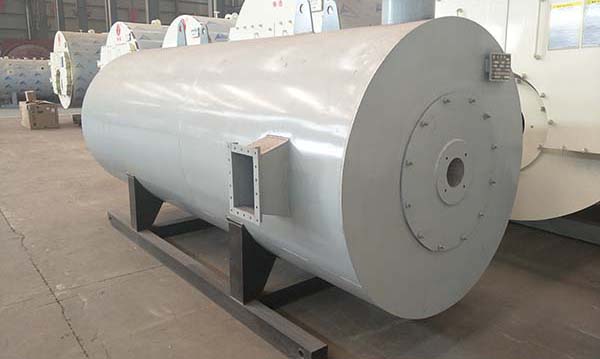
10-600 ×10⁴ kcal/h
Indirect air heater delivering clean hot air to 350-550 C, or direct-fired hot gas to 1,000 C, for drying, curing and oven retrofi...
View details
0.35-70 MW (30-6000 ×10⁴ kcal/h)
Horizontal three-pass hot water boiler for gas and oil, 0.35-70 MW at 85/65 °C, atmospheric shell with large water volume for stab...
View detailsExternal links open the publisher’s website and are provided for background reading.
Include the capacity (t/h or MW), fuel, working pressure and site country so the proposal matches your permit limits.
We appoint one or two partners per country to quote, deliver and service our boilers locally. Territory protection, factory pricing and commissioning support are part of the agreement.